

Choosing between reusable vs disposable ice packs looks like a small purchasing decision, but it shapes your cost per shipment, how much waste you create, and how reliably your products stay cold. For businesses that ship food, medicine, lab samples, or flowers every week, that choice adds up fast.
Quick answer: For any business that ships or stores cold products on a regular basis, reusable gel ice packs are the better choice. They cost more upfront, but you can refreeze and reuse them many times, which pushes the cost per use far below single-use options. They also hold temperature more evenly and cut packaging waste. Disposable packs still make sense for one-off shipments, first aid kits without a freezer, and deep-frozen goods that need dry ice.
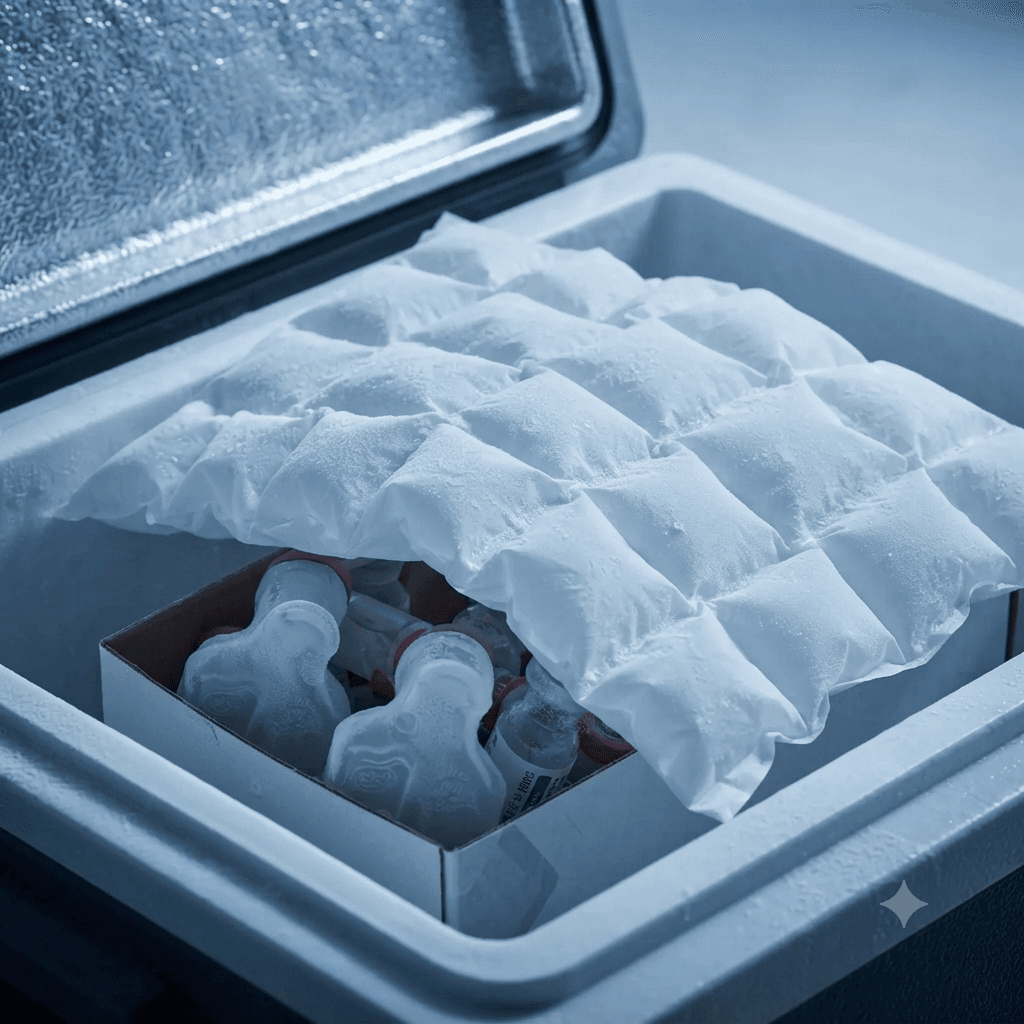
Key Takeaways
- Reusable gel ice packs cost more to buy but much less per use once you run them through more than a few cycles.
- Gel packs thaw slowly and evenly, which helps keep food and medical products out of unsafe temperature ranges.
- Switching to reusable packs reduces single-use packaging waste, one of the largest parts of US municipal trash.
- Water-based gel packs avoid the hazardous material rules that apply to dry ice shipments.
- Disposable options still have a role for one-way deliveries, emergency first aid, and ultra-cold goods.
What Is the Difference Between Reusable and Disposable Ice Packs?
The core difference is simple. A reusable ice pack is built to be frozen, used, and refrozen many times. A disposable ice pack works once and then goes in the trash.
Reusable Gel Ice Packs
Reusable gel packs are sealed in durable, leak-resistant film and filled with a water-based gel. According to Poison Control, most contain water, an ingredient that lowers the freezing point, a thickener, and non-toxic coloring. You freeze them, pack them around your product, and put them back in the freezer when they come back. Products like FREEZEZE gel ice pack refrigerants and THERMAPACK gel ice packs fall into this group.
Disposable Ice Packs
Disposable cooling comes in a few common forms:
- Instant cold packs: squeeze-activated packs that use a chemical reaction, often with ammonium nitrate or urea, to get cold without a freezer. They work once.
- Single-use gel packs: thin, low-cost packs meant to be thrown away after delivery.
- Wet ice: bagged ice that melts into water and can soak through boxes.
- Dry ice: solid carbon dioxide that is extremely cold but disappears as gas and is regulated for shipping.
Reusable vs Disposable Ice Packs: Side-by-Side Comparison
Here is how the two options compare on the factors that matter most to operations and finance teams.
| Factor | Reusable gel ice packs | Disposable ice packs |
|---|---|---|
| Upfront cost | Higher per pack | Lower per pack |
| Cost per use | Drops with every cycle | Same every time, since you rebuy for each shipment |
| Number of uses | Many cycles while the film stays intact | One |
| Temperature behavior | Slow, even thaw | Instant packs cool briefly, wet ice melts, dry ice can overcool |
| Leaks and mess | Sealed, no meltwater | Wet ice leaks and torn packs can spill |
| Shipping rules | Generally not regulated as hazardous | Dry ice is a regulated hazardous material |
| Waste | Low, replaced only when damaged | New waste with every shipment |
| Best for | Repeat shipments, storage, clinics, delivery fleets | One-off shipments, first aid kits, ultra-cold goods |
5 Advantages of Reusable Ice Packs for Modern Businesses
1. Lower Cost Per Use
The biggest gap between reusable vs disposable ice packs shows up in cost per use. That is the price of a pack divided by the number of times you use it, and it tells you far more than the sticker price.
Here is a simple illustration. Say a reusable gel pack costs five times as much as a single-use pack. If you get 50 cycles out of it, each use costs one-tenth of what the disposable pack costs. Even after you account for freezer space and return trips, the savings grow with every shipment. We walk through more of the numbers in our guide on how reusable ice packs help reduce shipping costs.
Companies that use thousands of packs a month can take this further by making their own. The TEMTRO gel pack production system is built for that, with a listed production cost of roughly 8 to 10 cents per pack.
2. More Predictable Temperature Control
Gel packs absorb heat slowly and release cold evenly as they thaw, so the temperature inside a shipper stays steady for longer. Loose ice melts unevenly, and instant cold packs lose their chill quickly. It is one reason gel ice packs outperform traditional ice.
That stability protects your products and your customers. The USDA Food Safety and Inspection Service notes that bacteria grow fastest between 40°F and 140°F and can double in as little as 20 minutes. For medicine, the stakes are just as high. The UN Environment Programme, citing the World Health Organization, reports that up to 50% of vaccines are wasted globally each year, largely because of poor temperature control and gaps in the cold chain. Here is more on why temperature stability is critical for pharmaceutical products.
3. Less Packaging Waste
Every disposable pack becomes trash after a single trip. Reusable packs stay in circulation until they are damaged, so far fewer end up in landfills.
The scale of packaging waste is real. According to the US EPA, containers and packaging made up 82.2 million tons of municipal solid waste in 2018, about 28% of the total, and 30.5 million tons of it went to landfills. Moving your cold chain to reusable packs is one of the easier ways to shrink your share. Learn more about how reusable gel ice packs support sustainable business practices.
4. Simpler and Safer Shipping
Dry ice is great at keeping things frozen, but it comes with rules. It is classified as a hazardous material for transport, and US regulations under 49 CFR 173.217 set requirements for packaging, venting, and marking. That means extra training, labels, and paperwork for your team.
Water-based gel packs are generally not regulated that way. They do not release gas, do not need venting, and will not leave a soggy box behind like melting ice. For frozen loads, low-temperature options like THERMAPACK -10°F gel ice packs can handle many shipments without dry ice, depending on transit time and insulation.
5. A Stronger Sustainability Story
Customers and partners increasingly ask how suppliers handle waste. A reusable cold chain program gives you a clear, measurable answer: fewer packs bought, fewer packs manufactured, and less waste created. Reusable packs can also be made in custom sizes and colors, which makes them part of your brand instead of something customers throw away.
When Disposable Ice Packs Still Make Sense
The reusable vs disposable ice packs question is not always one-sided. Disposable options still earn their place when:
- You ship one way to consumers with no practical way to get packs back. In that case, choose durable, non-toxic gel packs that customers can keep and reuse at home.
- You need cold therapy on the spot without a freezer, such as in a first aid kit or on a job site. Instant cold packs fill that gap.
- Your product must stay ultra-cold over long transit times, where dry ice is still the standard.
- You send cold shipments only a few times a year, so buying and storing reusable stock does not pay off.
For most businesses with a steady flow of cold shipments, though, these cases are the exception rather than the rule.
Which Industries Benefit Most From Reusable Ice Packs?
Any business with repeat cold shipments comes out ahead in the reusable vs disposable ice packs comparison, but these industries see the biggest gains:
- Pharmaceutical and biotech: steady temperatures for medicines, vaccines, and samples. See the role of cooling solutions in pharmaceutical logistics.
- Food delivery and meal kits: daily routes that return the same packs to the depot. Read about cooling solutions for food delivery services.
- Healthcare facilities: hospitals, clinics, and rehab centers that use cold packs every day for patient care. Here is why healthcare facilities depend on reliable cooling products.
- E-commerce and florists: sellers who need clean, leak-free packaging, including florist gel ice for fresh arrangements.
How to Switch From Disposable to Reusable Ice Packs
- Audit your current usage. Count how many disposable packs, bags of ice, or pounds of dry ice you use each month and what you spend on them.
- Match the temperature range. Refrigerated goods, such as medicines stored at 2°C to 8°C, need different packs than frozen goods. Pick packs rated for each product.
- Test your pack-out. Run a few trial shipments with a temperature logger to confirm how many packs each box needs and how long they hold.
- Set up a return and refreeze loop. Decide how packs come back from routes or customers, and give them enough freezer time to freeze solid before the next trip.
- Inspect and replace. Check packs for punctures or leaks every cycle and retire damaged ones.
Not sure which size or type fits your shipments? Our guide to choosing the right cooling solution for your business walks through the options, or you can contact the Axizz team for a recommendation.
Frequently Asked Questions About Reusable vs Disposable Ice Packs
Are reusable ice packs better than disposable ice packs for businesses?
For businesses that ship or store cold products regularly, yes. Reusable gel packs cost more upfront but much less per use, hold temperature more evenly, and create far less waste. Disposable packs are the better pick only for occasional, one-way, or emergency use.
How many times can you reuse a gel ice pack?
A well-made reusable gel pack can go through many freeze and thaw cycles, often dozens or more, as long as the outer film is not punctured or torn. Inspect packs after each use and replace any that leak.
Are reusable ice packs cheaper than disposable ones?
They cost more to buy, but they are usually cheaper over time. Divide the purchase price by the number of uses to get the cost per use. After enough cycles, a reusable pack costs a fraction of a single-use pack per shipment.
Can reusable gel packs replace dry ice?
For chilled shipments and many frozen ones, yes. Low-temperature gel packs rated to around -10°F can keep many frozen goods frozen without dry ice. For ultra-cold products or very long transit times, dry ice is still the usual choice.
What is inside a disposable instant cold pack?
Instant cold packs contain water and a chemical, commonly ammonium nitrate, calcium ammonium nitrate, or urea. Squeezing the pack mixes them and starts a reaction that absorbs heat. The reaction cannot be reversed, so the pack works only once.
How long do reusable gel ice packs stay cold?
It depends on pack size, how cold they were frozen, the insulation, and the outside temperature. In a well-insulated shipper, properly frozen gel packs often hold safe temperatures for 24 to 48 hours.
The Bottom Line
When you compare reusable vs disposable ice packs on cost per use, temperature control, waste, and shipping rules, reusable gel packs come out ahead for almost every business with regular cold shipments. Disposable packs still have a place, but as a backup rather than the backbone of your cold chain.
Ready to make the switch? Browse Axizz reusable gel ice packs or read more about the benefits of reusable cooling solutions for businesses.