
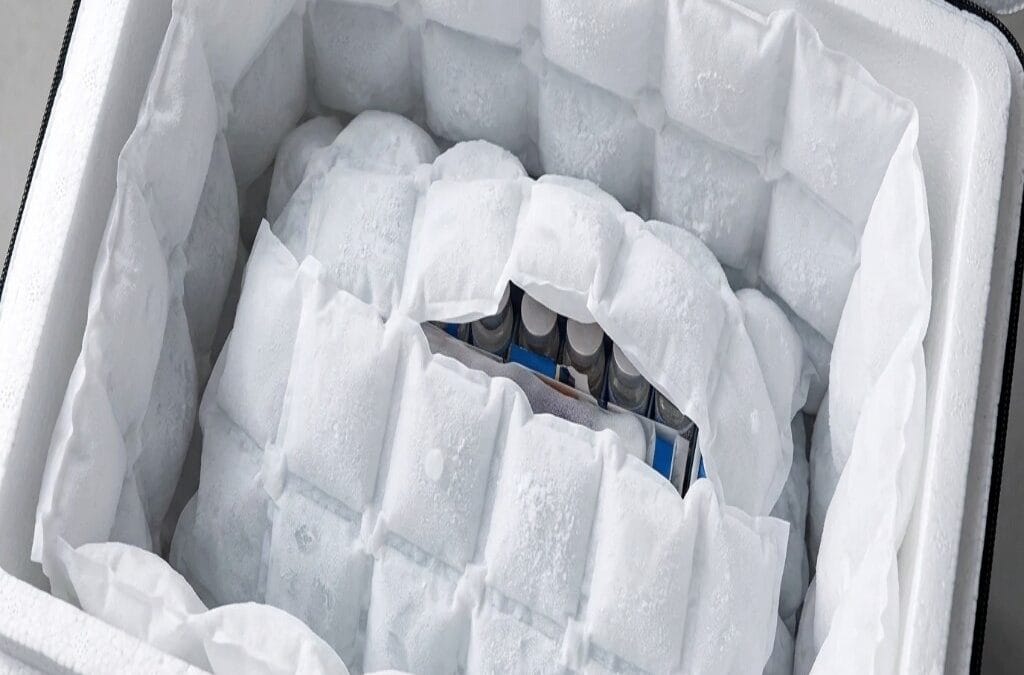
Reusable cooling solutions have become a standard part of how businesses ship, store, and handle temperature-sensitive products. Instead of buying disposable ice for every shipment, companies invest once in gel packs and cooling systems that come back, get refrozen, and go out again. The payoff shows up in three places: lower spending, less waste, and more predictable temperature control.
This guide covers what these products are, the seven benefits that matter most to operations and finance teams, the industries that gain the most, and how to pick the right setup for your shipments.
What Are Reusable Cooling Solutions?
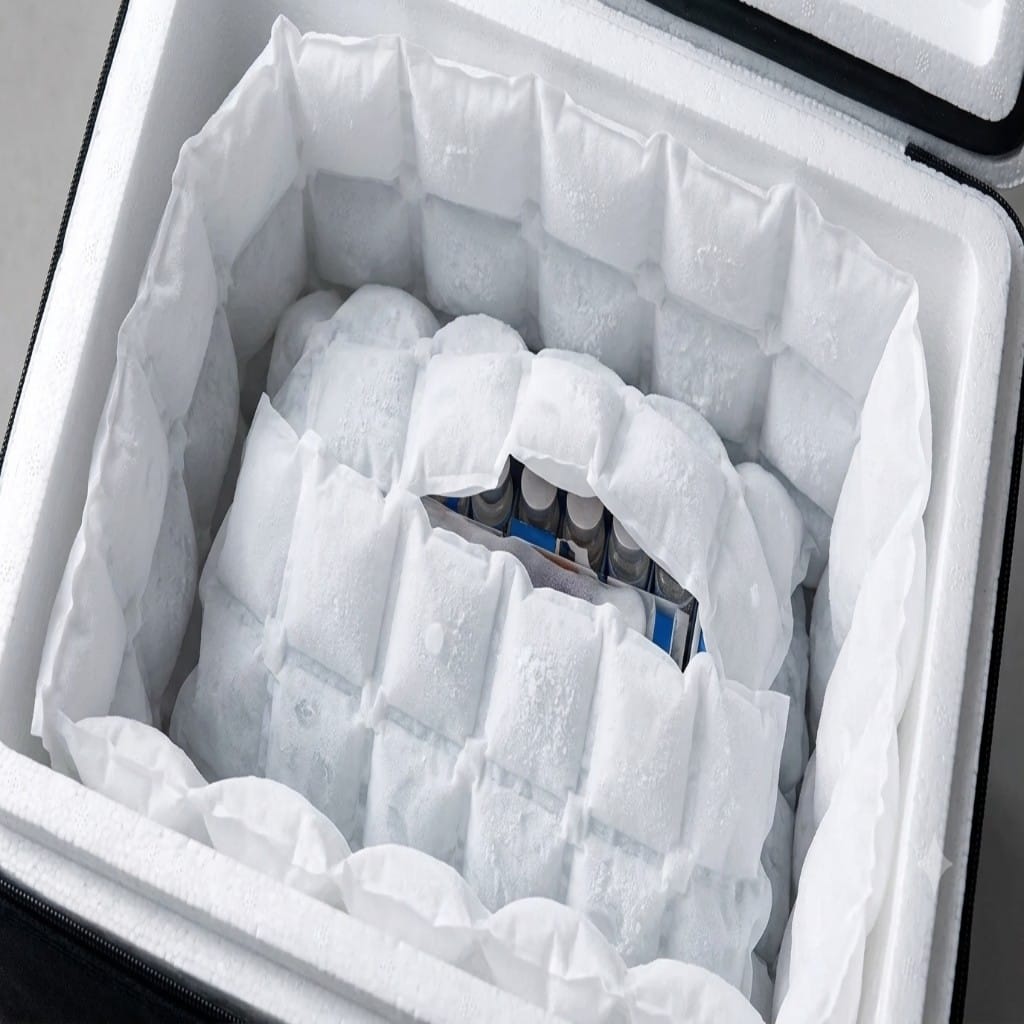
Reusable cooling solutions are temperature control products built to be frozen, used, cleaned, and used again. The category includes reusable gel ice packs, cold packs paired with insulated shippers, phase change materials, and the dry gel and production systems that let a company make its own packs in house.
The difference from single-use ice is straightforward. A disposable pack is an expense on every order. A reusable pack is an asset whose cost spreads across hundreds of freeze and thaw cycles.
7 Benefits of Reusable Cooling Solutions for Businesses
1. Lower Cost Per Shipment Over Time
The first invoice for reusable gel packs is higher than a case of disposable ice. After that, the math changes. A quality pack survives hundreds of cycles, so the cost per shipment keeps dropping every time it goes back into the freezer. Companies running steady outbound volume usually recover the initial spend on reusable cooling solutions within a few months, then keep the savings.
2. Consistent and Predictable Temperature Control
Gel formulations are engineered to hold a target range and release cold at a steady rate. That consistency is hard to get from loose ice, which melts unevenly and leaves water inside the box. With reusable cooling solutions, teams can test a pack-and-box combination once, document the result, and repeat it with confidence on every order.
3. Less Waste Going to Landfill
Single-use coolant creates packaging waste on a per-order basis. Reusable packs cut that stream sharply because the same unit keeps working. For businesses tracking waste reduction goals, this is one of the easier wins to measure and report. The EPA’s guidance on sustainable materials management treats reuse as a priority above recycling for exactly this reason.
4. Fewer Product Losses in the Cold Chain
A temperature excursion can write off an entire shipment. Reliable reusable cooling solutions reduce how often that happens, and the savings from avoided losses often outweigh the packaging savings. Perishable food, biologics, and diagnostic samples all carry a replacement cost far higher than the packs protecting them.
5. Simpler Handling and Compliance
Dry ice comes with training requirements, ventilation rules, and shipping declarations. Gel packs do not. Staff can load them without special certification, and carriers handle them as ordinary freight. For growing operations, that removes a real administrative burden.
6. Flexibility Across Shipment Sizes
Packs come in a range of weights and profiles, so the same inventory can cover a small parcel and a pallet load. Teams adjust the number of packs rather than switching to a different coolant system, which keeps purchasing simple and stock levels manageable.
7. A Sustainability Story Customers Notice
Buyers, retail partners, and procurement teams increasingly ask how suppliers manage packaging. Reusable cooling solutions give a clear, verifiable answer backed by numbers rather than claims. That matters in RFPs and vendor reviews, and it holds up when someone asks for evidence.
Which Industries Rely on Reusable Cooling Solutions?
Any business moving temperature-sensitive goods is a candidate for reusable cooling solutions, but a few sectors depend on them daily:
- Food and meal delivery: fresh produce, meat, seafood, dairy, and prepared meal kits.
- Pharmaceutical and biotech logistics: vaccines, biologics, reagents, and clinical trial materials.
- Healthcare and diagnostics: specimen transport between collection sites and labs.
- E-commerce: cosmetics, supplements, chocolate, and other heat-sensitive retail products.
- Veterinary and equine care: therapy applications and medication transport.
- Industrial and manufacturing: adhesives, coatings, and chemicals with storage limits.
Reusable Cooling Solutions vs. Single-Use Ice
| Factor | Reusable gel packs | Disposable ice or dry ice |
|---|---|---|
| Cost per shipment | Drops with every reuse | Fixed on every order |
| Temperature stability | Steady, repeatable release | Uneven, hard to model |
| Waste generated | Minimal after purchase | Per shipment |
| Handling requirements | Standard freezer storage | Training and ventilation for dry ice |
| Carrier paperwork | None | Hazmat declarations for dry ice |
| Best fit | Regular, repeatable outbound volume | One-off or ultra-low temperature shipments |
How to Choose the Right Reusable Cooling Solution
Choosing between reusable cooling solutions comes down to four variables. Work through them in order before you buy:
- Target temperature range. Frozen, refrigerated, and controlled room temperature each call for a different gel formulation.
- Transit duration. Map the longest realistic delivery window, including weekend delays, and size the coolant load to that number rather than the average.
- Box and insulation. Packs and shippers work as one system. A strong pack in a thin box still fails.
- Return and reuse plan. Decide whether packs come back from customers, stay inside a closed route, or get reused internally. This drives how many units you need in circulation.
Once those are settled, run a validation shipment with data loggers before switching your full volume over. One test costs very little and prevents an expensive surprise later.
Frequently Asked Questions
How many times can a reusable gel ice pack be used?
A well-made pack handles hundreds of freeze and thaw cycles. Practical lifespan depends on handling rather than the gel itself, so most packs are retired because of a puncture or seam failure, not loss of performance.
Are reusable cooling solutions cheaper than dry ice?
For most refrigerated and frozen shipping, yes. Dry ice has a recurring per-shipment cost plus handling and documentation overhead. It stays the better choice only when you need temperatures well below what gel can hold.
How should businesses clean and store gel packs?
Wipe the outer film with a mild detergent solution, dry it fully, then return the pack to the freezer laid flat. Inspect for swelling or seam damage during each cycle and pull anything questionable out of rotation.
Can a company produce its own gel packs?
Yes. Businesses with high volume often bring production in house using dry gel, film bags, and a filling system. It lowers unit cost further and removes the lead time of ordering finished packs.
Getting Started
Reusable cooling solutions pay off fastest for businesses with steady, repeatable shipping volume. Start by pricing your current coolant spend per shipment, then compare it against a reusable setup over twelve months. The gap is usually larger than teams expect once avoided product losses are included.
Axizz supplies gel packs, dry gel, and complete production systems for commercial cold chain use. Browse the full product range or contact our team for help sizing the right solution for your shipments.