
Cooling for athletes means lowering body or muscle temperature before, during or after exercise so you can train harder in the heat and bounce back faster. Used at the right time, cooling can delay fatigue, protect against heat illness and cut next-day soreness. Used at the wrong time, it can get in the way of the gains you are training for. This guide explains how each approach works, what the research says and how to build a simple cooling routine with products like gel ice packs, cooling vests and cold wraps.
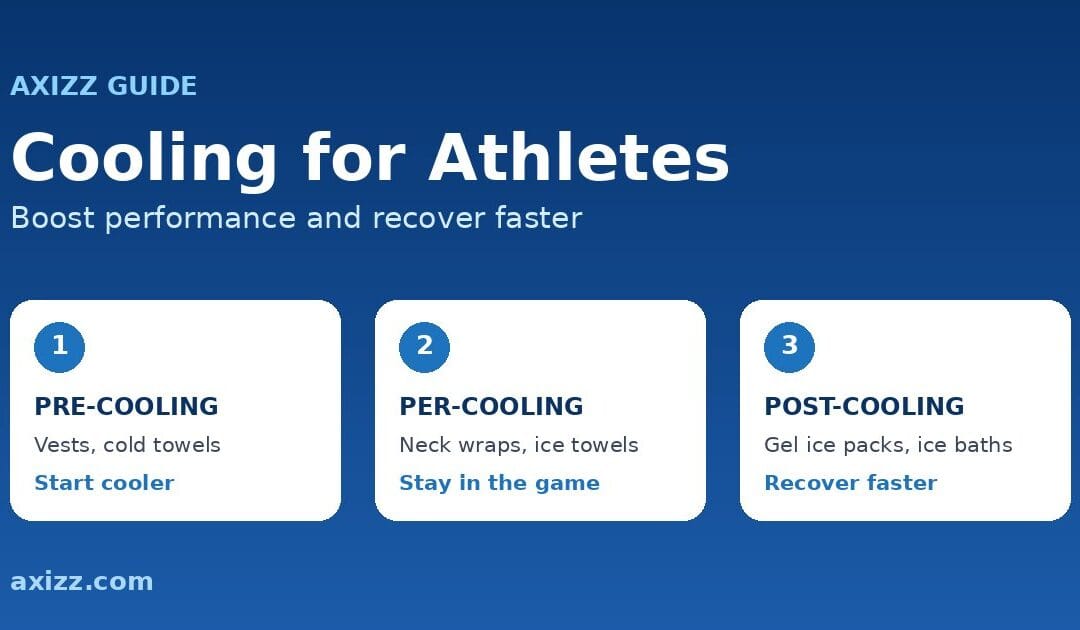
Quick answer: Cooling for athletes works in three phases. Pre-cooling (cooling vests, cold towels, cold drinks) lowers core temperature before you start, which helps endurance in hot weather. Per-cooling (neck wraps, cold water, ice towels) keeps you cooler while you play. Post-cooling (gel ice packs, cold water immersion, cooling blankets) reduces soreness and swelling after hard sessions. Most people get the best results from 10 to 20 minutes of targeted cooling, always with a cloth barrier between ice and skin.
Why Heat Holds Athletes Back
Your muscles turn most of the energy they burn into heat. During a long run or a full football match, core temperature can climb past 39°C (102°F). To shed that heat, your body sends more blood to the skin and sweats heavily. That leaves less blood for working muscles and speeds up dehydration.
The result is familiar to anyone who has trained in summer: your heart rate drifts up, the pace feels harder and you slow down earlier than you would on a cool day. In more serious cases, heat exhaustion and heat stroke become real risks. That is why cooling for athletes matters. Keeping body temperature in check is one of the simplest ways to protect both performance and safety. We cover the safety side in more detail in our guide to cooling solutions for outdoor sports.
The 3 Phases of Cooling for Athletes
Sports scientists group cooling for athletes by timing. Each phase has a different goal, so it helps to know which one you need before reaching for a product.
| Phase | When | Main goal | Common tools |
|---|---|---|---|
| Pre-cooling | 15 to 60 minutes before exercise | Start with a lower core temperature | Cooling vests, cold towels, ice slushies |
| Per-cooling | During exercise and breaks | Slow the rise in body heat | Neck wraps, cold water, ice towels |
| Post-cooling | Right after exercise | Reduce soreness, swelling and heat load | Gel ice packs, ice baths, cooling blankets |
1. Pre-Cooling: Start Cooler, Last Longer
Pre-cooling gives your body extra room to store heat before it hits its limit. A meta-analytical review of pre-cooling studies found that it improves performance in hot conditions, with the clearest benefit in endurance events such as running and cycling. Short sprints benefit much less.
Practical options include wearing a cooling vest during your warm-up, draping a cold towel over your neck and shoulders, or drinking an ice slushy 30 minutes before the start. A vest is especially useful because it cools the torso without chilling the leg muscles you need warm. Learn more about how cooling accessories improve comfort in high temperatures.
2. Per-Cooling: Stay in the Game
Cooling during exercise is often overlooked, yet it can be just as helpful. Research on cooling placements before and during exercise shows that cooling the neck, face and torso can improve performance in the heat. These areas are sensitive to temperature, so cooling them also makes the effort feel easier.
Tennis players use ice towels at changeovers. Football and soccer teams hand out cold water and neck wraps at half-time. Cyclists pour water over their heads and wear cooling bandanas. The key is to cool often and in small doses during natural breaks.
3. Post-Cooling: Recover Faster
After hard training, cold therapy narrows blood vessels, slows nerve signals and lowers tissue temperature. That combination reduces swelling and dulls pain. An updated meta-analysis on cold-water immersion found it reduces muscle soreness after exercise, with water around 11 to 15°C for 10 to 15 minutes being a common effective range.
You do not need a full ice bath to benefit. For a sore calf, knee or shoulder, a flexible gel ice pack is easier to use and molds to the joint. For whole-body recovery, a cooling blanket for recovery covers a larger area. For the science of muscle repair, see our article on cold therapy for muscle recovery.
Key Benefits of Cooling for Athletes
- Better endurance in the heat: a lower starting core temperature delays the point where heat forces you to slow down.
- Lower perceived effort: cooling the neck and face makes the same pace feel easier.
- Less muscle soreness: post-exercise cold therapy reduces delayed onset muscle soreness (DOMS).
- Swelling and pain control: ice packs help manage minor strains, bumps and bruises. See how cold therapy supports recovery after sports injuries.
- Reduced heat illness risk: active cooling lowers the chance of heat exhaustion during summer games and tournaments.
- Quicker turnaround: athletes playing several matches in a few days can feel fresher for the next one.
When Cooling Can Work Against You
Cooling for athletes is not always the right call. Research suggests that regular ice baths straight after strength training may blunt some of the muscle growth and strength gains you are working for, because inflammation is part of the adaptation signal. If building muscle is the goal of a session, skip the ice bath that day or wait a few hours.
Cooling also makes sense only when you need it. In mild weather, pre-cooling adds little. Before explosive efforts like sprints or jumps, avoid chilling the legs, since cold muscles produce less power. Save heavy cooling for hot days, endurance events, tournaments and heavy training blocks where recovery speed matters most.
How to Build a Simple Cooling Routine
- Check the conditions. Use pre-cooling and per-cooling when it is hot, humid or you are training for more than 45 minutes.
- Cool the torso before you start. Wear a cooling vest or use cold towels during your warm-up, and drink cold fluids.
- Cool the neck during breaks. Keep neck wraps and ice towels in an insulated bag on the sideline.
- Target sore areas after training. Apply a gel ice pack for 10 to 20 minutes, wrapped in a thin cloth.
- Rehydrate and rest. Cooling works best alongside fluids, food and sleep, not instead of them.
Safety Tips for Cold Therapy
- Never put ice or a frozen pack directly on bare skin. Use a cloth or sleeve.
- Limit each session to about 20 minutes, then let the skin warm up before repeating.
- Stop if the skin turns white, feels numb or starts to burn.
- People with circulation problems, Raynaud’s or reduced skin sensation should check with a doctor first.
- For serious injuries or signs of heat stroke such as confusion or collapse, get medical help right away.
Choosing the Right Cooling Products
Good cooling for athletes does not need to be expensive. Reusable gel ice packs cover most recovery needs and last for years. A cooling vest is worth it if you train or compete in hot weather often. Neck wraps and cooling bandanas are light enough to carry to every session. Browse the full range of Axizz cooling and cold therapy products to put together a kit that fits your sport.
Frequently Asked Questions
Does cooling improve athletic performance?
Yes, mainly in hot conditions. Cooling for athletes before and during exercise helps endurance performance in the heat by delaying the rise in core temperature. The effect is smaller in cool weather and for short, explosive efforts.
How long should athletes use an ice pack after training?
10 to 20 minutes per session is enough for most people. Wrap the pack in a thin cloth, remove it once the area feels numb and wait at least an hour before reapplying.
Is an ice bath better than a gel ice pack?
An ice bath cools large muscle groups at once, so it suits whole-body recovery after long events. A gel ice pack is better for targeting one sore joint or muscle, and it is easier to use at home or on the road.
Do cooling vests really work for sports?
Cooling vests are one of the most practical pre-cooling tools. Worn during a warm-up, they lower torso temperature without chilling the leg muscles, which helps athletes start hot-weather events cooler.
Can cooling slow muscle growth?
Regular ice baths right after strength training may reduce some long-term strength and muscle gains. If muscle growth is your goal, avoid cold immersion straight after lifting and save it for competition periods or endurance sessions.
Final Thoughts
Cooling for athletes is simple, affordable and backed by solid research when used with purpose. Cool down before and during hot-weather sessions to protect performance, and use cold therapy afterwards to reduce soreness and get ready for the next session. Match the method to your goal, follow basic safety rules and let cooling become a regular part of your training. For a wider look at recovery, read our guide on cold therapy for recovery.
This article is for general information only and is not medical advice. Talk to a healthcare professional about injuries or health conditions.