
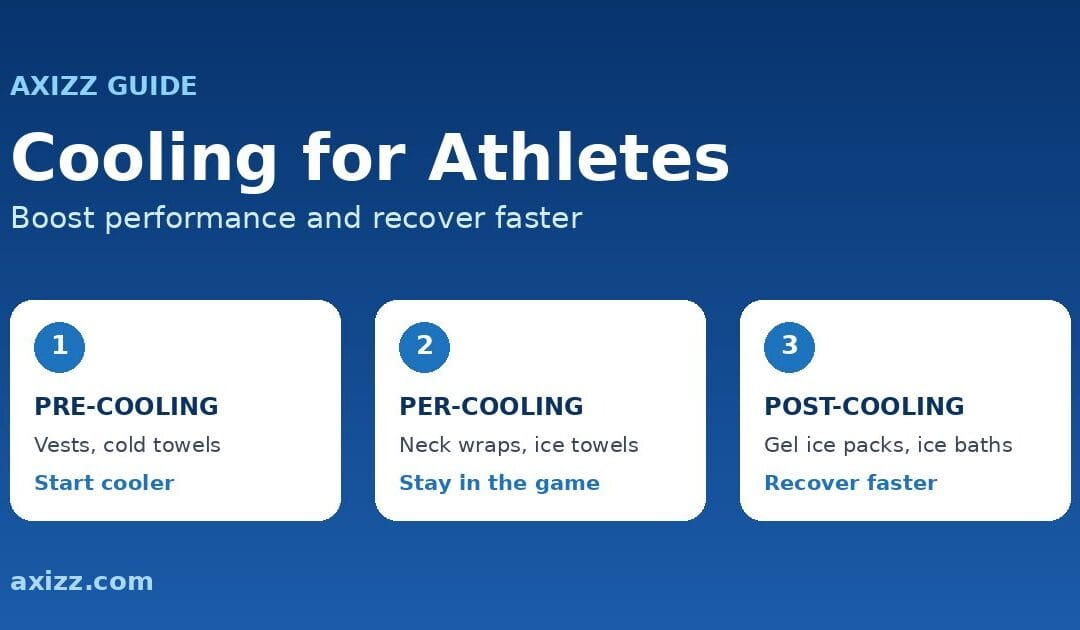
Reusable cooling packs for sports recovery are a staple for athletes of all levels. After a hard session or match, a cool pack can ease soreness, calm minor swelling and make it easier to get ready for the next workout. Axizz makes reusable gel packs for these needs.
Key Takeaways
- Cooling helps manage soreness and minor swelling.
- Short sessions with a barrier are safest.
- Recovery also needs sleep, food, water and rest.
- Pain that is sharp or lasting needs professional advice.
How Reusable Cooling Packs for Sports Recovery Help
Intense training causes small amounts of muscle stress and inflammation. Cooling narrows blood vessels and dulls pain signals, which can make sore areas feel better. Reusable cooling packs for sports recovery are portable, affordable and easy to use at home, in the gym or at the field.
5 Proven Tips for Using Cooling Packs After Exercise
1. Use them soon after activity
Apply cooling after the session ends, once you have cooled down and stretched lightly.
2. Target sore areas
Place packs on the sore muscle or joint, such as quads, calves, shoulders or knees.
3. Keep time limited
Ten to fifteen minutes with a cloth barrier is common. Longer sessions do not add benefit.
4. Support with basics
Hydration, protein, carbohydrates and sleep matter more than any single recovery tool.
5. Track what works
Note how you feel and perform after different recovery routines and adjust accordingly.
Practical Tips
- Keep packs in the gym bag freezer or cooler.
- Use flexible packs that mold around joints.
- Never apply directly to bare skin.
- Do not use cold on numb or damaged skin.
- Warm up properly before the next session.
Building Reusable Cooling Packs for Sports Recovery Into Your Week
Plan recovery as carefully as training. Use reusable cooling packs for sports recovery after your hardest sessions, not necessarily every day. Pair reusable cooling packs for sports recovery with mobility work and rest days, and listen to your body if soreness lingers.
For Teams and Clubs
Coaches can stock a cooler with packs at training and matches so players can start recovery quickly. Teach athletes safe time limits and when to ask medical staff for help. Rotating packs between a freezer and a cooler ensures every player has access.
When Cooling Is Not Enough
Seek professional help for severe pain, swelling that grows, inability to bear weight, numbness or pain that does not improve in a few days. Cooling is a comfort aid, not a treatment for serious injury.
Hydration and Fuel Still Matter
No pack replaces the basics: drink water, eat enough protein and carbohydrates, sleep seven to nine hours and schedule rest days. Think of cooling as a small booster on top of a strong foundation. If your performance or recovery stalls, review these basics before adding more tools.
Recovery for Different Sports
Runners often target quads and calves, swimmers focus on shoulders, and team-sport players need knees and ankles. Choose pack shapes that suit your sport, and adjust sessions to match training load and goals.
Recovery for Different Sports
Runners often target quads and calves, swimmers focus on shoulders, and team-sport players need knees and ankles. Choose pack shapes that suit your sport, and adjust sessions to match training load and goals.
Related Reading
how cold therapy helps speed up recovery, cold therapy after physical activity, cold therapy for injury prevention and recovery. For trusted background, see NHS advice on sprains and strains.
FAQ
When should I use a cooling pack after exercise?
Soon after training, for about 10 to 15 minutes with a barrier.
Do cooling packs prevent soreness?
They can ease it for a while but do not remove the need for rest and good training habits.
Conclusion
Reusable cooling packs for sports recovery are simple, affordable and effective for comfort when used safely. This article is general information, not medical advice.