
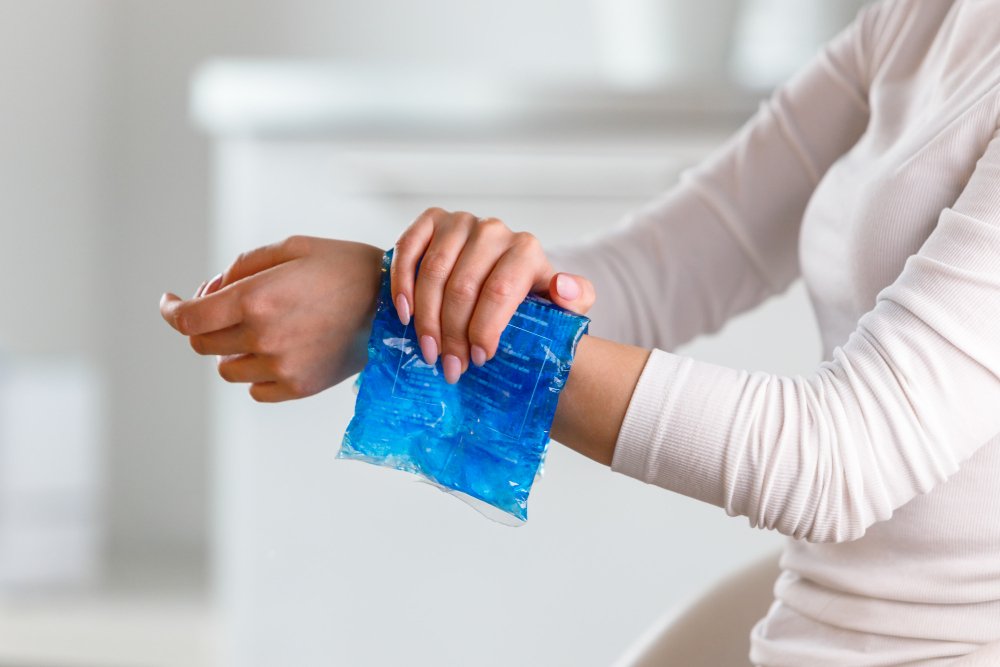
Medical temperature control products are the gel packs, insulated shippers, cold compresses, and heat packs that keep medicines, lab samples, and patients at the right temperature. Hospitals, clinics, labs, pharmacies, and home care teams rely on them every day to protect treatment quality and patient safety.
Some medical temperature control products protect things you cannot see failing. A vaccine that got too warm looks exactly like one that did not. Others work directly on the patient, easing pain and swelling after an injury or surgery. This guide covers 7 practical ways these products support healthcare, how to pick the right one, and the mistakes worth avoiding.
Key Takeaways
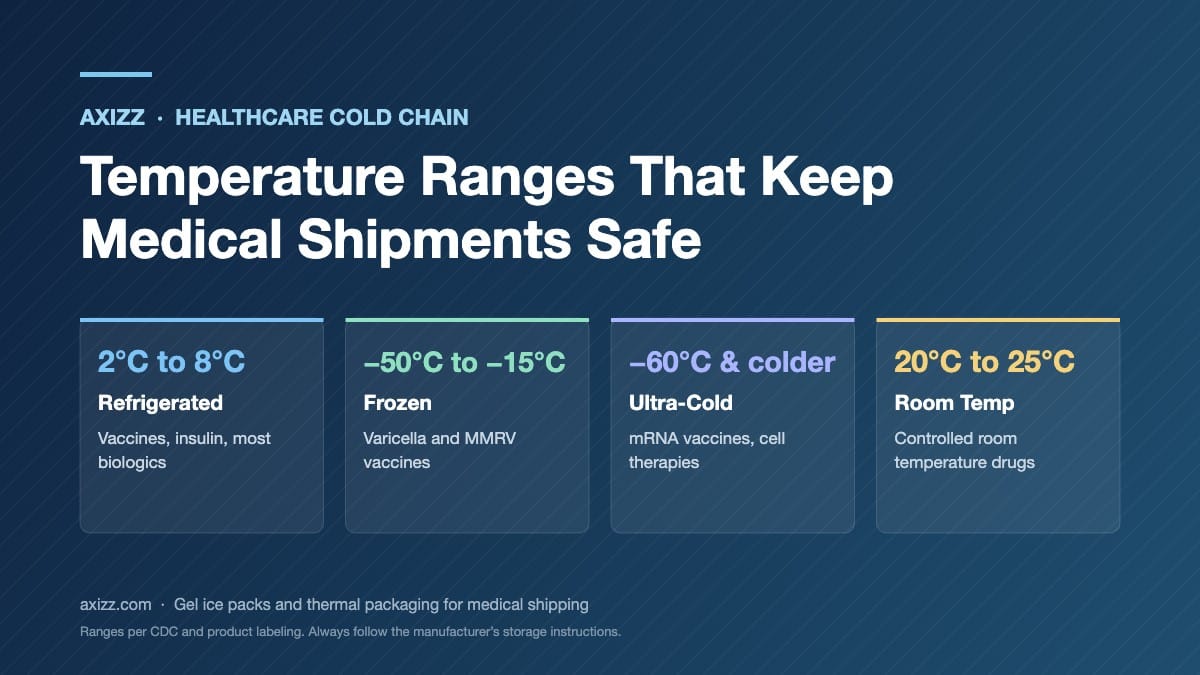
- Most refrigerated vaccines must stay between 2°C and 8°C (36°F to 46°F), and damage from heat or freezing is permanent.
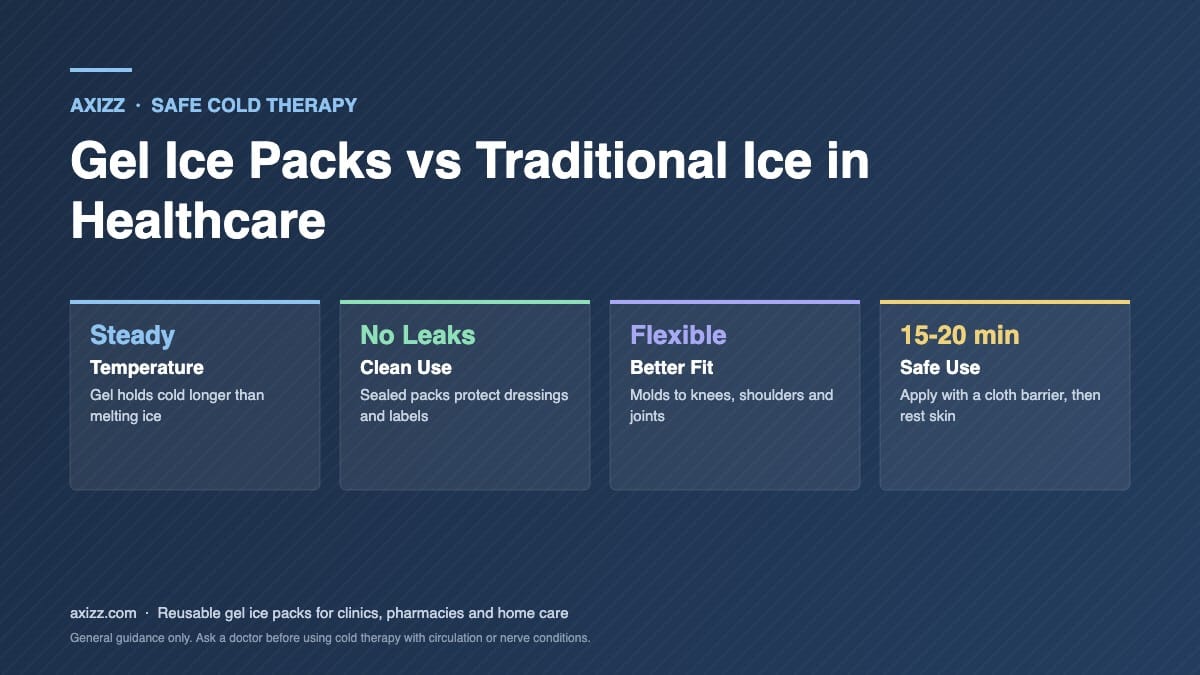
- Gel ice packs hold a steady temperature longer than loose ice and do not leak water onto samples or skin.
- Cold therapy limits swelling after injury, while reusable heat packs relieve stiffness and chronic muscle pain.
- The right product depends on the temperature range, how long it must hold, and whether it touches a patient.
What Are Medical Temperature Control Products?
Medical temperature control products are any items used to keep a medical product or a part of the body inside a target temperature range. They fall into two broad groups.
Product protection: gel ice packs, phase change materials, insulated shipping boxes, and temperature data loggers. These keep vaccines, insulin, biologics, blood products, and specimens stable during storage and transport. If you want the bigger picture of how this works across the supply chain, see our guide to temperature-control solutions in healthcare.
Patient care: cold compresses, ice blankets, hot and cold therapy wraps, and reusable hot gel packs. These are applied to the body to manage pain, swelling, and muscle tension.
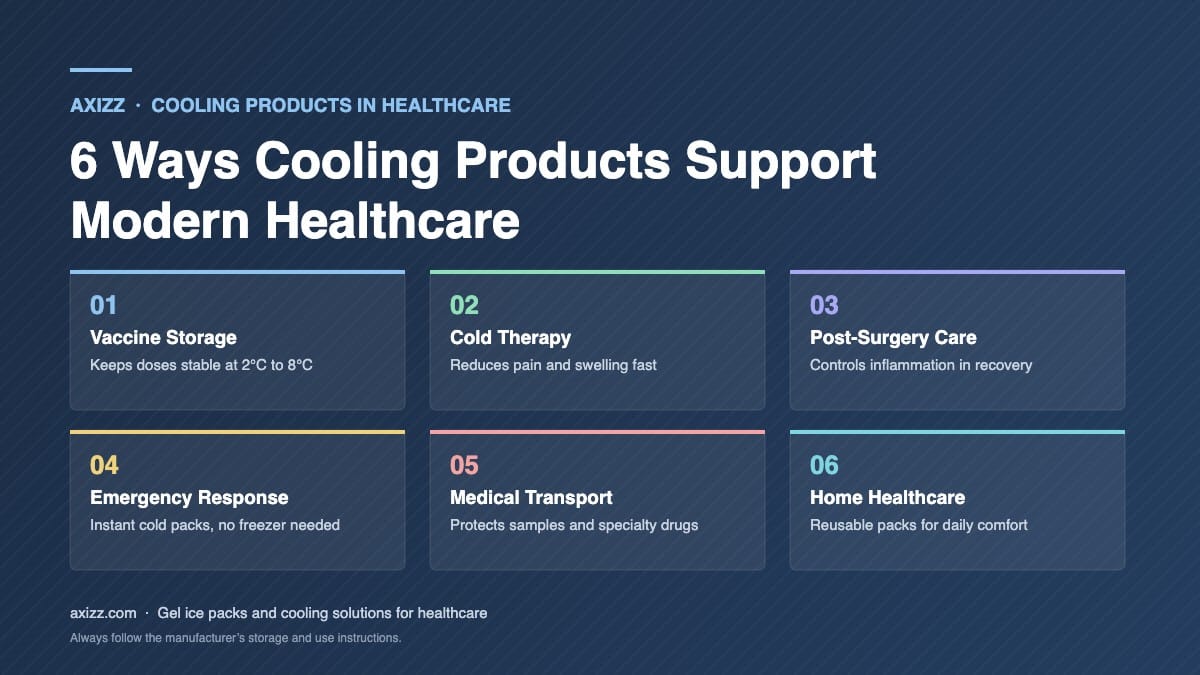
7 Ways Medical Temperature Control Products Support Healthcare
1. Protecting Vaccines and Medications in Storage
Vaccines, insulin, and many biologic drugs are sensitive to both heat and freezing. According to the CDC vaccine storage and handling guidance, most refrigerated vaccines belong between 2°C and 8°C. Medical temperature control products such as gel packs and conditioned coolant help clinics hold that range during power outages, fridge defrosting, and off site vaccination clinics.
2. Keeping Lab Specimens Stable in Transit
Blood, urine, tissue, and swab samples often travel from a clinic to a reference lab. If a sample warms up or freezes by mistake, the result can be wrong and the patient may need a repeat test. Pre-conditioned gel packs inside an insulated shipper keep specimens stable for the full trip. Our article on cooling products for medical transport goes deeper on packaging setups.
3. Reducing Pain and Swelling After Injury or Surgery
Cold therapy narrows blood vessels, slows nerve signals, and limits swelling. That is why orthopedic, sports medicine, and post surgery teams send patients home with cold packs as part of their medical temperature control products kit. Flexible options like the THERAPRO Cold Flexible Compress wrap around knees, shoulders, and ankles instead of sitting flat. For a closer look at the benefits, read cold therapy for recovery.
4. Relieving Stiffness With Heat Therapy
Not every patient needs cold. Heat relaxes tight muscles, improves blood flow, and eases chronic back, neck, and joint stiffness. Reusable hot gel packs give clinics and physical therapists a clean, repeatable heat source without electric heating pads or cords.
5. Supporting Emergency and First Response
Paramedics, school nurses, and athletic trainers need medical temperature control products that are ready right away. Instant and pre-frozen cold packs treat sprains, burns, and heat illness in the field. They also keep certain medications cool in ambulances during hot weather. See how cooling products support medical emergency services.
6. Enabling Safe Home Healthcare
More care now happens at home. Patients receive insulin, fertility drugs, and specialty medications by mail, and many recover from surgery on the couch instead of in a ward. Reusable medical temperature control products keep deliveries safe on the doorstep and give patients a simple way to follow their cold therapy plan.
7. Keeping Pharmacy and Clinic Deliveries Compliant
Pharmacies, distributors, and hospital networks move temperature sensitive stock between sites every day. A temperature excursion can mean discarded product, lost money, and a compliance report. Validated medical temperature control products, like gel packs and insulated boxes, reduce that risk. The WHO immunization supply chain program treats reliable cold chain equipment as a core part of safe vaccine delivery. Learn more in our post on cooling products in pharmaceutical distribution.
How to Choose the Right Medical Temperature Control Products
Before you buy medical temperature control products, start with three questions: what temperature do you need, how long must it hold, and will the product touch a patient? This quick table matches common needs to the right product.
| Healthcare need | Best product | Typical target |
|---|---|---|
| Refrigerated vaccines and insulin | Conditioned gel ice packs + insulated shipper | 2°C to 8°C (36°F to 46°F) |
| Lab specimen transport | Gel packs or phase change materials | Refrigerated or room temperature, per lab rules |
| Swelling after injury or surgery | Flexible cold compress or ice blanket | 15 to 20 minutes per session |
| Muscle stiffness and chronic pain | Reusable hot gel pack | Warm, never hot enough to burn |
| Field and emergency care | Pre-frozen or instant cold packs | Ready to use in seconds |
For most facilities, reusable gel packs are the most cost effective medical temperature control products. They freeze evenly, reuse hundreds of times, and never leave water on labels or dressings. Here is a full comparison of gel ice packs vs traditional ice. You can browse our range of gel ice packs and hot and cold therapy products to match your setting.

Cold vs Heat: Which Medical Temperature Control Products Should Patients Use?
The short answer: use cold for new injuries and swelling, and use heat for stiffness and ongoing muscle pain. Getting this right matters, because the wrong choice can slow healing.
Cold therapy is best in the first 24 to 72 hours after a sprain, strain, bruise, or surgery. It narrows blood vessels, which limits swelling and dulls pain. Cold compresses, gel ice packs, and ice blankets all fit here.
Heat therapy is best for tight muscles, chronic low back pain, arthritis stiffness, and tension. Warmth opens blood vessels, relaxes muscle fibers, and improves range of motion before stretching or physical therapy.
Many clinics keep both on hand. Dual use hot and cold packs are popular because one product covers both needs, and patients only have to learn one routine.
How Long Do Medical Gel Packs Stay Cold?
A standard frozen gel pack used on the body stays therapeutically cold for about 20 to 30 minutes, which matches a normal cold therapy session. For shipping, the answer depends on the whole package, not just the pack.
A well sized set of conditioned gel packs inside a quality insulated shipper can commonly hold a refrigerated range for 24 to 72 hours. Four factors decide the real number:
- Pack mass: more coolant means more cold stored.
- Insulation: thicker foam or vacuum panels slow heat gain.
- Payload size: a small load in a large box warms faster.
- Outside temperature: summer routes need more coolant than winter ones.
Any setup used for vaccines or clinical samples should be tested and documented before it goes into daily use. That is how you prove your medical temperature control products actually perform on your real routes.
Who Uses Medical Temperature Control Products?
The list is longer than most people expect:
- Hospitals for pharmacy storage, post-op recovery, and patient comfort.
- Clinics and urgent care for vaccines, injury care, and sample pickup.
- Diagnostic labs for incoming and outgoing specimens.
- Pharmacies and distributors for cold chain deliveries.
- Physical therapists and chiropractors for hot and cold therapy.
- EMS, schools, and sports teams for fast first aid.
- Home care patients for mailed medications and recovery at home.
Safe Use Tips for Cold and Heat Therapy
- Always place a thin cloth between the pack and the skin.
- Limit sessions to about 15 to 20 minutes, then let the skin recover.
- Use cold in the first 24 to 72 hours after an injury, and heat for stiffness later on.
- Check skin often in patients with diabetes, poor circulation, or reduced feeling.
- Follow the care plan from the treating clinician after surgery.
Common Mistakes to Avoid
Using loose ice for shipping. Melting ice soaks labels and packaging and creates uneven cold spots.
Putting frozen packs directly on vaccines. Direct contact can freeze a product that should only be chilled. Use a buffer layer.
Skipping monitoring. Without a thermometer or data logger, you cannot prove a shipment stayed in range.
Reusing damaged packs. A torn or leaking gel pack is an infection control risk. Replace it. For more on keeping supplies organized across a facility, read why healthcare facilities depend on reliable cooling products and how they improve efficiency in healthcare logistics.
Final Thoughts
Medical temperature control products do quiet but critical work. They keep vaccines effective, samples accurate, deliveries compliant, and patients more comfortable while they heal. Picking the right medical temperature control products for each job protects both patient outcomes and your budget.
Axizz makes reusable gel ice packs, cold compresses, and hot gel packs built for healthcare, clinics, and home care. Shop the full range or contact our team for bulk and custom orders.
Frequently Asked Questions
What are medical temperature control products?
They are products that keep medicines, specimens, or a patient’s body tissue at a specific temperature. The main types are gel ice packs, insulated shippers, phase change materials, cold compresses, reusable hot gel packs, and temperature data loggers.
What temperature should vaccines be kept at?
The CDC recommends storing most refrigerated vaccines between 2°C and 8°C (36°F to 46°F). Frozen vaccines are kept between -50°C and -15°C (-58°F to 5°F). Always follow the manufacturer’s label for each product.
How long should a cold pack stay on an injury?
Most guidance suggests 15 to 20 minutes at a time, with a cloth barrier between the pack and the skin. Let the skin return to normal temperature before the next session, and follow your clinician’s instructions after surgery.
Are reusable gel packs safe for hospitals and clinics?
Yes, when they are sealed, leak free, and cleaned between uses. Reusable gel packs are common for cold therapy, specimen transport, and pharmacy deliveries because they hold temperature longer than loose ice and do not leave water behind.
When should you use heat instead of cold?
Cold works best in the first 24 to 72 hours after an injury to limit swelling. Heat is better for muscle stiffness, chronic aches, and tension, because it relaxes tissue and improves blood flow. Do not use heat on a fresh injury or an open wound.