
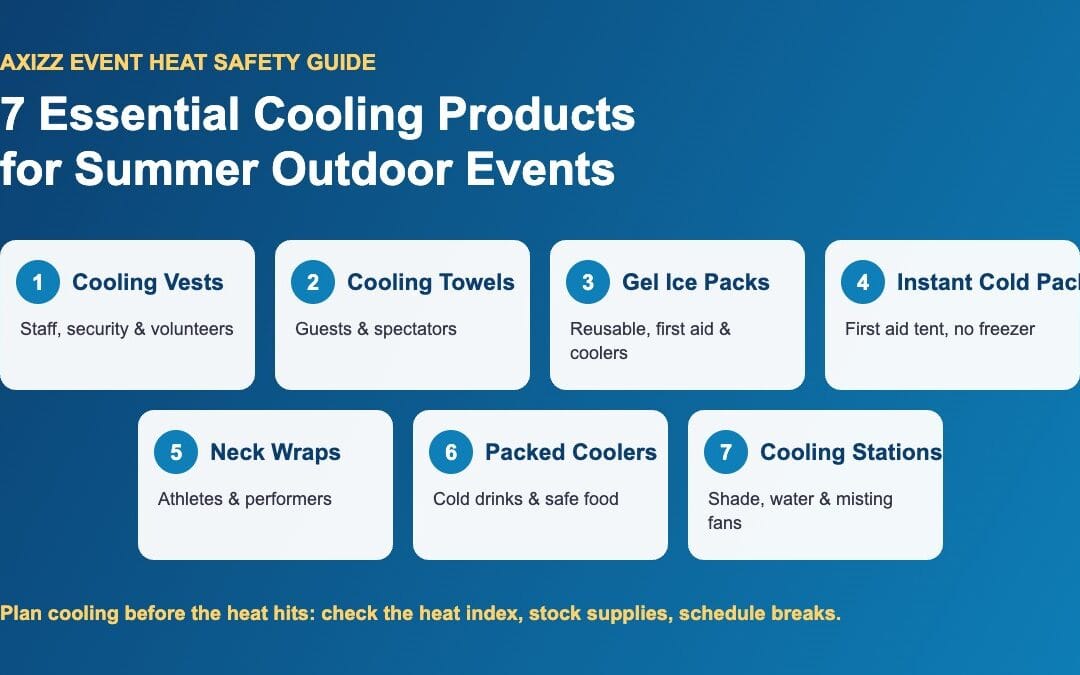
Summer outdoor events bring people together for festivals, concerts, sports tournaments, county fairs and company picnics. They also bring one serious risk: heat. When guests, staff and athletes spend hours in direct sun, cooling products stop being a nice extra and become part of basic event safety. This guide explains why, which products to stock, and how to build a simple cooling plan that actually works on event day.
Quick answer: Cooling products are essential for summer outdoor events because they help lower body temperature, reduce the risk of heat exhaustion and heat stroke, and keep attendees, staff and athletes comfortable for longer. The most useful items are cooling vests, cooling towels, reusable gel ice packs, instant cold packs, neck wraps, well-packed coolers and shaded cooling stations.
Key Takeaways
- Heat is the top safety risk at most summer outdoor events, and it affects guests, workers and athletes differently.
- Cooling products work best as part of a plan that also includes water, shade and scheduled breaks.
- Reusable gel ice packs are the most flexible item because they cover first aid, coolers and personal cooling.
- Staff and volunteers often face more heat stress than guests because they work physically for longer shifts.
- Branded cooling products give sponsors useful visibility while keeping people safe.
Why Heat Is the Biggest Risk at Summer Outdoor Events
Most people at an outdoor event are not thinking about heat until they already feel sick. They stand in lines, sit on bleachers, dance near stages and walk long distances across open lots. Add alcohol, caffeine or intense activity and the body loses its ability to cool itself fast enough.
The CDC’s heat and health guidance notes that heat-related illness is preventable, but it can become life threatening quickly when the body cannot cool down. For event organizers, that means heat planning belongs in the same category as crowd control and first aid.
Warning Signs Every Event Team Should Know
Heat exhaustion often shows up as heavy sweating, cold or clammy skin, a fast and weak pulse, nausea, muscle cramps, dizziness, headache or fainting. Move the person to shade, loosen clothing, apply cool wet cloths or cold packs and give sips of water.
Heat stroke is a medical emergency. Signs include a very high body temperature, hot red skin, a fast strong pulse, confusion or loss of consciousness. Call emergency services right away and cool the person while you wait.
Who Needs Cooling Products at an Outdoor Event?
Attendees and Spectators
Guests usually spend several hours outdoors with limited shade. Cooling towels, bandanas and cold drinks help them stay comfortable, which also keeps them at your event longer and makes them more likely to come back next year.
Staff, Security and Volunteers
The people running the event often have the hardest job. They set up tents, direct parking, manage gates and handle logistics in full sun, sometimes for 10 hours or more. OSHA’s heat exposure guidance recommends water, rest and shade for outdoor workers, and cooling vests make those breaks far more effective. We cover this in more detail in our post on how cooling vests improve workplace safety.
Athletes and Performers
Runners, cyclists, tournament players and stage performers generate a lot of internal heat. Pre-cooling before activity and cooling right after it helps with comfort and recovery. Our guide to cooling solutions for outdoor sports and recreation explains how teams use them.
Vendors and Food Stalls
Food and drink vendors need cooling for two reasons: their own comfort inside hot booths, and keeping perishable food at safe temperatures throughout the day.
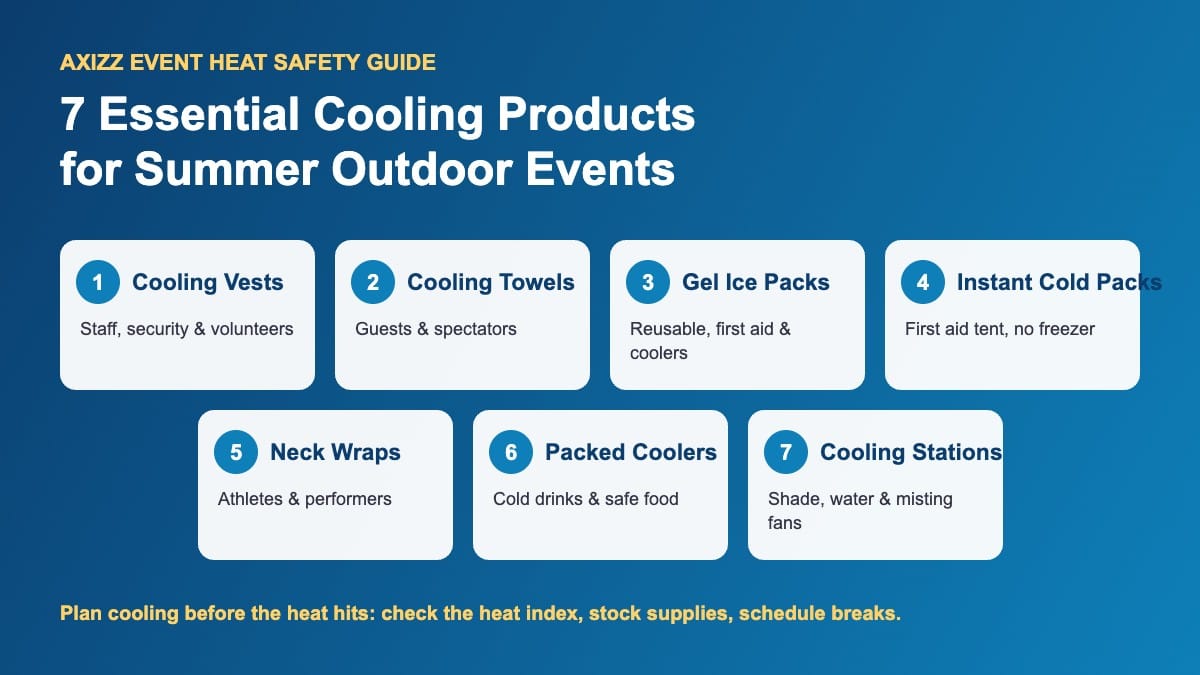
7 Essential Cooling Products for Summer Outdoor Events
1. Cooling Vests
Cooling vests hold gel or phase change packs close to the torso, which lowers core temperature more effectively than cooling the arms or head alone. They are ideal for security teams, parking staff and anyone working long outdoor shifts.
2. Cooling Towels and Bandanas
Soak, wring and snap. Cooling towels use evaporation to feel cool on the skin and are cheap enough to hand out to guests or sell at merch tables.
3. Reusable Gel Ice Packs
Gel ice packs are the most versatile item on this list. They keep coolers cold, work as cold compresses in the first aid tent and can be placed on the neck or wrists for quick relief. They also stay cold longer than loose ice and do not leave a puddle behind. See why gel ice packs are better than traditional ice for a full comparison.
4. Instant Cold Packs
Instant cold packs activate with a squeeze and need no freezer, which makes them perfect for roaming medics, remote parts of a venue and backup first aid kits.
5. Cooling Neck Wraps
The neck has major blood vessels close to the skin, so cooling it helps people feel relief fast. Neck wraps are popular with athletes, performers and anyone standing in the sun for long periods.
6. Well-Packed Coolers
A cooler packed with frozen gel packs keeps water, sports drinks and food cold through a long day. Pack gel packs on the bottom and on top, keep the cooler in shade and open it as little as possible.
7. Cooling Stations
A cooling station combines shade, water, fans or misting systems and a supply of cold packs in one clearly marked spot. It gives guests a place to recover and gives your medical team a central point to treat mild cases before they become serious.
Cooling Product Comparison for Event Planners
| Product | Best for | Needs a freezer? | Reusable? |
|---|---|---|---|
| Cooling vests | Staff, security, volunteers | Yes (for gel inserts) | Yes |
| Cooling towels | Guests and spectators | No | Yes |
| Gel ice packs | First aid, coolers, personal cooling | Yes | Yes |
| Instant cold packs | Roaming medics, backup kits | No | No |
| Neck wraps | Athletes and performers | Depends on type | Yes |
| Packed coolers | Drinks, food, vendors | Yes (for packs) | Yes |
| Cooling stations | Everyone on site | Yes (for supplies) | Yes |
How to Build a Cooling Plan for Summer Outdoor Events
- Check the forecast and heat index. Use the National Weather Service heat safety resources a week out and again the day before.
- Map shade and cooling stations. Place them near stages, entrances, sports fields and long lines.
- Stock the first aid tent. Include gel ice packs, instant cold packs, cooling towels and plenty of water.
- Pre-freeze gel packs overnight. Freeze them flat and keep several rotating sets in insulated coolers.
- Schedule staff breaks. Rotate workers into shade and give outdoor crews cooling vests.
- Tell guests the plan. Share cooling station locations on signs, maps and your event app.
Branded Cooling Products for Sponsors
Many sponsors now add their logo to cooling towels, fans and ice packs instead of standard giveaways. People actually use these items during the event and often keep them afterward, so the brand gets seen long after the gates close. It is a simple way to combine marketing with real value for guests.
Frequently Asked Questions
Why are cooling products important for summer outdoor events?
They help people lower their body temperature, which reduces the risk of heat exhaustion and heat stroke. They also keep guests comfortable for longer and help staff and volunteers work safely through long shifts in the sun.
What cooling products should I have at an outdoor event?
A solid kit includes cooling vests for staff, cooling towels for guests, reusable gel ice packs, instant cold packs for first aid, neck wraps for athletes, coolers packed with gel packs and at least one shaded cooling station with water.
Are gel ice packs better than regular ice for events?
For most events, yes. Gel ice packs stay cold longer, do not melt into water, can be refrozen and reused, and double as cold compresses in the first aid tent.
How do I keep gel ice packs cold during an all-day event?
Freeze them flat overnight, store them in an insulated cooler kept out of direct sun, open the cooler as little as possible and rotate between two or more sets if you have a freezer or refrigerated truck on site.
What are the signs of heat exhaustion at an event?
Common signs are heavy sweating, cold or clammy skin, a fast weak pulse, nausea, cramps, dizziness and headache. Move the person to shade, cool them with wet cloths or cold packs and give water. If they become confused or lose consciousness, call emergency services.
Can cooling products be branded for sponsors?
Yes. Cooling towels, fans and ice packs are popular branded giveaways because people use them during the event and keep them afterward, which gives sponsors lasting visibility.
Final Thoughts
Heat is predictable, and so is the damage it can do when nobody plans for it. The right cooling products, set up in the right places, keep summer outdoor events safe, comfortable and memorable for the right reasons. Start with gel ice packs, cooling vests and a well-stocked cooling station, then build out from there.
Get Your Event Ready With Axizz
Axizz supplies reusable gel ice packs, hot and cold therapy products and cooling accessories for organizers, teams and businesses. You can browse our cooling products or read more about cooling accessories for high-temperature environments. For bulk or custom orders, contact our team.