
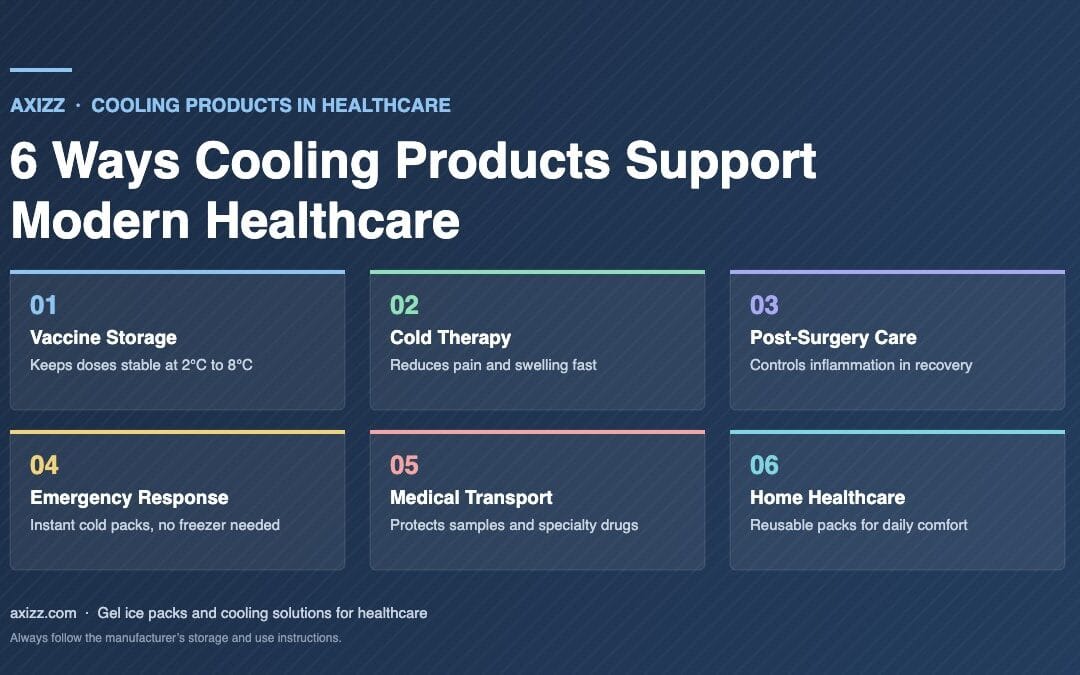
Cooling products in healthcare do three critical jobs: they keep vaccines and medicines within safe temperature ranges, they help patients manage pain and swelling, and they give emergency teams a fast way to treat injuries in the field. As hospitals, clinics, pharmacies, and home care providers handle more temperature-sensitive treatments than ever, these tools have moved from a nice extra to an essential part of daily patient care.
In this guide, we break down what counts as a healthcare cooling product, where each one is used, how gel ice packs compare to regular ice, and what to look for when you buy them for a medical setting.
Key Takeaways
- Most vaccines, insulin, and biologics must stay between 2°C and 8°C (36°F to 46°F) from the manufacturer to the patient.
- Cold therapy reduces swelling, numbs pain, and supports recovery after injury or surgery.
- Reusable gel ice packs hold a steady temperature longer than ice and do not leak or drip.
- Choosing the right product depends on the temperature range, hold time, and whether it touches skin or cargo.
What Are Cooling Products in Healthcare?
Cooling products in healthcare are any tools used to lower or hold temperature for medical purposes. They fall into two broad groups.
Patient-facing products touch the body. These include reusable gel ice packs, instant cold packs, cold compresses, cooling wraps, cooling blankets, and cooling vests. Their goal is therapy and comfort.
Product-facing solutions protect medicines and samples. These include gel refrigerant packs, insulated shippers, temperature-controlled packaging, and medical-grade coolers. Their goal is to keep sensitive items stable during storage and transport.
Why Cooling Products in Healthcare Matter More Than Ever
Several trends are pushing demand for reliable cooling across the medical industry:
- More temperature-sensitive drugs. Biologics, vaccines, insulin, and cell therapies all need strict temperature control. A few hours outside the safe range can make them useless.
- Growth of home healthcare. More patients recover at home and receive medicine by mail, which means the cold chain now ends at a front door, not a pharmacy shelf.
- Focus on drug-free pain relief. Clinicians are using cold therapy as a first step for pain and swelling before turning to medication.
- Stricter compliance. Health authorities expect providers to document storage temperatures, and product loss from a failed shipment is expensive.
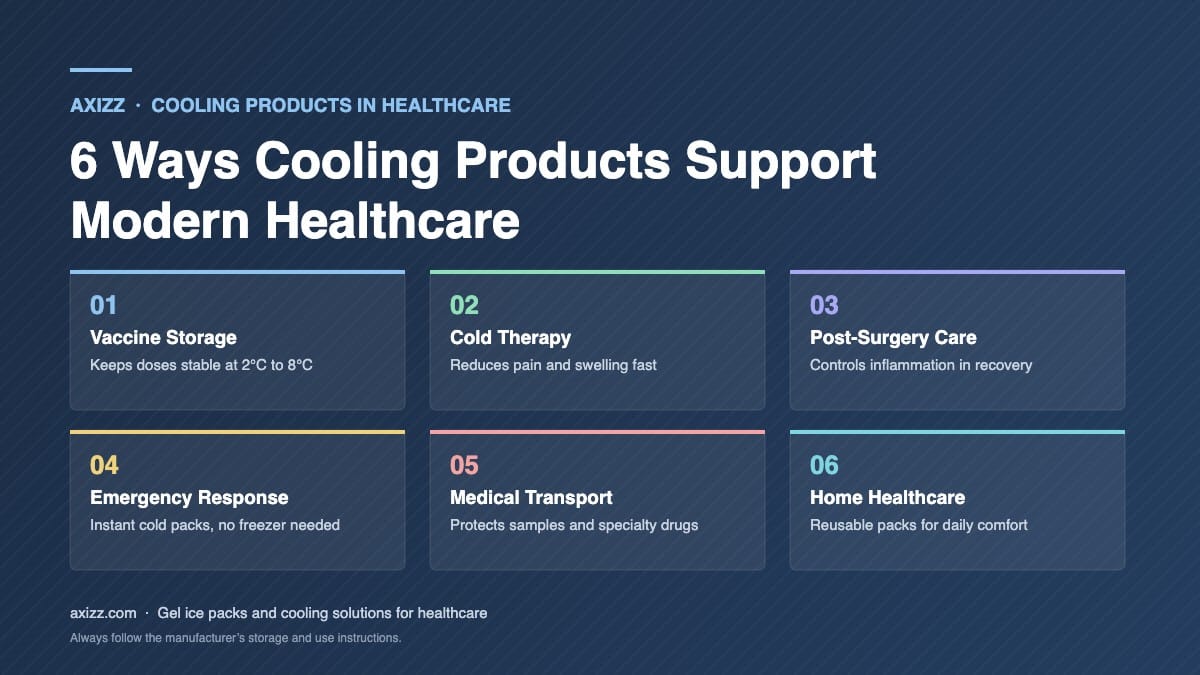
6 Key Uses of Cooling Products in Healthcare
1. Vaccine and Medication Storage
Vaccines lose potency when they get too warm or freeze by accident. The CDC vaccine storage and handling guidance asks providers to follow each manufacturer’s storage instructions and monitor temperatures closely. Gel packs and insulated containers keep doses stable during clinic outreach events, power outages, and transfers between sites.
2. Cold Therapy for Pain and Swelling
Cold therapy narrows blood vessels, which reduces swelling and slows nerve signals that carry pain. That is why ice packs are a standard first response for sprains, strains, bruises, and joint flare-ups. If you want to go deeper, read our guide on how cold therapy products support everyday wellness.
3. Post-Surgery and Rehabilitation Care
After orthopedic, dental, or cosmetic procedures, cold packs help control inflammation and make patients more comfortable. In physical therapy, clinicians often combine cold therapy with exercise to calm soreness between sessions. Cooling blankets and wraps also help athletes and active patients with faster recovery after physical activity.
4. Emergency and First Aid Response
Paramedics, school nurses, and sports medicine teams rely on instant cold packs because they work anywhere, with no freezer needed. In heat emergencies, cooling products help bring body temperature down while the patient is moved to care. We cover this in more detail in how cooling products support medical emergency services.
5. Medical Transport and Cold Chain Logistics
Blood samples, lab specimens, insulin, and specialty drugs all travel between labs, hospitals, pharmacies, and patients. Gel refrigerant packs inside insulated shippers hold the target range for the length of the trip. For a full breakdown, see why cooling products are essential for medical transport and how cooling products improve efficiency in healthcare logistics.
6. Home Healthcare and Patient Comfort
Patients managing chronic pain, fever, migraines, or post-surgery recovery at home need simple, safe tools. Reusable gel packs are easy to store in a home freezer, flexible enough to wrap around a knee or shoulder, and ready to use again and again.
Gel Ice Packs vs Traditional Ice: Which Works Better in Healthcare?
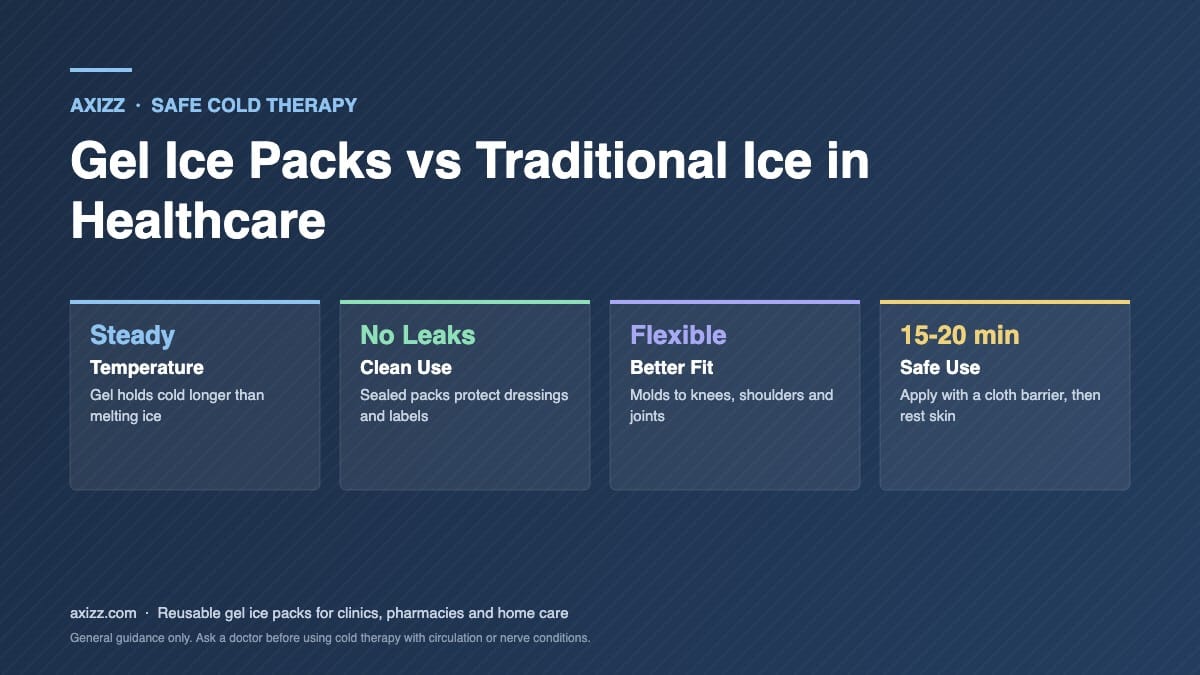
For most clinical and home uses, reusable gel ice packs are the better choice. Here is a quick comparison:
| Feature | Gel Ice Packs | Traditional Ice |
|---|---|---|
| Temperature stability | Steady, longer hold time | Melts quickly, uneven cooling |
| Mess and leaks | Sealed, no dripping | Wet, can damage labels and dressings |
| Fit on the body | Flexible, molds to joints | Hard and lumpy |
| Reusability | Hundreds of uses | Single use |
| Use in shipping | Built for cold chain packaging | Not suitable for medical cargo |
Want the full picture? Read why gel ice packs are better than traditional ice.
How to Choose the Right Cooling Products for Healthcare Use
Before you buy, run through this short checklist:
- Temperature range. Match the product to what you are protecting. Refrigerated items need 2°C to 8°C, while frozen items need much colder refrigerants.
- Hold time. Check how many hours the pack keeps its range, and plan for delays in transit.
- Skin contact. Products that touch patients should be soft, flexible, latex-free, and easy to clean.
- Durability. Look for puncture-resistant film and strong seals, especially for repeated freezer cycles.
- Reusability and sustainability. Reusable packs cut waste and cost over time.
- Supplier reliability. Work with a supplier that can deliver consistent quality in the sizes you need.
If you run a clinic, pharmacy, or distribution business, our guide to choosing the right cooling solution for your business goes into more detail.
Safety Tips for Using Cold Therapy
- Always place a thin cloth or cover between the pack and the skin.
- Apply cold for about 15 to 20 minutes at a time, then give the skin a break. Cleveland Clinic explains how long to ice an injury in more depth.
- Check the skin often for redness, numbness, or pale patches.
- People with poor circulation, diabetes-related nerve damage, or cold sensitivity should talk to a doctor first.
- Never use a damaged or leaking pack on a patient.
The Future of Cooling in Healthcare
The next wave of medical cooling is smarter and greener. Expect more phase change materials that hold exact temperatures, built-in data loggers that record every degree during a shipment, and plant-based or recyclable gel packs that reduce landfill waste. Explore these trends in innovations driving the future of cooling products.
Frequently Asked Questions
What are cooling products in healthcare?
Cooling products in healthcare are tools that lower or hold temperature for medical use. They include gel ice packs, instant cold packs, cold compresses, cooling blankets, insulated shippers, and gel refrigerant packs used to store and transport vaccines, medicines, and lab samples.
Why are cooling products important in hospitals and clinics?
They protect temperature-sensitive medicines like vaccines, insulin, and biologics from losing potency, and they give clinicians a safe, drug-free way to reduce pain and swelling after injuries or surgery.
What temperature should vaccines and insulin be kept at?
Most refrigerated vaccines and unopened insulin are stored between 2°C and 8°C (36°F to 46°F). Always check the manufacturer’s label, because some products need frozen or ultra-cold storage.
Are gel ice packs better than regular ice for medical use?
Yes, for most uses. Gel ice packs hold a steady temperature longer, do not leak, mold to the body, and can be reused hundreds of times. Regular ice melts fast, drips, and is not suitable for shipping medical products.
How long should you apply a cold pack to an injury?
Apply a cold pack for about 15 to 20 minutes at a time with a cloth barrier between the pack and your skin. Let the skin return to normal temperature before applying it again.
Can cooling products in healthcare be reused?
Many can. Reusable gel ice packs and many insulated shippers are designed for repeated use, which lowers cost and waste. Instant cold packs are single use.
Final Thoughts
Cooling products in healthcare protect both people and the medicines they depend on. From a gel ice pack on a sprained ankle to a refrigerated shipper carrying insulin across the country, reliable cooling keeps treatment safe, effective, and comfortable. The right product saves money, reduces waste, and gives patients better outcomes.
Looking for dependable gel ice packs and cooling solutions for your clinic, pharmacy, or medical supply business? Browse the Axizz shop or contact our team for bulk and custom orders.