
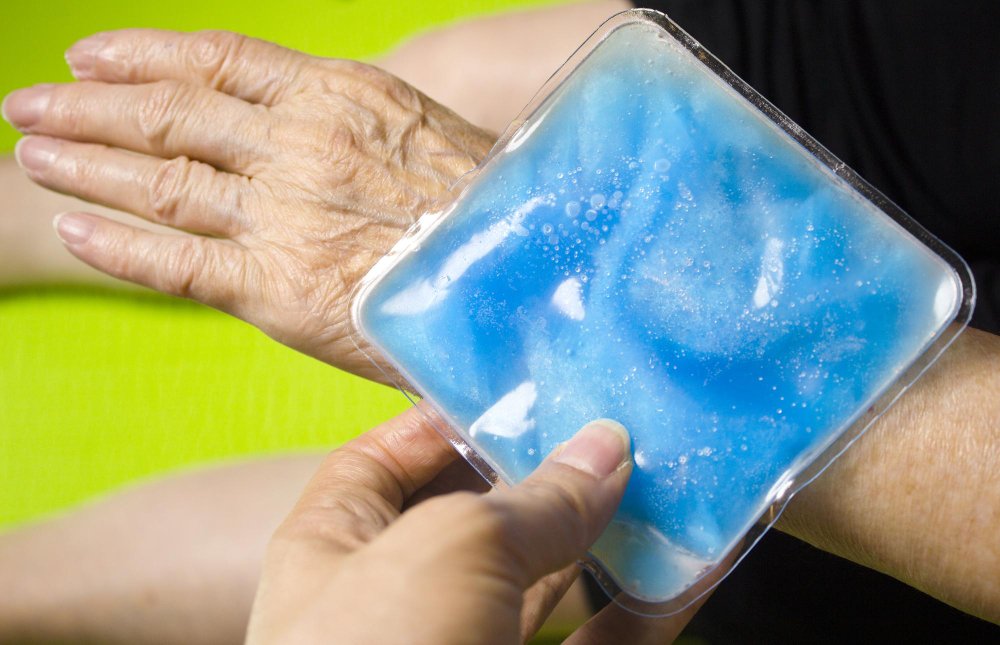
Cold therapy for physical rehabilitation is popular because it does one thing extremely well: it lowers pain and swelling fast enough for patients to move. Cooling an injured joint narrows blood vessels, slows nerve conduction and calms muscle guarding. Less pain and less swelling mean a patient can start their prescribed exercises sooner, and it is the movement, not the ice, that rebuilds strength and range of motion.
Key takeaways
- Cold therapy reduces pain, swelling and muscle spasm. It does not heal tissue on its own.
- Standard clinical application is 15 to 20 minutes, with a cloth barrier, up to four to six times a day in the first 48 to 72 hours.
- Gel packs, cold wraps and flexible compresses are preferred over loose ice because they conform to knees, shoulders and ankles.
- Its real value in rehabilitation is making exercise tolerable so therapy can progress.
- Skip cold therapy on numb skin, over areas with poor circulation, or where a therapist has advised against it.

What is cold therapy for physical rehabilitation?
Cold therapy, also called cryotherapy, is the controlled application of cold to an injured or post-surgical area to lower tissue temperature. In a rehabilitation setting it is a modality, not a treatment plan. Therapists use it around exercise, manual therapy and gait training to keep symptoms manageable while the real work of recovery happens.
It is used across orthopedic recovery, sports medicine, post-surgical care, and outpatient clinics treating strains, sprains, tendinopathy and joint replacement rehabilitation.
What actually happens in the tissue
- Vasoconstriction. Blood vessels narrow, so less fluid leaks into the injured area and swelling builds more slowly.
- Slower nerve conduction. Cooled sensory nerves fire less quickly, which raises the pain threshold for a short window after treatment.
- Lower metabolic demand. Cooled cells need less oxygen, which is thought to limit secondary tissue damage around the original injury.
- Reduced muscle spasm. Cold dampens muscle spindle activity, easing the protective guarding that limits range of motion.
Why therapists rely on cold therapy for physical rehabilitation
- It creates a window for exercise. A patient who can bend a knee without flinching will complete their sets. That is the whole point.
- It is low risk. Used correctly, cold therapy has few side effects compared with additional pain medication.
- It works at home. Patients can repeat it between visits without supervision, which extends the value of each session.
- It is cheap and reusable. A gel pack costs a fraction of most clinical equipment and lasts for years.
- It fits any body part. Flexible products wrap a shoulder, ankle or lower back equally well.
- Patients feel it working. Immediate relief builds confidence in the program, and adherence is half the battle in rehabilitation.
Which cold therapy products are used in rehab settings
| Product type | Best for | Notes |
|---|---|---|
| Reusable gel ice packs | Knees, shoulders, lower back | Stay flexible when frozen and conform to the joint |
| Cold wraps with straps | Ankles, elbows, wrists | Add light compression and free the patient to move |
| Flexible cold compresses | Post-surgical sites | Even coverage over incisions and dressings |
| Ice blankets and large packs | Hips, thighs, full back | Cover broad muscle groups in one application |
| Instant single-use packs | Field and travel use | No freezer needed, but one use only |
| Cold compression units | Post-operative knee and shoulder | Circulating cold with controlled pressure, clinic grade |
Most clinics standardize on reusable gel products because they hold temperature long enough for a full session and survive hundreds of freeze cycles. Options such as the THERAPRO Cold Flexible Compress, the CRYOPAK Ice Pack Wrap and FREEZEZE Gel Ice Pads cover the common clinical use cases without needing a different product for every body part.
When to use cold therapy during recovery
| Phase | Typical timing | Role of cold therapy |
|---|---|---|
| Acute | 0 to 72 hours | Primary tool for pain and swelling control |
| Subacute | 3 to 14 days | Used after exercise sessions to manage flare-ups |
| Remodeling | 2 weeks onward | Occasional, usually after heavier loading days |
| Chronic or flare-up | Any time | Short-term symptom relief, often alternated with heat |
A common mistake is stopping cold therapy the moment the acute phase ends. In practice, many patients keep using it after therapy sessions for weeks, simply because loading a healing joint provokes symptoms. For a broader view of how this fits a full program, see our guide on cold therapy for recovery.
How to apply cold therapy safely
- Place a thin cloth or the pack cover between the product and bare skin.
- Apply for 15 to 20 minutes. Longer does not help and raises the risk of a cold burn.
- Wait at least 45 to 60 minutes before the next application.
- Limit to roughly four to six sessions a day during the acute phase.
- Check the skin at the 5 minute mark. Pink is fine, white or waxy is not.
- Remove immediately if pain increases, the skin blanches, or numbness feels deep rather than surface level.
Cleveland Clinic offers a practical breakdown of how long to ice an injury, and their overview of the RICE method explains where icing sits alongside rest, compression and elevation.
Who should be cautious with cold therapy
- People with reduced sensation, including diabetic neuropathy
- Poor peripheral circulation or peripheral vascular disease
- Raynaud phenomenon or cold urticaria
- Areas with open wounds or compromised skin
- Directly over a regenerating or superficial nerve
Cold therapy vs heat therapy in rehabilitation
| Cold therapy | Heat therapy | |
|---|---|---|
| Main effect | Reduces swelling and dulls pain | Increases blood flow and tissue extensibility |
| Best used | New injuries, post-surgery, after exercise | Stiff joints, chronic tightness, before exercise |
| Typical duration | 15 to 20 minutes | 15 to 20 minutes |
| Avoid when | Sensation is impaired or circulation is poor | The area is swollen, hot or acutely inflamed |
In practice, cold therapy for physical rehabilitation and heat therapy are not competitors. A simple rule therapists use: cold for swelling, heat for stiffness. Many patients end up using heat before a session to loosen up and cold afterwards to settle symptoms down. Our article on temperature-control solutions in healthcare covers how both fit into clinical workflows.
What the research actually says
The evidence for cold therapy is strongest where clinicians use it most: short-term pain relief and swelling control. Evidence that icing speeds up tissue healing is much weaker, and some researchers argue that heavy icing may blunt parts of the inflammatory response the body uses to repair itself. A 2021 review, The cold truth: the role of cryotherapy in the treatment of injury and recovery from exercise, lays out this tension clearly.
For rehabilitation that distinction matters less than it sounds. Therapists are not using cold packs to heal tissue. They are using them to keep pain low enough that a patient completes their exercises, and that is a use the evidence supports well.
Choosing cold therapy products for a clinic or home program
- Flexibility when frozen. A pack that turns into a brick will not contact a shoulder or ankle properly.
- Temperature retention. Look for products that hold therapeutic cold for a full 20 minute session.
- Seam and shell durability. Clinic packs get dropped, frozen and cleaned daily.
- A usable cover. A built-in fabric cover removes the need to improvise a barrier and reduces cold burn risk.
- Easy cleaning. Wipeable surfaces matter in any shared clinical environment.
- Reusability. Reusable gel products cost less per use than single-use packs within weeks.
The same criteria apply at home, where patients are often managing recovery with one or two products. See how cold therapy products support everyday wellness for the non-clinical side of this.
Frequently asked questions
How long should you apply cold therapy?
Fifteen to twenty minutes per session, with at least 45 minutes between applications. Longer sessions do not improve results and increase the risk of skin and nerve injury.
Is cold therapy useful after physical therapy exercises?
Yes. Applying cold after a session is one of the most common uses in rehabilitation, because loading a healing joint often produces a temporary spike in pain and swelling.
Can you still use cold therapy after the first 72 hours?
Yes. The 72 hour window applies to the acute inflammatory phase, not to cold therapy itself. Patients often use it for weeks to manage symptoms after exercise or on flare-up days.
Should you use cold or heat after surgery?
Cold, in almost all cases, and usually for the first several weeks. Heat can increase swelling around a fresh surgical site. Follow the surgeon or therapist instructions, since protocols differ by procedure.
How often per day is cold therapy safe?
Four to six sessions a day is typical during the acute phase, spaced at least 45 to 60 minutes apart, provided the skin returns to normal color and sensation between applications.
Does cold therapy slow down healing?
There is ongoing debate about whether prolonged, aggressive icing blunts the inflammatory signals involved in repair. Standard rehabilitation dosing, meaning short sessions used for symptom control, is not considered a problem.
The bottom line
Cold therapy for physical rehabilitation stays popular because it is cheap, safe, easy to repeat at home, and it solves the problem that stalls recovery more than anything else: pain that stops people from moving. Pair it with a proper exercise program and it earns its place. Use it as a substitute for one and it does very little. For more on its role in injury care, read why cold therapy remains a trusted solution for injury recovery.
This article is general information, not medical advice. Follow the instructions given by your physician or physical therapist for your specific injury or procedure.