
Temperature control in food distribution is the practice of holding every product inside its required temperature band from the processor’s dock to the customer’s shelf. Chilled food belongs at or below 40°F (4°C), frozen food at or below 0°F (-18°C), and hot-held food above 140°F (60°C). Anything that sits between 40°F and 140°F for more than four cumulative hours is a food safety risk, not just a quality problem.
This guide covers the temperature ranges each food category needs, where cold chains actually break, the equipment and coolants that keep loads in range, and the records regulators expect to see. If you handle shipments as well as storage, pair this with our guide to why temperature-controlled shipping is essential for modern supply chains.
Why Temperature Control in Food Distribution Matters
Food safety
Bacteria such as Salmonella, Listeria, and E. coli multiply fastest between 40°F and 140°F, the range the USDA calls the danger zone. Under the right conditions their numbers can double in about 20 minutes. A load that warms up on a dock for an hour does not look different, which is exactly what makes it dangerous.
Shelf life and quality
Every few degrees of warming shortens shelf life measurably. Leafy greens wilt, seafood loses texture, dairy sours early, and frozen product develops ice crystals and freezer burn after a single thaw-refreeze cycle. Quality complaints and short-dated returns are usually a cold chain symptom, not a supplier problem.
Cost and waste
Spoiled loads mean rejected deliveries, credit notes, emergency replacement freight, and disposal fees. Distributors that tighten temperature control usually recover the investment through fewer rejections long before they see any other benefit.
Compliance and traceability
Under the FDA’s Sanitary Transportation of Human and Animal Food rule, shippers, carriers, loaders, and receivers all carry responsibility for temperature during transport. Written procedures, training records, and temperature data are part of the requirement, not optional extras.
Required Temperature Ranges by Food Type
| Food category | Target range | Notes |
|---|---|---|
| Fresh meat and poultry | 28–32°F (-2 to 0°C) | Hold as cold as possible without freezing |
| Fresh seafood | 30–34°F (-1 to 1°C) | Ice or gel packs in direct contact where permitted |
| Dairy and eggs | 33–40°F (1 to 4°C) | Avoid freezing; texture damage is permanent |
| Fresh produce (most) | 34–40°F (1 to 4°C) | Ethylene-sensitive items need separation |
| Chill-sensitive produce | 45–55°F (7 to 13°C) | Bananas, tomatoes, citrus suffer chilling injury below this |
| Frozen foods | 0°F (-18°C) or colder | Ice cream often needs -10°F (-23°C) |
| Hot-held prepared food | Above 140°F (60°C) | Four-hour cumulative limit outside range |
Mixed loads are where temperature control in food distribution usually gets caught out. Bananas and lettuce cannot ride at the same temperature, so either separate the compartments or accept damage on one of them.
Where Temperature Control in Food Distribution Breaks Down
Failures are rarely caused by a refrigeration unit dying mid-route. They accumulate in ordinary handling gaps:
- The loading dock. Pallets staged in an unconditioned bay for 30 to 60 minutes pick up more heat than the rest of the trip combined.
- Product loaded warm. A trailer reefer maintains temperature; it does not pull down a warm pallet. Product must be pre-cooled before loading.
- Door openings on multi-stop routes. Each stop vents cold air. Ten stops on a hot day adds up fast.
- Poor airflow in the trailer. Pallets stacked flush against walls or the bulkhead block circulation and create warm pockets.
- Last-mile handovers. Product sitting at a back door, in a car boot, or in an unrefrigerated locker until someone collects it.
- Equipment run on defaults. Set points never adjusted for a specific load, and defrost cycles nobody has reviewed.
How to Maintain Reliable Temperature Control in Food Distribution
- Pre-cool everything. Product, trailer, and packaging all reach target temperature before the load is built. Pre-cool trailers for at least 30 minutes.
- Set the equipment for the load, not the route. Choose set points and continuous versus cycle-sentry operation based on what is actually on board.
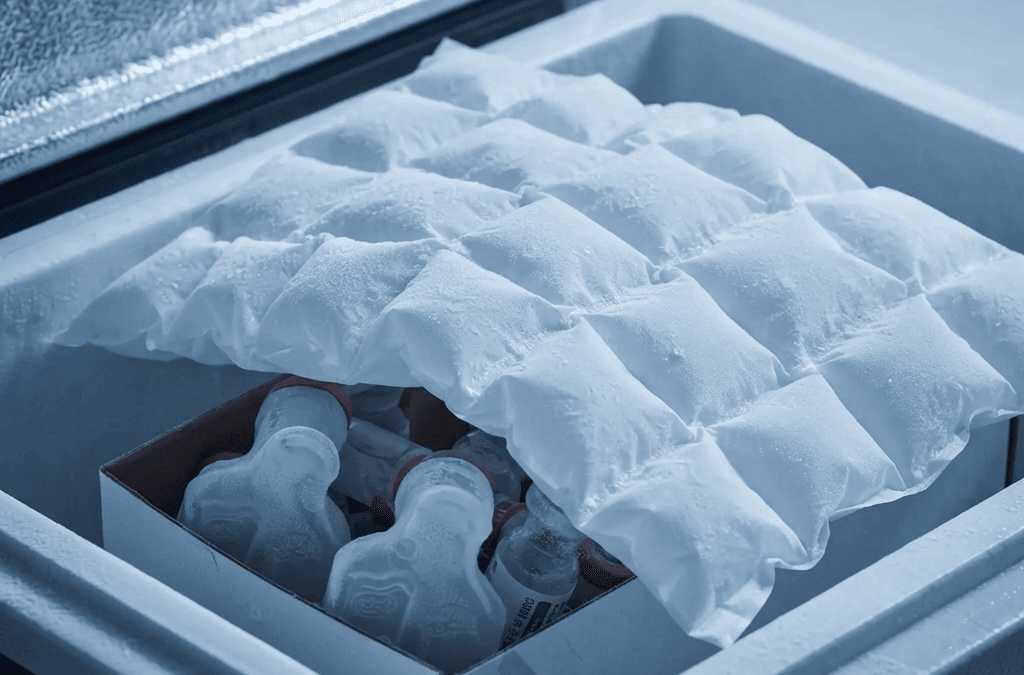
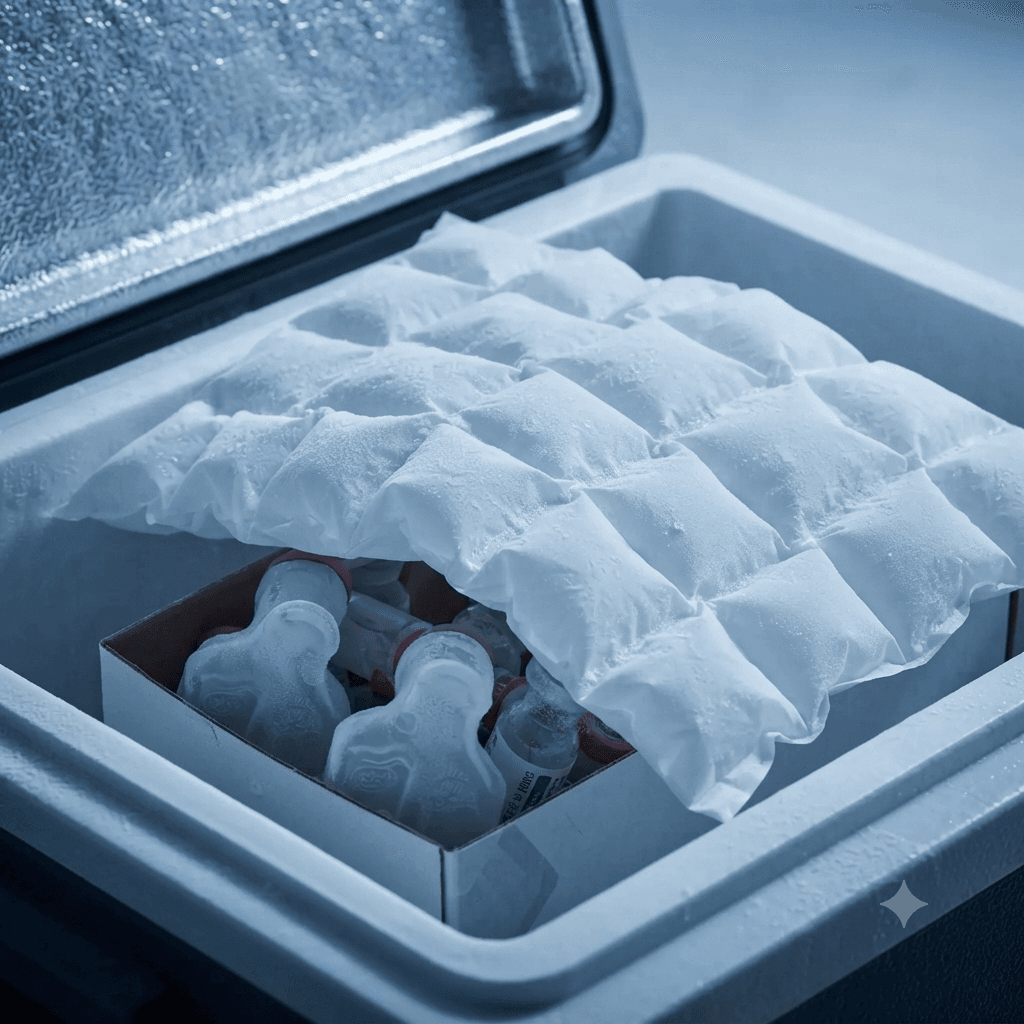
- Use the right coolant for the format. Reefers for full loads; insulated shippers with advanced gel ice packs for parcels, direct-to-consumer boxes, and last-mile totes.
- Load for airflow. Leave channels along walls and the bulkhead, keep pallets off the floor where the trailer requires it, and never block return-air paths.
- Cut dock exposure. Stage in conditioned space, use dock seals, and measure how long pallets actually wait rather than assuming.
- Log continuously and verify at receipt. Data loggers in the load, probe checks on arrival, and a written accept-or-reject threshold that staff actually apply.
- Train and rehearse the exception. Everyone who touches the load should know what to do when a reading is out of range, before it happens.
Cooling Solutions That Support Temperature Control in Food Distribution
| Solution | Best for | Typical hold time |
|---|---|---|
| Refrigerated trailer or van | Full pallet loads, multi-stop routes | Continuous while powered |
| Insulated shipper + gel packs | Parcels, meal kits, direct-to-consumer | 24–72 hours |
| Insulated tote + gel packs | Last-mile and catering deliveries | 4–12 hours |
| Dry ice | Ice cream and deep-frozen product | 12–48 hours, hazmat rules apply |
| Wet ice | Local same-day seafood only | 6–12 hours, creates meltwater |
Most operations end up running two or three of these side by side, and effective temperature control in food distribution usually means combining them rather than picking one. Reusable coolants dominate the parcel and tote side because the cost per trip falls with every rotation; our breakdown of reusable gel ice packs for commercial applications covers that maths, and choosing the right cooling solution for your business walks through the selection criteria.
Records Regulators Expect
- Written temperature specifications agreed between shipper and carrier before dispatch
- Continuous temperature records for each load, retained per your HACCP or food safety plan
- Pre-cooling and pre-trip inspection records for vehicles and equipment
- Cleaning and sanitation logs for trailers, totes, and reusable coolants
- Training records for every person who loads, drives, or receives temperature-sensitive food
- Documented corrective actions for every out-of-range event
Frequently Asked Questions
What temperature should food be kept at during distribution?
Chilled food should stay at or below 40°F (4°C), frozen food at or below 0°F (-18°C), and hot-held food above 140°F (60°C). Some categories are tighter: fresh seafood is best at 30–34°F and ice cream often needs -10°F.
What is the food temperature danger zone?
The danger zone is 40°F to 140°F (4°C to 60°C), the range where bacteria multiply fastest. Perishable food should not spend more than four cumulative hours in this range across its entire journey.
How long can food stay out of refrigeration during delivery?
Two hours is the common working limit, dropping to one hour when ambient temperature is above 90°F (32°C). The four-hour figure is cumulative across the whole supply chain, so dock time and previous legs count against it.
Do gel ice packs work for food distribution?
Yes, for parcels, totes, and last-mile deliveries. Food-grade gel packs hold chilled and frozen product for 24 to 72 hours in an insulated shipper, produce no meltwater, and can be reused hundreds of times. Refrigerated vehicles remain the right choice for full pallet loads.
What causes most cold chain failures in food distribution?
Handling gaps rather than equipment breakdowns. Dock staging in unconditioned space, loading product that was never pre-cooled, repeated door openings on multi-stop routes, and blocked airflow inside the trailer account for most out-of-range events.
How should temperature be monitored during transport?
Place a data logger with the product, not near the air discharge, and verify with a calibrated probe at receipt. Continuous logging gives you the evidence to accept, reject, or defend a load.
The Bottom Line
Reliable temperature control in food distribution comes down to four habits: pre-cool before you load, match the coolant to the delivery format, protect airflow and minimise dock exposure, and log continuously so every load can be proved. Distributors that get those four right see fewer rejections, longer shelf life, and far less argument at the receiving door.