
Green cooling solutions are products and practices that keep people, food and medicine at the right temperature while using less energy, fewer climate-damaging refrigerants and less single-use material. Think reusable gel ice packs instead of bagged ice, right-sized insulated shippers instead of oversized boxes, and wearable cooling gear that cools a worker instead of a whole warehouse.
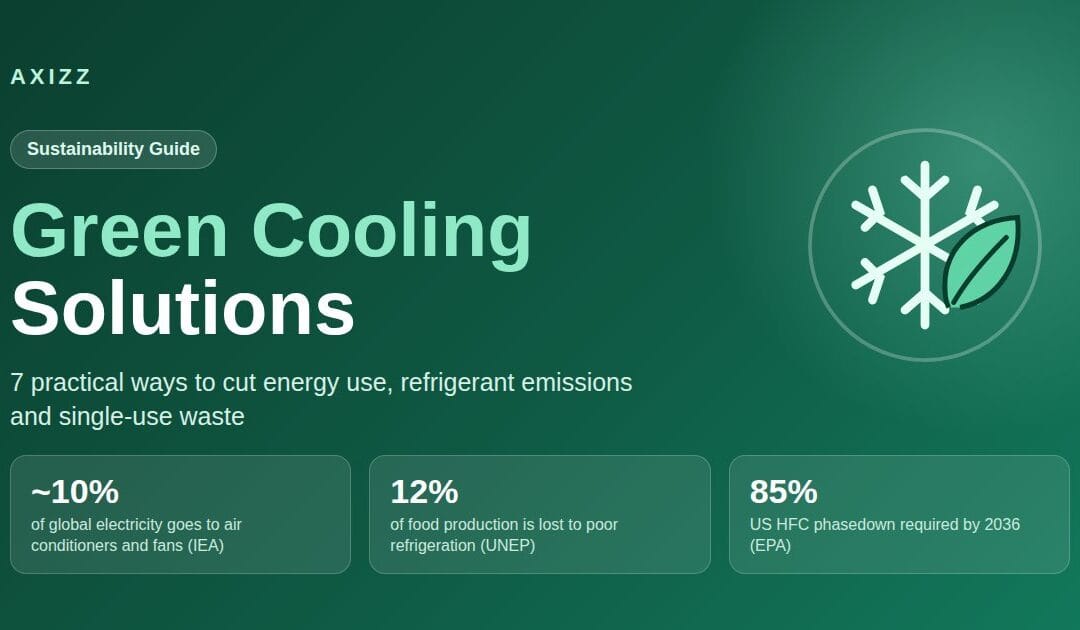
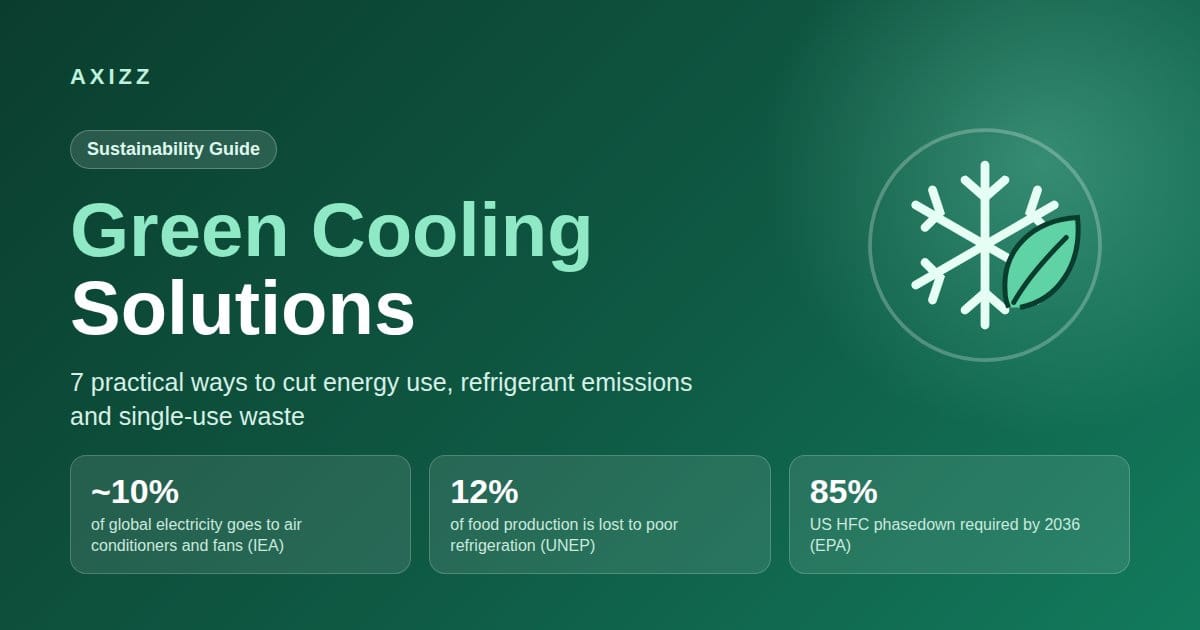
Cooling is a bigger part of the climate picture than most people realize. The International Energy Agency estimates that air conditioners and fans already use about 10% of the world’s electricity. The UN Environment Programme reports that around 12% of global food production, roughly 526 million tonnes, is lost every year because of poor or missing refrigeration.
This guide covers seven practical green cooling solutions you can use today, how they compare with traditional cooling, and how to pick the right mix for your needs.
Key Takeaways
- Green cooling reduces three things: energy use, refrigerant emissions and single-use waste.
- Reusable gel ice packs replace melting ice and, for many chilled shipments, dry ice.
- Right-sized insulated packaging means fewer cold packs for the same hold time.
- Personal cooling gear keeps people comfortable without cooling a whole building.
- A reuse loop and proper disposal matter as much as the product you choose.
Table of Contents
What Are Green Cooling Solutions?
Green cooling solutions are cooling methods designed to lower environmental impact across a product’s full life: how it’s made, shipped, reused and thrown away. Whether you call it green or eco-friendly cooling, most of the work comes down to three levers:
- Energy: using less electricity to create and hold cold, through better insulation, efficient freezers and passive cooling.
- Refrigerants: moving away from high global warming potential refrigerants, such as many HFCs.
- Materials: choosing durable, reusable products over single-use ones and cutting packaging waste.
Why Green Cooling Solutions Matter Right Now
Cooling demand keeps climbing
Hotter summers and growing economies mean more air conditioners, refrigerated trucks and cold storage. The IEA’s Future of Cooling report projects that energy demand for space cooling could more than triple by 2050 without efficiency gains. Every kilowatt-hour saved on cooling eases pressure on power grids during heat waves, exactly when they’re most stretched.
Spoiled food and medicine carry a climate cost
When cooling fails, products spoil and everything that went into making them is wasted. According to UNEP and FAO, the food cold chain accounts for about 4% of global greenhouse gas emissions once you count refrigeration equipment and food lost to poor cooling.
Refrigerant rules are tightening
In the United States, the AIM Act requires an 85% phasedown of HFCs by 2036, according to the EPA. Some HFCs trap heat hundreds to thousands of times more strongly than CO2. That makes passive options like gel packs more attractive for anyone trying to rely less on mechanical refrigeration.
7 Green Cooling Solutions You Can Use Today
1. Switch from loose ice to reusable gel ice packs
Bagged ice melts, soaks through boxes and has to be bought again for every trip. Reusable gel ice packs stay sealed, last longer and stay colder than ice, then go straight back in the freezer. Our FREEZEZE™ Gel Ice Pack Refrigerants are non-toxic, leakproof and made for lunch boxes, coolers and shipping containers. For a side-by-side look, read why gel ice packs are better than traditional ice.
2. Use dry ice only for deep-frozen goods
Dry ice is single use, disappears in transit and is regulated as a dangerous good for air shipping. For chilled goods like produce, meal kits and many medical supplies, gel refrigerants usually do the job. THERMAPACK™ Gel Ice Pack Refrigerants are built as an economical substitute for ice and dry ice in commercial shipping containers.
3. Right-size your insulated packaging
The less heat that gets into a box, the fewer cold packs you need. Matching the shipper to the product, filling empty space and adding a thermal liner cuts both coolant and packaging waste. THERMAPACK™ Thermal Shipping Envelopes and Covers pair with gel ice packs for economical 24-hour shipping. Our cold chain packaging guide has more ideas.
4. Cool the person, not the whole building
In hot warehouses, farms, kitchens and job sites, air conditioning the entire space is costly or impossible. Evaporative cooling gear uses no electricity. A COOLMOR™ Cooling Vest is soaked in water, and the absorbent crystals inside release cooling relief as the water slowly evaporates. See how cooling vests improve workplace safety.
5. Make gel packs close to where you use them
A finished gel pack is mostly water, and trucking water across the country burns fuel. Dry gel crystals are light and compact, and the water is added on site. With the TEMTRO™ Gel Pack Production System, businesses produce their own gel packs locally and take a lot of freight weight out of every order.
6. Freeze and store cold packs efficiently
- Freeze packs flat in a single layer so they freeze faster and more evenly.
- Keep freezers reasonably full, since a stocked freezer holds temperature better than an empty one.
- Condition packs to the temperature your product needs so you don’t over-cool.
- Retire punctured or damaged packs before they leak.
7. Build a reuse and return loop
A reusable pack only helps if it actually gets reused. For B2B shipments, a return program can bring packs and shippers back. For consumers, a simple “freeze and reuse this pack” note on the packing slip gives it a second life at home. At the end of its life, don’t pour the gel down a drain, because it can clog pipes. In most areas the sealed pack goes in household trash, but check local rules.
Gel Packs vs. Ice vs. Dry Ice: How They Compare
| Factor | Reusable gel ice packs | Loose or bagged ice | Dry ice |
|---|---|---|---|
| Reusable? | Yes, refreeze and reuse | No, melts | No, turns to gas |
| Mess | Sealed and leakproof | Meltwater leaks | No liquid, needs venting |
| Typical temperature | Chilled to frozen, by formula | Around 32°F (0°C) | About -109°F (-78.5°C) |
| Handling | Safe and non-toxic | Easy | Gloves and ventilation; dangerous good for air freight |
| Waste per shipment | Low when reused | New bags every time | New supply every time |
| Best for | Food, pharma, lunch boxes, first aid | Short, local use | Deep-frozen goods |
How Businesses Benefit From Green Cooling Solutions
- Lower repeat costs: reusable packs are bought once and used many times.
- Fewer damaged shipments: sealed packs don’t leak onto labels, boxes or products.
- Simpler packaging: right-sized shippers use less material and can lower freight costs.
- A stronger customer story: more buyers now ask suppliers how they cut waste.
We break down the numbers in reusable vs disposable ice packs and in our guide to sustainable cooling solutions for modern businesses.
How to Choose the Right Green Cooling Solution
- What temperature range do you need? Chilled goods kept at 36 to 46°F (2 to 8°C) rarely need dry ice.
- How long must it stay cold? Transit time decides pack size, pack count and insulation.
- Will the packs come back to you? If yes, invest in heavier-duty packs and durable shippers.
- Who handles the product? Non-toxic packs are the safer choice around food, patients and customers.
- What do you spend on coolant and freight today? That’s your baseline for measuring savings.
Axizz has developed and commercialized more than 170 temperature control products, from gel ice packs for shipping to hot and cold therapy packs. Not sure where to start? Contact our team and we’ll help you match pack types, sizes and packaging to your application.
The Future of Green Cooling Solutions
Expect more natural and low-GWP refrigerants, more recyclable insulation and more reusable coolants moving through cold chains. Businesses that already run efficient, low-waste cooling will be a step ahead as rules tighten. For a deeper look, read about sustainable cooling technologies for a more environmentally responsible future.
The easiest green cooling solutions start with the packs you already use every day. Browse our reusable gel ice packs and make your next shipment a greener one.
Frequently Asked Questions
What are green cooling solutions?
Green cooling solutions are products and practices that keep people, food and medicine cold while using less energy, fewer high-impact refrigerants and less single-use material. Common examples include reusable gel ice packs, insulated shipping covers, efficient freezers and evaporative cooling vests.
What is the most eco-friendly way to keep food cold during shipping?
For most chilled shipments, the greenest option is reusable gel ice packs inside a right-sized insulated shipper. Gel packs don’t leak, can be refrozen and reused, and avoid the fresh supply of ice or dry ice that every new shipment would otherwise need.
Can personal cooling products reduce the need for air conditioning?
They can help. Evaporative cooling vests, bandanas and hats cool the body directly and use no electricity, which makes them a practical way to stay comfortable in hot workplaces, outdoors or anywhere air conditioning isn’t available or practical.
Is dry ice bad for the environment?
Dry ice is usually made from carbon dioxide captured as a by-product of other industrial processes, so the bigger issues are practical ones: it’s single use, it disappears during transit, and it’s regulated as a dangerous good for air shipments. For goods that only need to stay chilled, gel refrigerants are usually the lower-waste choice.
How do you dispose of a used gel ice pack?
Keep reusing it as long as the film is intact. When it’s damaged or worn out, don’t pour the gel down a sink or toilet because it can clog pipes. Check your local waste rules; in most areas the sealed pack goes in household trash.
How can a small business start switching to green cooling?
Start by replacing loose ice or disposable packs with reusable gel ice packs, then right-size your insulated packaging. Track coolant and freight costs for a month before and after the switch so you can see the savings clearly.