
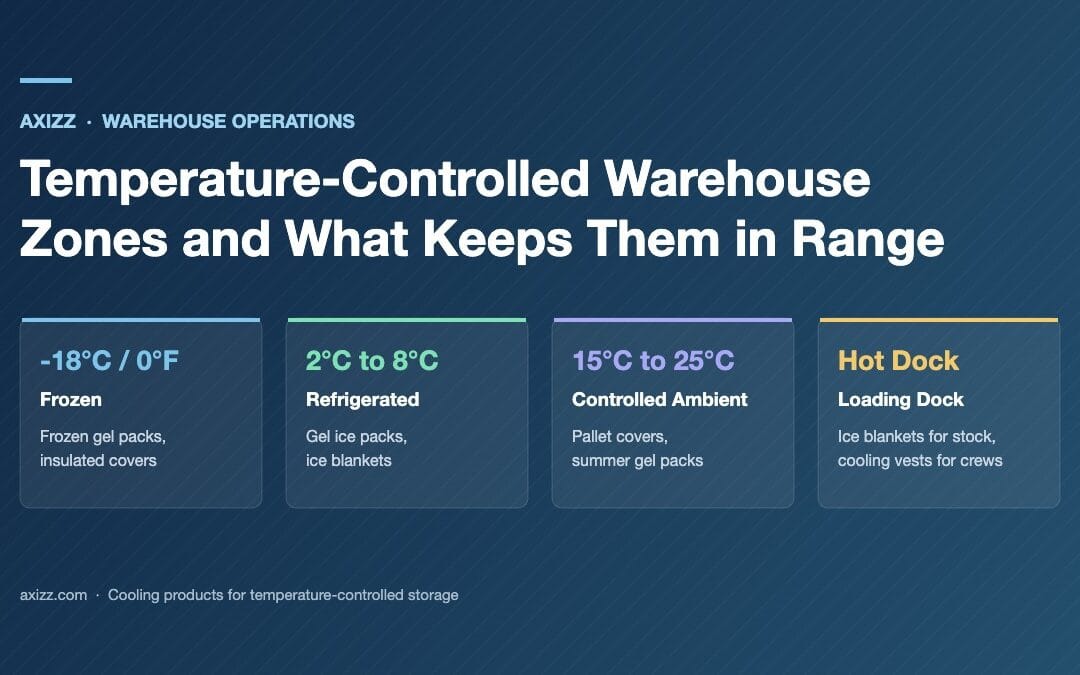
A temperature-controlled warehouse runs on tight margins. One warm pallet, one door left open too long, or one worn-out crew on a hot dock can undo a week of careful work. Refrigeration keeps the rooms cold, but it can’t cover every gap. Cooling products fill those gaps. Gel ice packs, ice blankets, insulated packaging, and personal cooling gear such as cooling vests protect product and people in the places the refrigeration system doesn’t reach.
Quick answer: Cooling products improve efficiency in a temperature-controlled warehouse by protecting inventory during dock transfers and staging, adding a thermal buffer during door openings and power outages, cutting spoilage and rework, keeping workers productive in hot zones, and reducing the heat load on refrigeration equipment, which uses most of the building’s electricity.
What Is a Temperature-Controlled Warehouse?
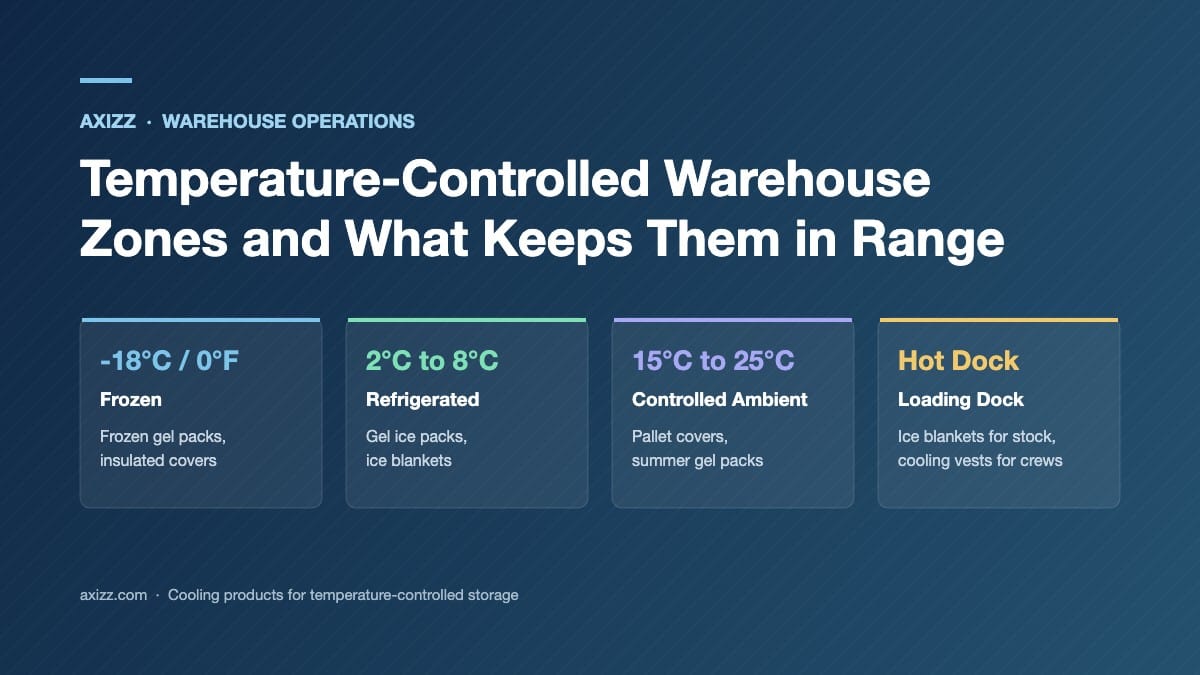
A temperature-controlled warehouse is a storage facility that holds goods within a set temperature range, and often a set humidity range, from receiving to shipping. Pharmaceuticals, vaccines, fresh and frozen food, chemicals, cosmetics, and some electronics all need this kind of storage. Most facilities split the building into zones, each with its own target range.
| Zone | Typical range | What’s stored there | Cooling products that help |
|---|---|---|---|
| Frozen | -18°C (0°F) or colder | Frozen food, ice cream, some biologics | Frozen gel packs, insulated covers for picking and staging |
| Refrigerated | 2°C to 8°C (36°F to 46°F) | Vaccines, insulin, dairy, fresh produce | Gel ice packs, ice blankets, insulated totes |
| Cool | 8°C to 15°C (46°F to 59°F) | Chocolate, wine, some produce | Gel packs and pallet covers |
| Controlled ambient | 15°C to 25°C (59°F to 77°F) | Many medicines, supplements, cosmetics | Pallet covers and gel packs for summer staging |
| Loading dock | Often unconditioned | Everything, for a short time | Ice blankets for product, cooling vests for staff |
These ranges aren’t arbitrary. CDC vaccine storage guidance keeps refrigerated vaccines between 2°C and 8°C, and the USDA warns that bacteria grow fastest in the “danger zone” between 40°F and 140°F. A few degrees of drift can turn sellable stock into waste.
Why Efficiency Matters in Cold Storage
Efficiency in a temperature-controlled warehouse isn’t only about speed. It’s about how much product you keep, how much energy you spend keeping it, and how much work gets done per shift. Three facts show what’s at stake:
- Food safety: According to the USDA, bacteria can double in as little as 20 minutes once food sits in the danger zone.
- Energy: In one U.S. utility’s breakdown of refrigerated warehouse energy use, refrigeration accounts for about 79% of electricity.
- Labor: OSHA treats heat as a hazard for indoor workers, not just outdoor crews, and recommends water, rest, and shade to prevent heat illness.
Cooling products help with all three at once.
7 Ways Cooling Products Improve Temperature-Controlled Warehouse Efficiency
1. They Protect Product at the Loading Dock
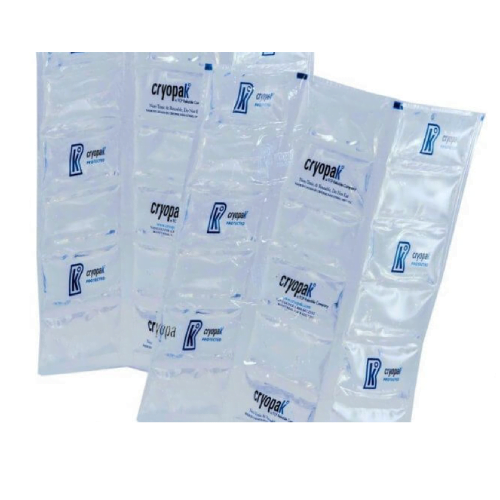
The dock is the weakest link in most facilities. Trucks back in, doors open, and pallets wait while paperwork gets checked. On a summer afternoon, dock air can sit far above a product’s safe range. Laying a gel ice blanket such as the CRYOPAK flexible ice blanket over sensitive pallets, or packing totes with gel ice packs, slows the temperature rise during those minutes. A risky wait becomes a controlled one.
2. They Buy Time During Door Openings, Defrost Cycles, and Outages
Every door opening lets warm air in. Defrost cycles push room temperatures up for a short time. A power cut or compressor failure can take a room out of range within hours. Gel packs add thermal mass. Pre-conditioned packs placed with high-value stock absorb heat before the product does, which gives your team time to fix the problem or move inventory. For pharma and biologics, that buffer can be the difference between a normal day and a quarantined lot.
3. They Cut Spoilage, Rework, and Write-Offs
A temperature excursion rarely ends with one bad pallet. It triggers quarantine, an investigation, customer calls, and sometimes a recall. That paperwork eats hours your team could spend shipping orders. Keeping product in range with the right cooling products means fewer excursions to chase. Our guide on cooling products in pharmaceutical distribution shows how this plays out for medicines.
4. They Speed Up Picking and Pack-Out
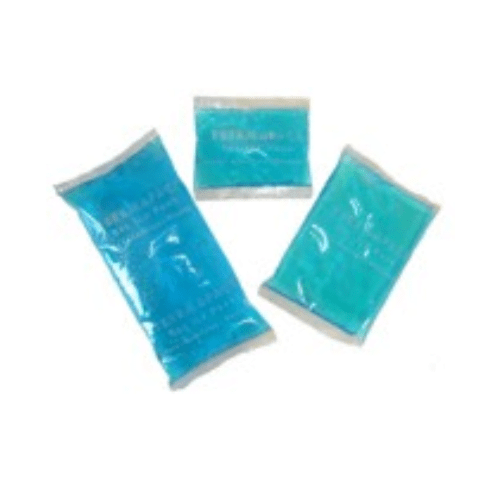
When pre-conditioned gel packs sit ready in a dedicated fridge or freezer next to the packing line, pickers don’t hunt for coolant or improvise with loose ice. A standard pack-out (same box, same insulation, same number of packs per order) makes every order faster to build and easier to check. Reusable packs also stack neatly and don’t leak meltwater onto labels and cartons. See how gel ice packs improve efficiency in cold storage operations for pack-out workflows, and our cold chain packaging guide for shipping beyond the warehouse.
5. They Keep Workers Productive in Hot Zones
Not every part of a temperature-controlled warehouse is cold. Loading docks, mezzanines, packing areas near the roof, and ambient zones in summer can get hot, and crews there lift, push, and walk all day. Heat stress slows people down and raises the risk of mistakes and injuries. A COOLMOR cooling vest or cooling neck bandana helps keep body temperature down, so workers hold a steady pace through the shift. Read more in how cooling vests improve workplace safety.

One important note: cooling vests belong in the hot areas. Staff working inside freezers need the opposite, warm layers and regular breaks in warm areas, as OSHA’s cold stress guide explains. Good warehouse managers plan for both.
6. They Ease the Load on Refrigeration Systems
Refrigeration equipment works hardest when warm product enters a cold room. Every pallet that warms up on the dock brings in heat the system has to pull back out. Keeping product cold during receiving and staging with ice blankets and gel packs means less heat enters the room, shorter compressor run times, and less wear on equipment. Since refrigeration uses most of the power in these buildings, small gains show up on the utility bill.
7. They Support Compliance and Audits
Food and pharmaceutical customers expect proof that product stayed in range. A documented pack-out, tested with your own coolant on your own routes, gives quality teams something concrete to show auditors. Pair cooling products with temperature data loggers and you get both protection and a record. That makes customer audits and inspections smoother and faster.
Gel Ice Packs vs. Loose Ice vs. Dry Ice
Picking the right coolant matters as much as using one. Here’s how the common options compare for warehouse use:
| Feature | Gel ice packs | Loose or wet ice | Dry ice |
|---|---|---|---|
| Best for | Chilled goods, 2°C to 8°C | Short-term chilling of food | Frozen goods, well below -18°C |
| Temperature | Set by how packs are conditioned | About 0°C (32°F) | About -78°C (-109°F) |
| Mess | None, fully sealed | Meltwater on cartons and floors | No liquid, but releases CO2 gas |
| Reusable | Yes | No | No |
| Handling rules | Minimal | Minimal | Ventilation, gloves, shipping limits |
For most chilled storage and shipping, gel packs win on cost per use and cleanliness. We explain why in more detail in why gel ice packs are better than traditional ice.
How to Choose Cooling Products for Your Warehouse
- Start with the product’s required range. A 2°C to 8°C vaccine and a frozen dessert need very different coolants.
- Size for the longest exposure. Plan for your slowest dock day, not the average one.
- Condition packs correctly. Frozen gel packs placed directly against refrigerated product can freeze it, so many shippers use fridge-conditioned packs or a buffer layer for 2°C to 8°C goods.
- Choose reusable where you can. Reusable packs cut waste and purchasing costs over time, as covered in how reusable gel ice packs support sustainable business practices.
- Plan for people, not just pallets. Budget for personal cooling products for dock and packing crews.
- Test before you scale. Run your pack-out on real routes and in real dock conditions, and record the results.
How Axizz Supports Temperature-Controlled Warehouse Teams
Axizz supplies gel ice packs, flexible ice blankets, and COOLMOR personal cooling gear to businesses that store and ship temperature-sensitive goods. For companies that make their own gel packs, our TEMTRO manufacturing products include dry gel, gel pack bags, and a complete gel pack production system. If you’re setting up or upgrading a temperature-controlled warehouse, we can help you match the right cooling products to each zone. For more ideas, read about the benefits of cooling products for warehouse and distribution centers.
Temperature-Controlled Warehouse FAQs
What is a temperature-controlled warehouse?
A temperature-controlled warehouse is a storage facility that keeps goods within a specific temperature range, and sometimes a set humidity range, from receiving to shipping. It usually has several zones, such as frozen, refrigerated, and controlled ambient, so it can safely store products like food, medicines, and cosmetics.
What temperature is a temperature-controlled warehouse kept at?
It depends on the zone. Frozen areas usually run at -18°C (0°F) or colder, refrigerated areas at 2°C to 8°C (36°F to 46°F), and controlled ambient areas at about 15°C to 25°C (59°F to 77°F). The product’s storage requirements set the exact range.
How do gel ice packs improve cold storage efficiency?
Gel ice packs add thermal mass that absorbs heat before it reaches the product. They protect stock during dock transfers, staging, door openings, and outages. They also don’t leak meltwater and can be reused many times, which lowers the cost per use.
Do cooling vests help in a cold storage warehouse?
Yes, but only in the hot areas. Cooling vests help workers on loading docks, in packing areas, and in ambient zones during summer. Workers inside freezers need warm layers and breaks in warm areas instead.
How long do gel ice packs stay cold?
It depends on the amount of gel, the insulation, and the outside temperature. In a good insulated shipper with the right number of packs, chilled temperatures can hold for roughly 24 to 72 hours. On an open dock without insulation the time is much shorter, so always test your own setup.
How can a temperature-controlled warehouse lower energy costs?
Keep dock doors closed as much as possible, move product through staging quickly, keep incoming product cold with ice blankets and gel packs, maintain door seals and refrigeration equipment, and track temperatures so problems get fixed early. Less heat entering cold rooms means less work for the refrigeration system.
The Bottom Line
A temperature-controlled warehouse runs best when product stays in range and people stay comfortable. Refrigeration handles the rooms. Cooling products handle the gaps: the dock, the staging lane, the outage, and the hot afternoon shift. Get those gaps under control and you’ll see fewer write-offs, faster orders, lower energy bills, and a steadier crew. Browse Axizz gel ice packs or contact our team to find the right fit for your facility.