
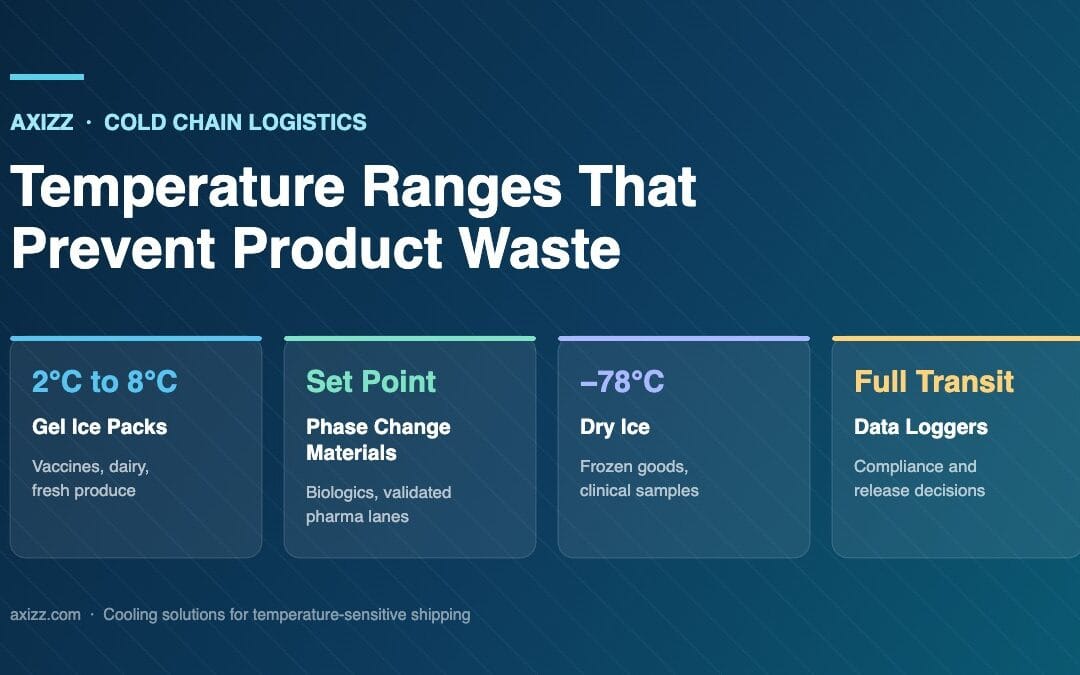
Dry gel packs in cold chain logistics play a quiet but vital role: they keep sensitive goods at the right temperature from origin to destination. Their steady cooling and clean, leak-free design make them a favorite across food, pharma and e-commerce. Axizz makes reusable gel packs for these needs.
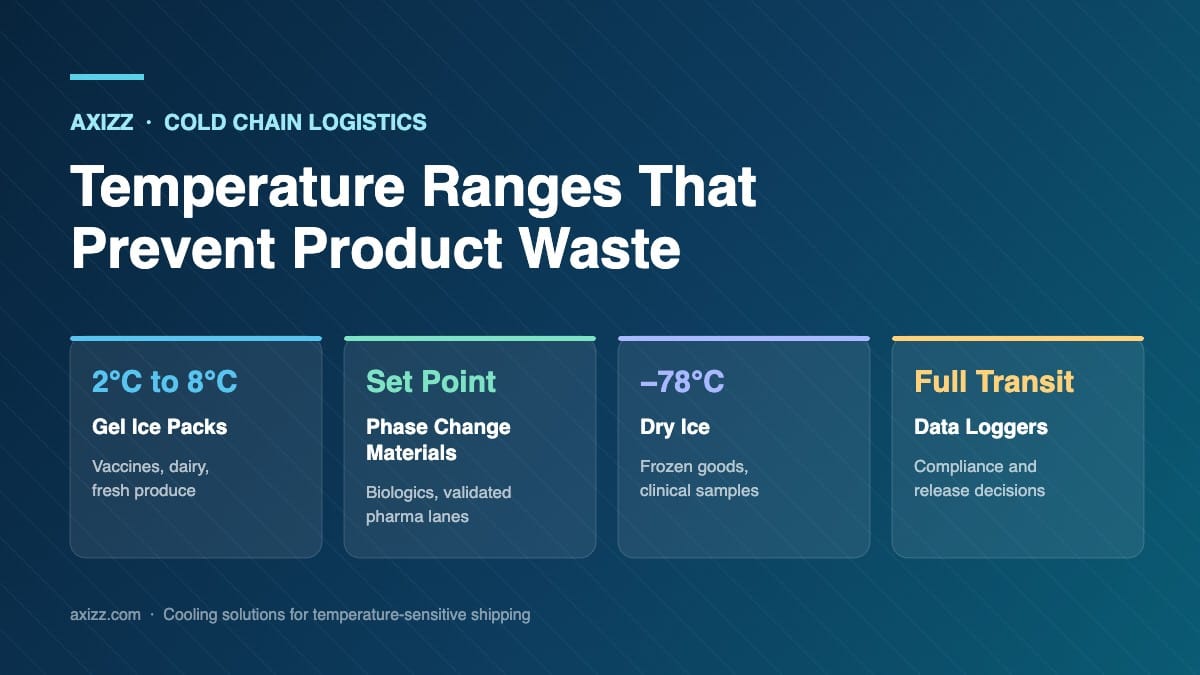
Key Takeaways
- Dry gel gives steady, controlled cooling.
- No meltwater means better packaging protection.
- Reusability lowers cost and waste.
- Process, testing and monitoring turn packs into a reliable system.
Why Dry Gel Packs in Cold Chain Logistics Matter
Cold chain logistics must protect products across handovers, delays and weather. Dry gel packs in cold chain logistics supply the cooling capacity inside the shipper, and when paired with good insulation they extend the time products stay in range.
5 Proven Roles of Dry Gel Packs
1. Maintaining temperature ranges
Packs are chosen and conditioned to hold target temperatures such as chilled, frozen or controlled ambient.
2. Protecting packaging and labels
Dry gel does not leak or soak, so documents and cartons remain readable and strong.
3. Supporting validation
Consistent performance makes qualification and repeatable testing easier for regulated goods.
4. Enabling reuse loops
Durable packs can be collected, cleaned and redeployed, lowering cost across many shipments.
5. Improving handling
Packs are safe, clean and simple for staff, which reduces training time and packing errors.
Practical Tips
- Define the temperature range and duration for each lane.
- Condition packs using a written procedure.
- Use qualified insulated shippers.
- Use loggers on test shipments and key routes.
- Review deviations and update your process.
Designing a Reliable Cold Chain With Dry Gel Packs
Start by mapping each route and its risks, then choose packaging and packs to match. Dry gel packs in cold chain logistics should be tested under summer and winter extremes, and results documented. A well-run program for dry gel packs in cold chain logistics improves compliance, reduces losses and supports customer confidence.
Cost, Waste and Sustainability
Reusable packs reduce single-use waste and lower long-term spending. Compare total cost per delivered shipment, including failures, and consider return programs for repeat lanes. Even a partial reuse rate can deliver meaningful savings.
Working With Carriers
Share handling instructions, request tracking and agree on transit-time expectations. Strong communication with carriers prevents delays and protects the cold chain.
Planning a Lane-by-Lane Approach
Different routes have different risks. A short local lane may need only one pack and a light liner, while an international lane may need extra packs, heavier insulation and a logger. Document each lane with its packing recipe, test results and expected transit time. This lane-by-lane plan makes it easier to scale and to train new staff, and it ensures your dry gel packs are used where they matter most.
Training Your Team
Hold a short session on conditioning, packing and handling. Explain why steps matter, show examples of failures and share results from test shipments. Teams that understand the reasons behind the steps follow them more consistently.
Measuring Success
Track on-time arrival within temperature range, claims per thousand shipments and cost per delivered order. Share these numbers with operations and sales teams so everyone sees the value of good cold chain practice.
Measuring Success
Track on-time arrival within temperature range, claims per thousand shipments and cost per delivered order. Share these numbers with operations and sales teams so everyone sees the value of good cold chain practice.
Related Reading
why temperature-controlled shipping is essential, cold chain packaging, cold chain packaging in global trade. For trusted background, see the World Health Organization.
FAQ
What are dry gel packs used for in logistics?
They provide steady cooling inside insulated shippers for food, pharma, lab and retail goods.
Can dry gel packs be used in regulated shipping?
Yes when the packaging is validated for the product and route.
Conclusion
Dry gel packs in cold chain logistics are a reliable foundation for temperature control. Combine them with insulation, testing and good process for dependable results.