
Cold chain packaging has become one of the most important pieces of global trade, and almost nobody outside logistics ever sees it. Every day, vaccines, seafood, fresh produce, lab samples, and specialty ingredients cross borders inside containers that have to hold a set temperature from the moment they are sealed until they reach the customer. When the temperature holds, the product arrives usable. When it slips, the shipment is usually a total write-off.
The growth numbers back this up. The global cold chain packaging market was valued at USD 33.7 billion in 2025 and is projected to reach USD 93.1 billion by 2033, expanding at a 13.5% compound annual growth rate, according to Grand View Research. That is not a passing trend. It reflects a real change in what the world ships, how far it ships it, and how little tolerance buyers now have for spoiled goods.
What Cold Chain Packaging Actually Does
Cold chain packaging is the physical system that keeps a temperature-sensitive product inside its safe range while it moves through the supply chain. It is not one single product. It is a combination of an insulated shell, a refrigerant that absorbs heat, and in most regulated shipments a monitoring device that records what actually happened in transit.
A standard shipper has three working layers:
- An outer container, normally corrugated board or a rigid reusable case that takes the handling abuse.
- An insulating liner such as EPS foam, polyurethane, vacuum insulated panels, or a curbside recyclable fiber panel.
- A refrigerant, most often gel ice packs, dry ice, or a phase change material matched to the target temperature.
The goal sounds simple and is hard to hit: hold the inside temperature steady while the outside swings from a chilled warehouse to a hot loading dock to an unheated cargo hold and back again, sometimes over five or six days.
Why Cold Chain Packaging Matters More Than Ever
More products now need temperature control
Twenty years ago the list was short. Today it includes biologics, mRNA vaccines, cell and gene therapies, insulin, diagnostic samples, meal kits, craft chocolate, cut flowers, live seafood, and cosmetics with active ingredients. Each one has its own temperature window, and each one pushes demand for better cold chain packaging. Our guide to cooling products in pharmaceutical distribution covers the medical side in more detail.
Trade routes are longer and more fragmented
A single shipment may leave a plant in one country, sit in a consolidation warehouse in another, fly through a hub in a third, and clear customs in a fourth. Every handoff adds hours and adds risk. Good cold chain packaging is what carries the product through the parts of the journey nobody on your team controls, which is why temperature-controlled shipping has moved from a specialist service to a baseline expectation.
Regulators want proof, not promises
Most vaccines and biologics have to stay between 2 and 8 degrees Celsius, and the documentation now matters as much as the result. IATA Temperature Control Regulations set out how temperature-sensitive cargo must be packed, labelled, and handled for air freight, and health authorities expect shippers to validate their packaging rather than assume it works. Auditors ask for test data, not a supplier brochure.
One failed shipment costs more than the product
The write-off is only the first line of the bill. Add the expedited reship, the staff hours lost to the investigation, the penalty clauses buried in the supply contract, and the customer who quietly moves to a competitor. Set against that, the price gap between adequate and genuinely reliable cold chain packaging is small.
The Building Blocks of Reliable Cold Chain Packaging
Insulated shippers
The liner sets how slowly outside heat reaches the payload. EPS foam is cheap and works well for short lanes. Polyurethane holds longer. Vacuum insulated panels give the best performance per millimetre of wall thickness and are worth the cost on long international routes where every hour of hold time counts.
Gel ice packs and refrigerants
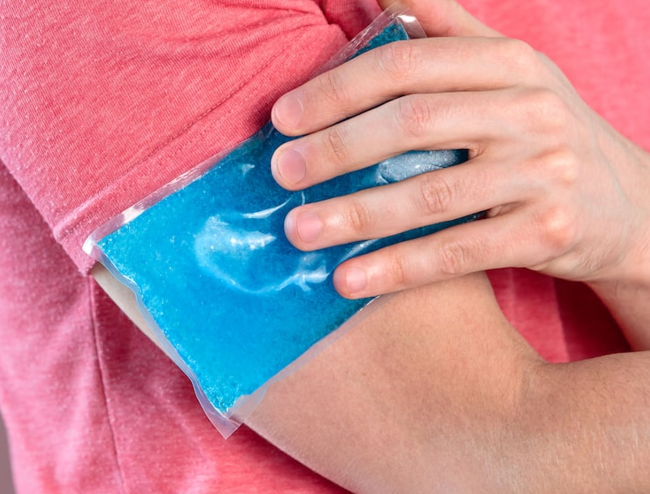
The refrigerant does the actual work. Gel ice packs are the most common choice for chilled shipments because they are reusable, non-toxic, sit at a predictable temperature, and will not soak the product if a seal gives way. Dry ice goes far lower, near minus 78 degrees Celsius, but it sublimates into carbon dioxide gas and brings its own air freight restrictions. Phase change materials hold a narrow band very precisely and cost more. We compared the first two options in why gel ice packs beat traditional ice.
Temperature monitoring
A data logger or a single-use indicator turns a shipment from a guess into a record. Connected loggers now report in near real time, so a delay at a transit hub can trigger a rescue before the payload goes out of range instead of after.
Packing method
The best materials fail if they are packed badly. Refrigerant placement, void fill, payload orientation, and pre-conditioning time all change the outcome. A written pack-out procedure that warehouse staff can follow on a busy shift is part of the packaging system, not an afterthought.
Industries That Depend on Cold Chain Packaging
- Pharmaceuticals and biotech. Vaccines, biologics, insulin, and clinical trial kits, where a temperature excursion can mean a destroyed batch and a regulatory report.
- Food, seafood, and meal delivery. Chilled proteins, dairy, and prepared meals moving to doorsteps, a sector we looked at in why food delivery companies depend on cooling products.
- Floral and horticulture. Cut flowers lose vase life fast above their target range, so growers ship with gel refrigerants year round.
- Clinical labs and diagnostics. Blood, tissue, and reagent samples that are often irreplaceable.
- Cosmetics and personal care. Active ingredients and probiotics that degrade in summer freight.
- Industrial and specialty chemicals. Adhesives, resins, and catalysts with strict storage limits.
How to Choose the Right Cold Chain Packaging
- Define the temperature range first. Frozen, chilled, and controlled room temperature need completely different builds.
- Map the worst realistic transit time, not the average one. Design for the Friday shipment that sits over a weekend.
- Test against seasonal extremes. A summer profile and a winter profile behave differently, and winter freeze damage is as real as summer heat damage.
- Size the refrigerant to the payload, then confirm it with a thermal test rather than a rule of thumb.
- Validate and document with logged test runs you can hand to an auditor or a customer.
- Review after every failure. Most excursions trace back to a handling step, not the materials.
If you are building a process from scratch, our overview of cold chain solutions for temperature-sensitive products is a useful starting point.
What Is Changing in Cold Chain Packaging
Three shifts are worth watching. Sustainability pressure is pushing buyers away from EPS foam toward curbside recyclable fiber liners and reusable shipper rental programs. Insulation is getting thinner without losing performance, which cuts dimensional weight and freight cost at the same time. And monitoring is moving from a logger someone reads on arrival to connected sensors that flag a problem while the parcel is still moving. Together these are turning cold chain packaging from a cost line into something logistics teams actively optimise.
Cold Chain Packaging FAQs
What temperature does cold chain packaging need to hold?
It depends on the payload. Chilled pharmaceuticals usually need 2 to 8 degrees Celsius, frozen foods sit at minus 18 or below, and some cell therapies require minus 80 or cryogenic conditions. Always design to the product specification, not to a generic cold setting.
How long can cold chain packaging keep a shipment cold?
Typical validated systems run from 24 hours to 120 hours. Hold time comes from the combination of liner material, wall thickness, refrigerant mass, payload volume, and ambient conditions, so it has to be measured for your specific build rather than quoted from a catalogue.
Are gel ice packs better than dry ice?
For chilled shipments, yes in most cases. Gel packs are reusable, safe to handle, easy to ship, and hold near the chilled range without freezing the product. Dry ice is the right answer only when you genuinely need deep frozen temperatures, and it adds handling and air freight paperwork.
Is cold chain packaging recyclable?
Increasingly so. Paper and fiber based liners go into normal curbside recycling in many areas, and reusable gel packs cut waste simply by being used again. Traditional EPS foam is recyclable in theory but accepted in very few places, which is a large part of why buyers are moving away from it.
How do I know my packaging actually works?
Run a thermal validation. Pack a real payload, add data loggers at the hottest and coldest points inside the box, expose it to a summer and a winter temperature profile for the full planned transit time, and keep the results. That record is what convinces auditors and customers.
Getting Cold Chain Packaging Right
Global trade in temperature-sensitive goods is not slowing down, and the gap between companies that treat cold chain packaging as a serious engineering problem and companies that treat it as a box purchase keeps getting wider. The first group ships confidently into new markets. The second group absorbs spoilage as a cost of doing business.
If you are reviewing your own setup, start with the refrigerant. Browse our range of gel ice packs for cold chain shipping, or contact the Axizz team and we will help you match a pack to your transit time and temperature target.