
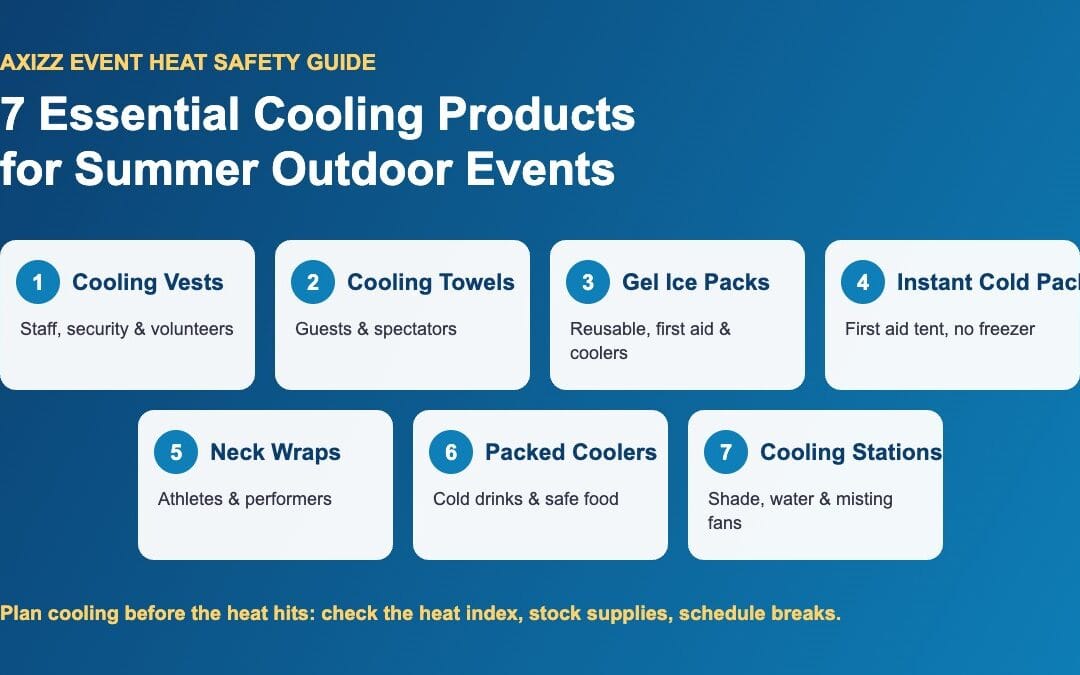
Cooling packs help people stay comfortable and safer during summer heat waves by drawing heat away from the body and keeping food and drinks cold. When temperatures climb, a reusable gel pack from the freezer is a quick, low-cost way to cool down. Axizz makes reusable dry gel cooling products for home, work and outdoor use.
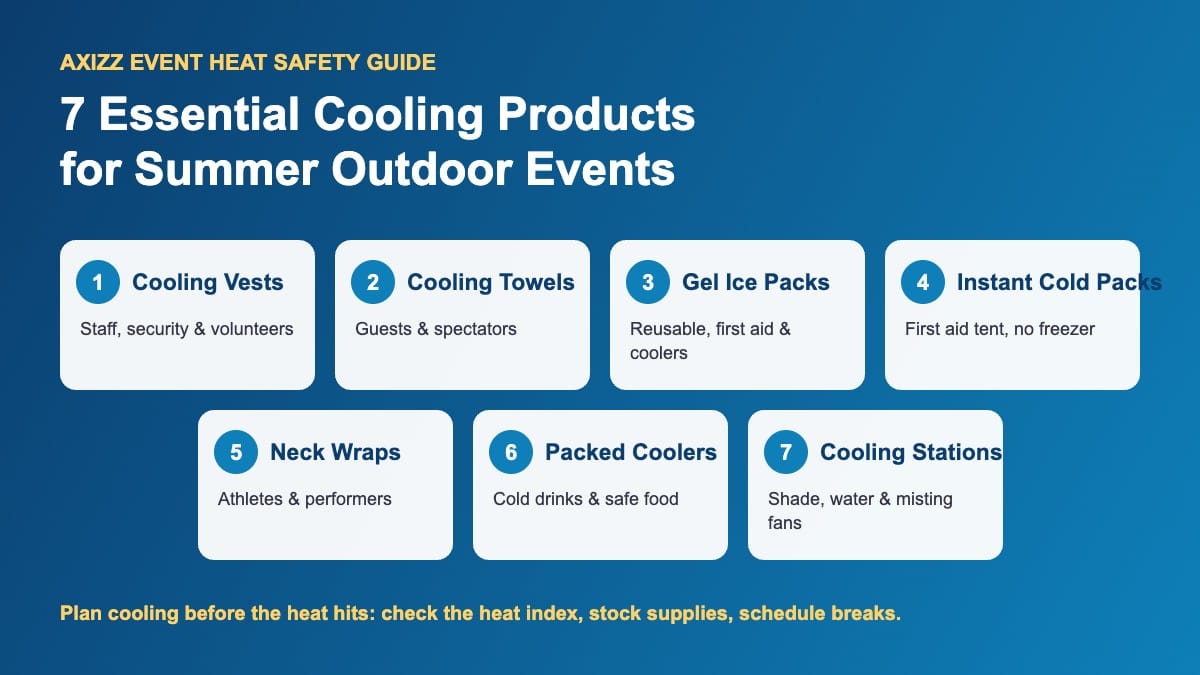
Key Takeaways
- Cooling packs give fast, local relief from heat discomfort.
- Place them on the neck, wrists or forehead with a cloth barrier.
- They also keep food and drinks cold on hot days.
- Serious heat illness needs medical help, not just a cold pack.
Why Summer Heat Waves Are Risky
Long stretches of high heat make it harder for the body to cool itself. Older adults, children, outdoor workers and people with certain health conditions are more at risk. Public health agencies recommend staying hydrated, resting in cool spaces and watching for warning signs. The CDC heat and health guidance is a good starting point.
7 Smart Ways to Use Cooling Packs in a Heat Wave
1. Cool the pulse points
Wrap a pack in a thin cloth and hold it against the neck, wrists or inside of the elbows. These areas sit close to major blood vessels, so cooling feels faster.
2. Use them while resting indoors
Pair a cooling pack with a fan and plenty of water. This helps lower comfort-related stress during the hottest hours.
3. Keep food and drinks cold
Line a cooler with dry gel packs to protect lunches, baby milk and snacks. Dry gel does not melt into water, so food stays dry. See why gel ice packs are better than traditional ice.
4. Take them outdoors
Picnics, sports days and festivals are easier with portable packs. Read our tips for cooling products during outdoor activities.
5. Protect outdoor workers
Teams working in the sun can use packs and cooling gear during breaks. Learn how cooling vests improve workplace safety.
6. Rotate several packs
Keep a few in the freezer so a cold one is always ready while another recovers.
7. Check on vulnerable people
Offer cooling packs to older relatives and neighbors, and make sure they have water and shade.
Safety Tips When Using Cooling Packs
- Always use a cloth barrier to avoid cold burns.
- Limit direct contact to 10 to 15 minutes at a time.
- Do not use packs on numb or damaged skin.
- Seek medical help for confusion, vomiting, very hot dry skin or fainting.
Build a Simple Heat Wave Kit
Preparing before the temperature spikes makes it easier to stay safe. A basic heat wave kit takes only a few minutes to put together and can be stored in a cupboard or a car.
- Two or three reusable cooling packs kept in the freezer.
- Thin cloths or covers to use as a barrier on skin.
- A cooler bag with dry gel packs for water and food.
- A handheld fan or spray bottle.
- A list of emergency numbers and nearby cool spaces such as libraries.
Check the kit at the start of each summer and replace any worn packs. If you manage a workplace, share the same checklist with your team so everyone knows where cooling supplies are stored and when to take breaks.
FAQ
Do cooling packs really help in a heat wave?
They give local, short-term comfort and are a helpful addition to hydration, shade and rest. They are not a replacement for medical care.
How long should I keep a cooling pack on?
Ten to fifteen minutes with a cloth barrier is a common guideline, then take a break.
Conclusion
Reusable cooling packs are a simple, affordable tool for summer heat waves. Keep a few ready in your freezer, use them safely, and explore the range at Axizz. This article is general information, not medical advice.