
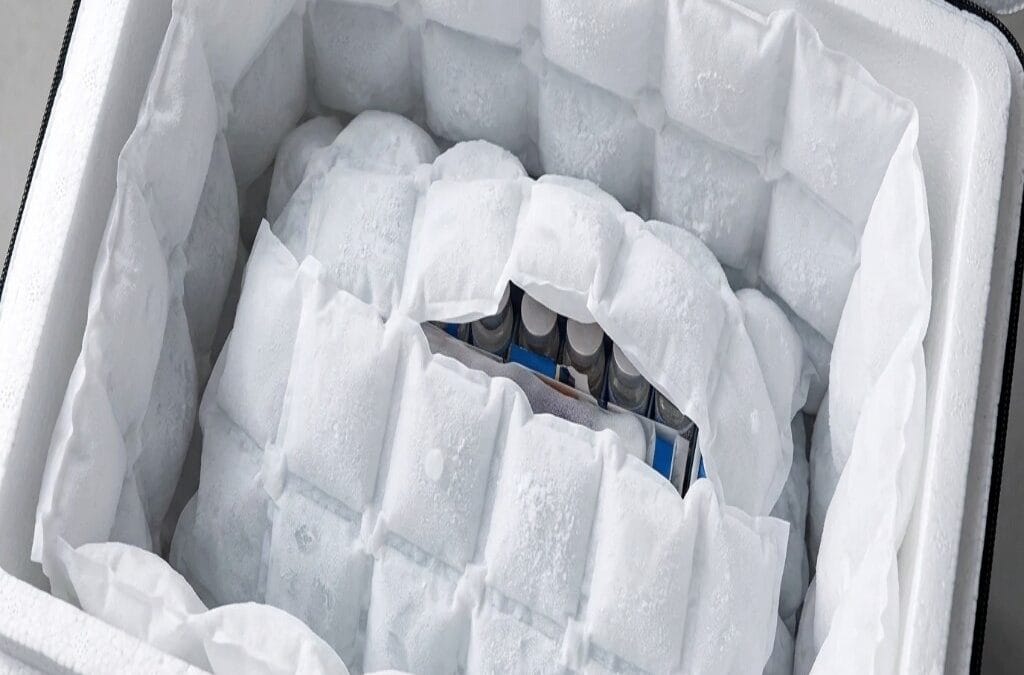
Cooling solutions for e-commerce are no longer optional for any brand that ships something perishable. The moment a parcel leaves the warehouse it enters a supply chain nobody fully controls. Vans sit in traffic, boxes wait on hot loading docks, and one weekend delay turns a two-day transit into four. During those hours, the packaging system around the product is the only thing still doing its job.
Customers do not weigh carrier delays or a heatwave in the forecast. They open the box, see a melted chocolate bar or a warm vial of serum, and decide the brand got it wrong. Strong cooling solutions for e-commerce have moved from a logistics line item to a visible part of the customer experience.
Why cooling solutions for e-commerce matter more than ever
The product categories growing fastest online are also the least tolerant of heat. Online grocery, meal kits, specialty foods, direct-to-consumer supplements, telehealth prescriptions and high-end skincare all travel through the same parcel network as books and phone cases, but they behave very differently in a hot trailer.
Two shifts made this urgent. Fulfillment moved from regional warehouses to national and cross-border shipping, so transit windows got longer and harder to predict. At the same time, customers began expecting the same unboxing quality from a small brand that they get from a large retailer. Cooling solutions for e-commerce close the gap between those two realities, which is why temperature-controlled shipping has become standard practice rather than a specialty service.
What weak temperature control actually costs
The damage from a failed shipment is rarely limited to the item inside the box, and that is the main reason cooling solutions for e-commerce deserve real budget attention.
Spoiled and unsellable product
Heat exposure does not always look dramatic. Chocolate blooms, an emulsion separates, a probiotic loses potency, a medication drifts out of range. The FDA places the bacterial danger zone between 40 °F and 140 °F, and perishable food held in that band is no longer safe to sell. Every compromised unit is paid for twice: once to produce it, once to replace it.
Refunds, replacements and chargebacks
A replacement shipment almost always costs more than the original. You cover the product again, a second set of cooling materials, faster freight, and the support time to sort it out. At scale, a five percent heat-damage rate can wipe out the margin on an entire product line.
Compliance and liability
Food, pharmaceutical and medical device shipments carry documented temperature requirements. Businesses in these categories have to show that goods stayed within an approved range from packing to doorstep. Without validated cooling solutions for e-commerce orders, that record does not exist, and neither does the defense if a customer or regulator raises a question.
Reviews and repeat purchase
Photos of a leaking, lukewarm box end up in reviews and on social feeds, where they keep costing sales long after the refund is issued. A customer who opens one ruined order rarely places a second.
Which products need cooling solutions for e-commerce shipping
Not every catalog needs a cold chain, but more categories qualify than most sellers assume.
Food and beverage
Meal kits, fresh produce, dairy, seafood, meat, chocolate, artisan desserts and craft beverages all degrade quickly above room temperature. Many also fall under food safety rules, which makes temperature control a legal obligation rather than a service upgrade.
Pharmaceuticals and healthcare
Prescriptions, biologics, diagnostics, test kits and clinical samples usually have narrow approved ranges. Home delivery of medicine keeps growing, which pushes clinical-grade requirements into ordinary parcel networks and makes cooling products in healthcare logistics a daily operational concern.
Cosmetics, skincare and supplements
Actives such as retinol, vitamin C, peptides and probiotics lose strength when they get warm. Creams separate, capsules soften and stick together, and the customer notices the texture before they notice anything else.
Pet, agricultural and specialty goods
Raw pet food, live plants, cultures, adhesives, industrial chemicals and lab materials each have their own tolerance. If a product datasheet lists a storage temperature, it needs a shipping plan that matches.
The building blocks of a reliable cold chain
Dependable cooling solutions for e-commerce come from a system, not a single product. Four parts do the work.
Gel ice packs and refrigerants
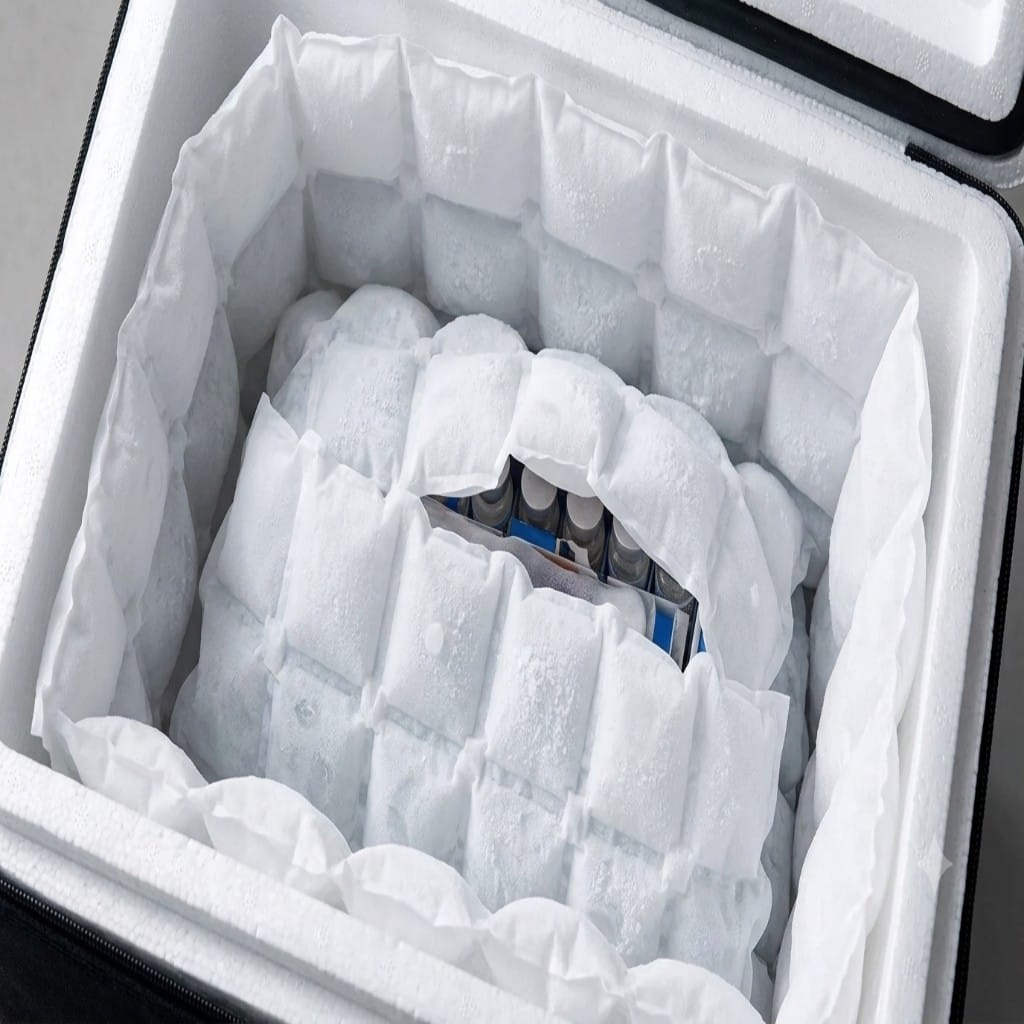
Gel packs are the workhorse of the industry: non-toxic, available in different weights and freeze points, and safe to handle without special training. Gel ice pack refrigerants hold temperature far longer than loose ice, produce no meltwater, and bring the per-shipment cost down for anyone shipping in volume. Reusable gel packs make even more sense for subscription and repeat-order businesses.
Insulated packaging
Insulation is the half of cooling solutions for e-commerce that sellers most often underspend on, and the liner or shipper is what actually keeps the cold inside the box. Coolers, foam inserts, insulated liners and thermal bags slow heat transfer so the refrigerant lasts through the whole transit window instead of the first afternoon.
Transit time planning
Cooling materials are sized against a duration, not a distance. A shipment leaving on a Friday afternoon may sit through a weekend, so packing decisions should be built around the worst realistic case rather than the carrier’s promised window.
Testing and validation
Pack a test shipment with a temperature logger and send it along your actual routes during your hottest month. The result tells you how much refrigerant you truly need. Guessing here produces both spoiled orders and boxes stuffed with far more gel packs than the job requires. Validation is what turns cooling solutions for e-commerce from guesswork into a repeatable spec.
How to choose cooling solutions for e-commerce fulfillment
Work through this checklist before committing to a format:
- What temperature range does the product actually require, and how long can it sit outside that range?
- What is the longest transit time in your network, including weekends and delays?
- What is the highest ambient temperature your parcels pass through in summer?
- How much weight can you add before shipping cost becomes the bigger problem?
- Will customers reuse or dispose of the materials, and does that fit your sustainability position?
- Can your packing team assemble the box the same way every time, under peak-season pressure?
That last question decides more outcomes than any specification. A perfect design that takes six minutes to pack will get shortcut in November. Our guide on choosing the right cooling solution for your business walks through the trade-offs in more detail.
Producing gel packs in-house at scale
Businesses shipping thousands of orders a month often reach a point where buying prefilled packs stops making financial sense. A gel pack production system lets you make packs on site, control size and freeze point, and stop paying freight to move water across the country. It also protects you during peak season, when suppliers of cooling products are the first to run out.
Cost versus risk
Cooling solutions for e-commerce look like an added expense until you set them against the cost of one failed batch. A few dollars of gel packs and insulation per order sit opposite the replacement product, the second shipment, the support ticket, the refund and the review. For most perishable categories, the math is not close.
There is upside beyond avoided loss. Dependable cooling solutions for e-commerce let a business expand into new regions, use standard ground service instead of expensive overnight shipping, and sell products competitors cannot move safely.
Frequently asked questions
What are cooling solutions for e-commerce shipping?
They are the combined materials and methods that keep an online order inside a safe temperature range in transit: gel ice packs and other refrigerants, insulated liners or shippers, the packing method itself, and the transit plan behind it.
How long do gel ice packs stay frozen in a parcel?
It depends on pack weight, insulation quality and outside temperature. A well-insulated box with correctly sized packs commonly holds a safe range for 24 to 48 hours. The only reliable number for your own products comes from a logger test on your real routes.
Are gel packs better than dry ice for online orders?
For most chilled products, yes. Gel packs are reusable, safe to handle and carry no hazardous material restrictions. Dry ice suits frozen goods that must stay well below freezing, but it brings labeling rules, air freight limits and handling requirements with it.
How many gel packs should go in each box?
Start from transit duration and summer ambient temperature, not box size. Two or three standard packs suit a short chilled shipment, while longer transits and heavier loads need more refrigerant and better insulation. Validate with a test shipment before rolling it out.
Do cooling solutions work with standard ground shipping?
Yes, and that is usually where they pay for themselves. Properly sized cooling solutions for e-commerce orders allow many brands to ship ground instead of overnight, which cuts the cost per order significantly.
Make cooling part of how you ship
Temperature control is not a seasonal patch. It belongs in the packaging spec, tested before summer, reviewed when transit times change, and adjusted when new products enter the catalog. Brands that treat cooling solutions for e-commerce as standing infrastructure spend less on replacements, keep better reviews, and reach markets that stay closed to competitors still hoping for mild weather. The latest innovations in cooling products keep widening that gap.
Axizz supplies gel ice packs, refrigerants, insulated packaging and in-house gel production systems for businesses shipping temperature-sensitive goods. Browse the range or get in touch, and we will help you match the right setup to your products and routes.