
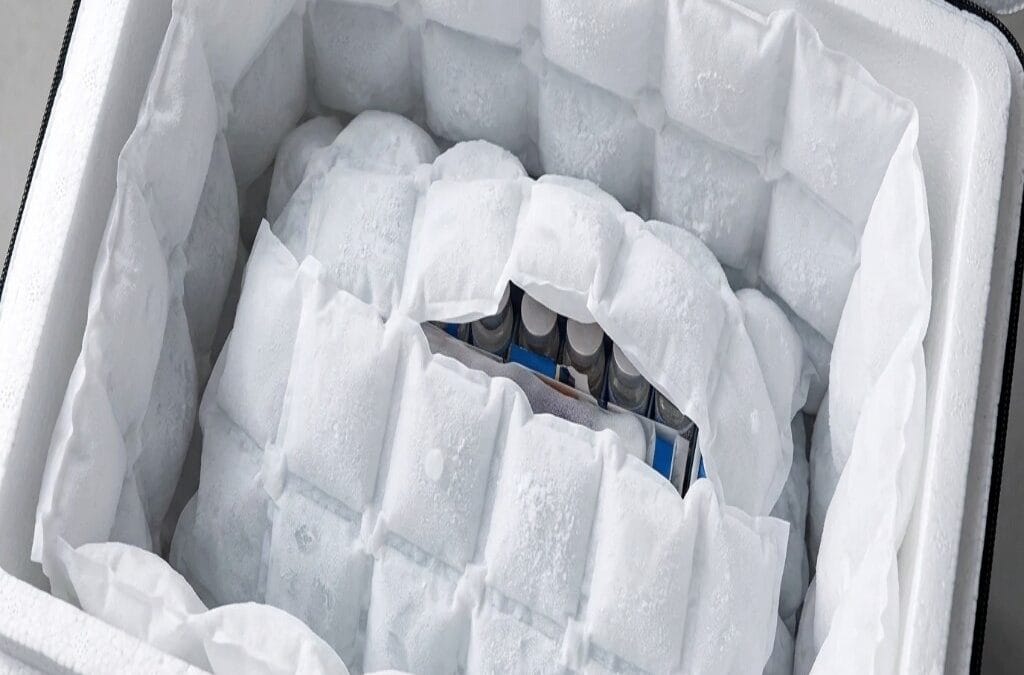
Cooling technology in supply chains is the combination of insulated packaging, refrigerants and temperature monitoring that keeps a product inside a defined temperature range from the moment it leaves the factory until it reaches the end user. Without it, a vaccine shipment, a box of fresh seafood or a set of laboratory samples can lose value in a matter of hours.
As global trade, e-commerce grocery and pharmaceutical distribution keep expanding, temperature control has moved from a logistics detail to a core business requirement. This guide explains how cooling technology in supply chains works from factory to final delivery, which industries depend on it, the main solution types available today, and how to pick the right one for your shipments.
What Is Cooling Technology in Supply Chains?
Cooling technology in supply chains refers to every method used to hold cargo at a controlled temperature during handling, transport and storage. It is the physical layer of what the logistics industry calls the cold chain: an unbroken sequence of temperature-controlled steps between producer and consumer.
A working cold chain package normally combines four elements:
- A refrigerant such as a gel ice pack, phase change material or dry ice that absorbs heat.
- Insulation such as an EPS cooler, vacuum insulated panel or insulated liner that slows heat transfer.
- A validated pack-out that defines how much coolant goes where, tested against a real transit profile.
- Monitoring through data loggers or IoT sensors that record temperature for the full journey.
Remove any one of the four and cooling technology in supply chains stops being dependable: the shipment becomes a guess. That is why buyers now evaluate cooling as a system rather than buying coolant and boxes separately. Our overview of how cold chain solutions protect temperature-sensitive products covers the process end to end.
Why Temperature Control Matters More Than Ever
Product safety and efficacy
Biologics, vaccines, insulin, diagnostic reagents and many specialty chemicals degrade once they move outside their labelled storage range. The damage is usually invisible, so a product can arrive looking perfect while no longer performing as intended. Temperature records are the only reliable proof of condition.
Waste and cost reduction
The Food and Agriculture Organization estimates that roughly 14% of food produced globally is lost between harvest and retail, with inadequate cooling a major contributor. Every prevented temperature excursion avoids a replacement shipment, a claim and an unhappy customer.
Regulatory and customer expectations
Pharmaceutical distributors work to good distribution practice rules, food shippers follow the FDA’s Sanitary Transportation rule, and air freight operators increasingly ask for IATA CEIV Pharma handling. Documented cooling performance is now part of winning and keeping contracts.
Industries That Depend on Cooling Technology
Cooling technology in supply chains is mission critical in any sector where product value is tied to temperature:
- Pharmaceuticals and biotech: vaccines, biologics and clinical trial kits, usually at 2 to 8 °C or frozen. See cooling products in pharmaceutical distribution.
- Food and grocery: fresh produce, dairy, meat, seafood and meal kits shipped direct to consumers.
- Clinical laboratories: blood, tissue and swab samples where a few hours of warmth invalidates a result.
- Healthcare logistics and EMS: hospital transfers, home infusion and emergency response kits.
- Specialty chemicals and cosmetics: adhesives, resins and actives that separate or cure when warm.
- Sports medicine and retail: reusable cold packs sold or supplied for recovery and first aid.
Core Cooling Technology Options in Supply Chains Today
Each refrigerant type suits a different temperature band, transit length and budget. The table below compares the options most shippers choose between.
| Cooling method | Typical range | Best for | Main limitation |
|---|---|---|---|
| Gel ice packs | 0 to 8 °C | Food, refrigerated pharma, lab samples, 24 to 72 hour transits | Needs correct freezing and conditioning time |
| Phase change materials | -25 to 25 °C, tuned | Tight ranges and long multi-day journeys | Higher unit cost |
| Dry ice | Around -78 °C | Frozen biologics and deep frozen food | Dangerous goods handling, sublimates away |
| Insulated containers and liners | Passive | Extending the hold time of any refrigerant | No cooling on its own |
| Active refrigerated units | Set point controlled | Pallet and container freight | Power, servicing and cost |
Gel ice packs remain the workhorse
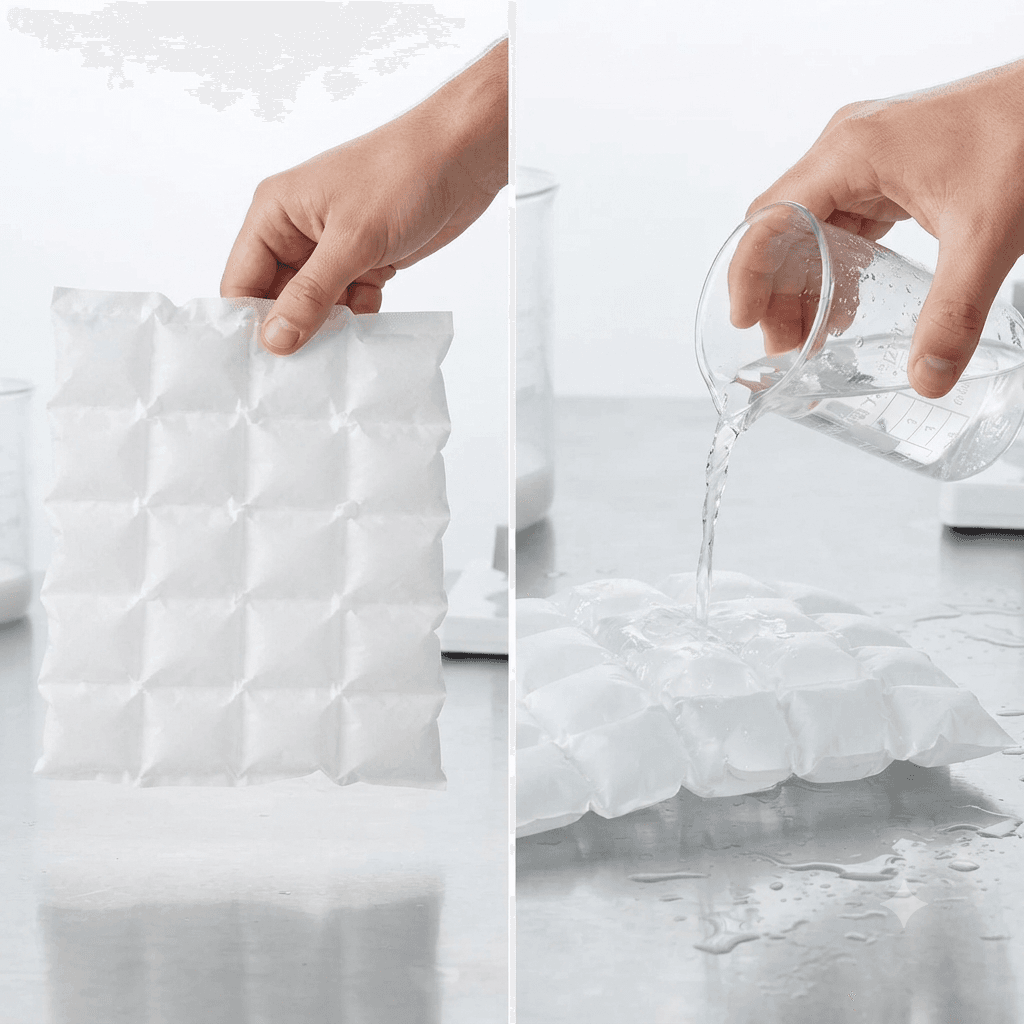
Reusable gel packs are the most widely used refrigerant in parcel-level cold chain because they are inexpensive, leak resistant, reusable and accepted by every carrier. Modern formulations hold temperature far longer than wet ice and leave no meltwater to damage cartons or labels. Read more on reusable gel ice packs for commercial applications.
Monitoring turns cooling into evidence
Single-use loggers and connected sensors now cost little enough to include in routine shipments. The data lets teams see exactly where in a lane the temperature drifted, then fix that step rather than adding coolant everywhere. This is the shift described in temperature-controlled shipping for modern supply chains.
How to Choose the Right Cooling Solution
Choosing cooling technology in supply chains starts with five questions you should answer before ordering packaging:
- What is the required range? Chilled, frozen or controlled room temperature changes everything downstream.
- How long is the worst-case transit? Design for delays and weekend holds, not the scheduled time.
- What ambient conditions apply? A summer lane in Texas and a winter lane in Ontario need different pack-outs.
- Single use or reusable? Closed loops and repeat routes usually favour reusable gel packs and durable shippers.
- What proof is required? Regulated cargo needs validation documents and logger data, not just a good box.
Our guide to choosing the right cooling solution for your business walks through the same decision with worked examples.
Trends Shaping the Next Decade of Cold Chain
- Sustainable materials: curbside recyclable liners and non-toxic gel formulations replacing polystyrene and foam.
- Reusable circulation: return-and-refreeze programmes that cut per-shipment cost and packaging waste.
- Precision phase change materials: refrigerants tuned to narrow bands instead of generic freezing.
- Connected visibility: real-time alerts that let a courier intervene before a shipment is lost.
- Last-mile cold delivery: grocery, meal kits and home healthcare pushing cold chain to the doorstep.
Cooling technology in supply chains is moving toward lighter, smarter and more circular solutions. For a closer look at what is coming next, see the future of temperature-controlled packaging.
Frequently Asked Questions
What is cooling technology in supply chains?
It is the set of refrigerants, insulated packaging and monitoring devices used to hold products within a specified temperature range throughout transport and storage, so they arrive safe, compliant and effective.
How long do gel ice packs keep a shipment cold?
A correctly frozen and conditioned pack-out typically holds refrigerated temperatures for 24 to 72 hours. The exact figure depends on pack quantity, insulation quality, payload mass and ambient temperature, which is why each lane should be tested rather than assumed.
Are gel packs better than dry ice?
They serve different jobs. Gel packs are the practical choice for chilled 0 to 8 °C shipments and carry no dangerous goods paperwork. Dry ice is needed for frozen and deep frozen cargo but requires special handling, ventilation and carrier declarations.
What causes most cold chain failures?
Handling gaps rather than product defects. The common causes are under-conditioned coolant, pallets left on a hot dock, unvalidated pack-outs and transit delays that exceed the packaging’s hold time.
Can cooling technology be sustainable?
Yes. Reusable gel packs, recyclable insulation and right-sized pack-outs reduce both material use and the replacement shipments caused by spoilage, which is usually the larger environmental cost.
Final Thoughts
Cooling technology in supply chains is no longer a back-office expense. It protects product value, satisfies regulators and decides whether a customer receives something usable. Businesses that treat refrigerant, insulation, pack-out design and monitoring as one validated system consistently see less spoilage, fewer claims and stronger customer trust.
If you are reviewing cooling technology in supply chains for your own operation, talk to the Axizz team about gel ice packs and cooling products matched to your temperature range and transit times.