
Temperature-controlled packaging solutions keep food, medicines, and other sensitive goods inside a safe temperature range from the moment they leave a facility until a customer opens the box. Demand for them has climbed fast over the last few years, and the reasons go far beyond the pandemic-era vaccine rush.
Quick answer: Demand for temperature-controlled packaging solutions is growing because more drugs now need cold storage, more people buy groceries and meals online, food and drug rules are getting stricter, supply chains are longer, spoilage is expensive, and companies want reusable, lower-waste materials. Better temperature monitoring is also making cold shipping easier to manage and prove.
Key takeaways
- Recent 2026 estimates value the global market at roughly US$14.6 billion to US$26.5 billion, with steady growth expected into the 2030s.
- Healthcare is the largest user, and passive systems (insulated shippers with gel packs or phase change materials) hold most of the market.
- Poor refrigeration causes the loss of about 526 million tonnes of food a year, around 12% of global food production.
- The right temperature-controlled packaging solutions depend on your product’s temperature range, transit time, route, season, and budget.
What Are Temperature-Controlled Packaging Solutions?
Temperature-controlled packaging solutions are shipping and storage systems built to hold a product within a set temperature range for a set amount of time. A typical setup combines three parts:
- Insulation: insulated shippers, thermal liners, bubble-foil envelopes, or pallet covers that slow down heat transfer.
- A refrigerant: gel ice pack refrigerants, phase change materials, or dry ice that absorb heat and hold the target temperature.
- Monitoring: temperature indicators or data loggers that record what the product went through in transit.
Together, these parts form the physical side of the cold chain. For a closer look at how each layer works, see our guide on how temperature-controlled packaging protects sensitive products.
Passive vs. Active Systems
Most temperature-controlled packaging solutions fall into two groups. Passive systems use insulation plus pre-conditioned refrigerants such as gel packs. They need no power, cost less, and work well for parcels and short to mid-length routes. Active systems use powered cooling or heating with a thermostat and are common for large, high-value pharmaceutical freight. According to Future Market Insights, passive systems hold about 57% of the market because they are affordable and reliable.
How Big Is the Market for Temperature-Controlled Packaging Solutions?
Research firms measure this market in different ways, so the numbers vary. Future Market Insights values it at about US$14.6 billion in 2026, rising to US$24.9 billion by 2036. Another 2026 analysis published on GlobeNewswire puts it at US$26.5 billion, reaching US$44.9 billion by 2033 at 7.8% a year.
Whichever estimate you use, the direction is the same: steady growth for at least the next decade. Healthcare leads with about 43.6% of demand, followed by food and beverage, and India and China are among the fastest-growing regions.
7 Forces Driving Demand for Temperature-Controlled Packaging Solutions
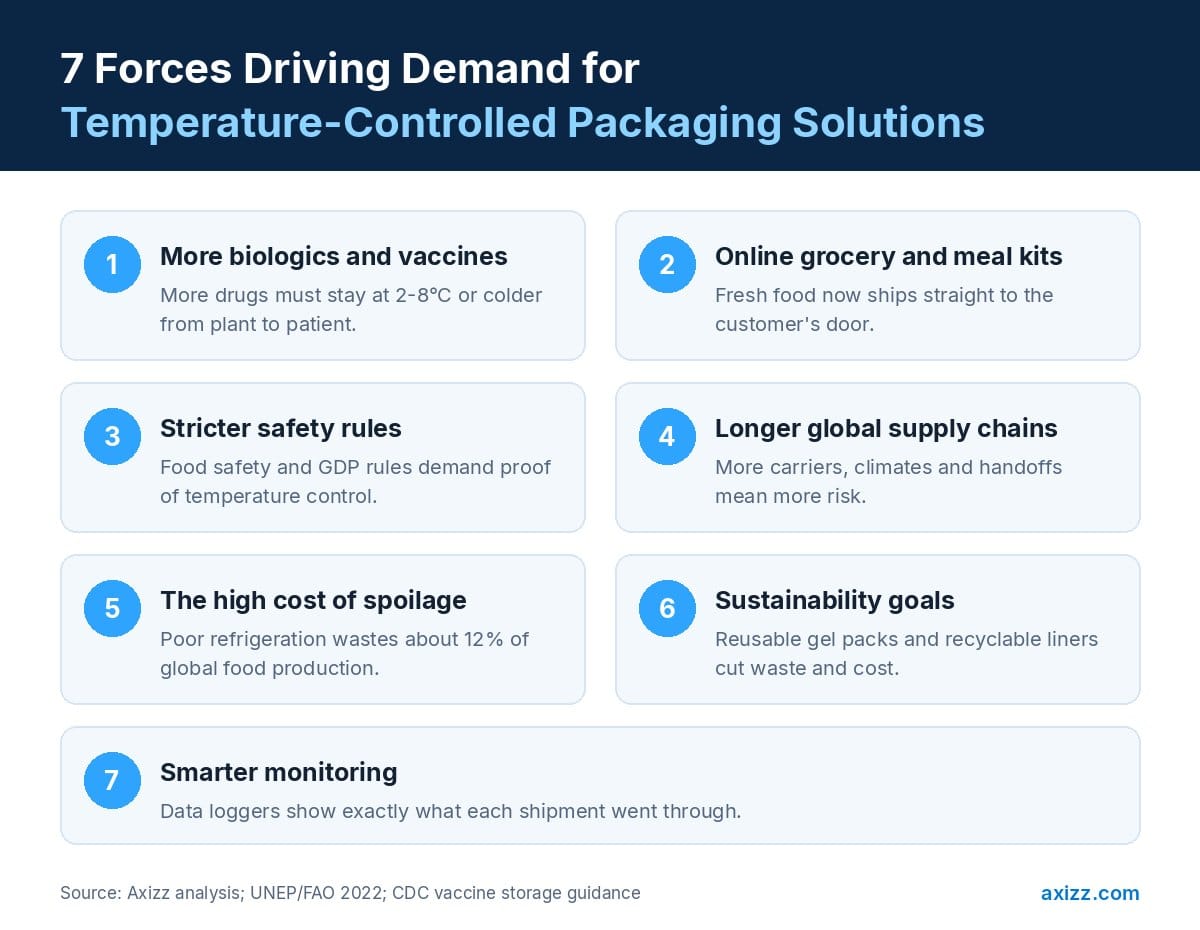
1. More Biologics, Vaccines, and Specialty Drugs
Insulin, vaccines, biologics, and cell and gene therapies all lose effectiveness when they get too warm or too cold. The CDC’s vaccine storage guidance calls for refrigerated vaccines to stay between 2°C and 8°C (36°F to 46°F). As more new drugs need this kind of handling, drug makers and distributors need packaging that holds those ranges every time. We cover this in more detail in the importance of cooling products in pharmaceutical distribution.
2. Online Grocery and Meal Kit Delivery
Fresh meat, seafood, dairy, and prepared meals now travel straight to people’s doors. Every one of those boxes needs insulation and a refrigerant that lasts through the last mile, including time spent sitting on a porch. That shift has turned cold packaging from a warehouse issue into a customer experience issue. Here is more on why food delivery companies depend on cooling products.
3. Stricter Food Safety and Drug Rules
The USDA warns that bacteria grow fastest between 40°F and 140°F, a range it calls the Danger Zone. Food shippers have to keep products out of that range, and drug distributors must follow Good Distribution Practice (GDP) standards that require documented temperature control. Tested, qualified packaging makes compliance much easier to prove.
4. Longer, More Global Supply Chains
Products now cross borders, climates, and several carriers before they reach the end user. Each handoff adds time and risk. Longer routes need temperature-controlled packaging solutions with more insulation and more refrigerant, which pushes demand for higher-performance shippers. Our cold chain packaging guide explains how to protect global shipments step by step.
5. The High Cost of Spoilage
A failed shipment means lost product, refunds, and unhappy customers. On a global scale, a UNEP and FAO report found that the lack of effective refrigeration causes the loss of about 526 million tonnes of food each year, or 12% of global food production. Reliable temperature-controlled packaging solutions are one of the simplest ways to cut that loss.
6. Sustainability and Reusable Materials
Businesses and regulators want less single-use waste. Reusable gel ice packs, recyclable liners, and returnable shippers lower the cost per shipment and keep material out of landfills. New European packaging rules are also pushing toward recyclable packaging by 2030, so many brands are switching early. See sustainable cooling solutions for modern businesses for practical options.
7. Smarter Temperature Monitoring
Low-cost data loggers and connected sensors now show exactly what a shipment went through. That visibility helps companies spot weak routes, prove compliance, and choose packaging based on real data instead of guesswork. It also raises the bar, because customers can now see when a delivery went out of range.
Common Temperature Ranges and What Ships in Them
Most temperature-controlled packaging solutions are built around one of these ranges:
| Range | Temperature | Typical products | Common refrigerant |
|---|---|---|---|
| Controlled room temperature | 15°C to 25°C (59°F to 77°F) | Many tablets, some medical supplies, chocolate | Insulation with conditioned gel packs |
| Refrigerated | 2°C to 8°C (36°F to 46°F) | Vaccines, insulin, biologics, lab samples | Gel ice packs or phase change materials |
| Chilled food | 0°C to 4°C (32°F to 40°F) | Fresh meat, seafood, dairy, meal kits | Frozen gel ice packs |
| Frozen | -25°C to -15°C (-13°F to 5°F) | Frozen foods, ice cream, some biologics | Frozen gel packs or dry ice |
| Ultra-cold | -80°C to -60°C (-112°F to -76°F) | mRNA vaccines, cell therapies | Dry ice or cryogenic shippers |
How to Choose Temperature-Controlled Packaging Solutions for Your Business
- Know your product’s range. Start with the safe temperature range from the manufacturer, the label, or the regulator.
- Map the full transit time. Add a buffer of 12 to 24 hours for delays, weekends, and missed deliveries.
- Plan for the season and route. Summer heat and winter cold call for different pack-outs, even for the same product.
- Match the refrigerant to the job. Gel ice packs suit chilled and refrigerated shipments. Dry ice is used for frozen and ultra-cold goods, but it is regulated as a dangerous good for air transport.
- Size the insulation correctly. Too little shortens hold time, and too much adds weight and freight cost.
- Test before you scale. Run a few test shipments with a data logger to confirm the pack-out holds temperature.
- Think about reuse. Reusable gel packs and liners lower your cost per shipment over time.
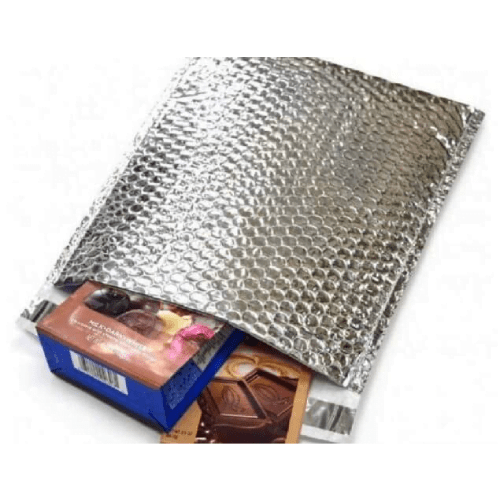
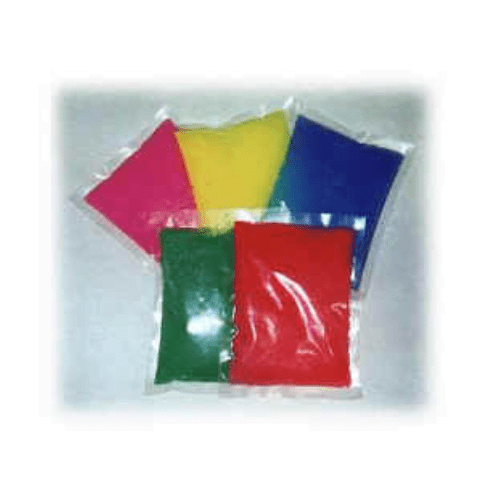
For short routes, THERMAPACK™ thermal shipping envelopes paired with FREEZEZE™ flexible gel ice packs give economical protection for about 24 hours. For bigger loads, THERMAPACK pallet covers wrap perishables for short freight moves. Still weighing your options? Read our guide to choosing the right cooling solution for your business.
Frequently Asked Questions
What are temperature-controlled packaging solutions?
Temperature-controlled packaging solutions are packaging systems that keep products within a set temperature range during storage and shipping. Most combine insulation, such as insulated shippers or thermal liners, with a refrigerant like gel ice packs, phase change materials, or dry ice. Many also include a temperature indicator or data logger.
Why is demand for temperature-controlled packaging solutions growing?
Demand is growing because of more temperature-sensitive drugs and vaccines, the rise of online grocery and meal delivery, stricter food and drug safety rules, longer global supply chains, the high cost of spoilage, and a push toward reusable, lower-waste packaging.
What is the difference between passive and active temperature-controlled packaging?
Passive packaging uses insulation and pre-conditioned refrigerants like gel packs and needs no power. Active packaging uses powered cooling or heating controlled by a thermostat. Passive systems are cheaper and more common for parcels, while active systems are used for large, high-value freight.
How long do gel ice packs keep a shipment cold?
It depends on the insulation, the number and size of gel packs, the outside temperature, and the transit time. A thermal mailer with gel ice packs typically covers about 24 hours, while a well-insulated shipper with more refrigerant can last 48 hours or longer. Always test your pack-out before shipping at scale.
Should I use gel ice packs or dry ice?
Use gel ice packs for chilled and refrigerated products, usually between 0°C and 8°C. Use dry ice for frozen or ultra-cold products, since it sits at about -78.5°C. Dry ice is regulated as a dangerous good for air shipping and needs proper labeling and ventilation, while gel packs are non-toxic and easier to handle.
Are temperature-controlled packaging solutions eco-friendly?
They can be. Reusable gel ice packs, recyclable liners, and returnable shippers cut waste and lower the cost per shipment. Choosing the right box size also avoids wasted material and freight space.
Final Thoughts
The demand for temperature-controlled packaging solutions is not a short-term spike. It is tied to long-term changes in how medicine is made, how people shop for food, and how goods move around the world. Businesses that pick the right mix of insulation and refrigerant now will lose less product, keep customers happier, and stay ready for stricter rules ahead. To see where the industry is heading next, read the future of temperature-controlled packaging, or contact Axizz to find the right gel ice packs and thermal packaging for your shipments.