

Eco-friendly cooling products are reusable, recyclable or low-impact items that keep food, medicine and people cool without creating a steady stream of single-use waste. Think reusable gel ice packs, recyclable insulated shippers, non-toxic gel fillings and cooling wear that works without electricity. As more companies set waste and carbon goals, these products are moving from a nice extra to standard practice.
This guide explains what makes a cooling product sustainable, the seven innovations shaping the category, and how to choose eco-friendly cooling products for your business or home.

Key Takeaways
- Eco-friendly cooling products cut waste by replacing single-use cold packs, loose ice and disposable foam.
- Reusable gel ice packs can be refrozen and used for years, which lowers the cost per use.
- Non-toxic gels, recyclable films and passive cooling (no power needed) reduce environmental impact.
- The best eco-friendly cooling products balance temperature performance, durability and safe disposal.
What Are Eco-Friendly Cooling Products?
A cooling product is sustainable when it reduces environmental impact across its full life: the materials it uses, how long it lasts, the energy it needs and what happens when it is no longer useful. In practice, eco-friendly cooling products usually share these traits:
- Reusability: built to be frozen, used and refrozen many times.
- Safe materials: non-toxic gels and food-safe outer films.
- Recyclable packaging: less foam, more paper-based or curbside-recyclable materials.
- Low or zero energy use: passive cooling that needs no power at the point of use.
- Long service life: durable seams and puncture-resistant materials that resist leaks.
For a closer look at the environmental side, read our guide to sustainable cooling products and environmental responsibility.
Why Sustainable Cooling Matters Now
Cooling demand is rising fast. The International Energy Agency’s The Future of Cooling report warns that energy use for space cooling could more than triple by 2050 without efficiency gains. At the same time, cold chain shipping for groceries, meal kits and pharmaceuticals keeps growing, and much of it still relies on single-use packaging.
That creates a clear opportunity. Passive, reusable cooling products need no electricity once frozen, and every reuse avoids another disposable pack. The U.S. EPA’s Sustainable Materials Management program encourages exactly this kind of thinking: reduce material use across a product’s life cycle rather than only managing waste at the end.
For businesses, the case is practical too. Customers notice wasteful packaging, sustainability reporting is becoming routine, and reusable systems often cost less per shipment over time.
7 Innovations Shaping Eco-Friendly Cooling Products
1. Reusable Gel Ice Packs
Reusable gel ice packs are the foundation of sustainable cooling. They hold a steady cold temperature longer than loose ice, do not leave meltwater behind and can be reused for years with proper care. Businesses in food delivery, healthcare and logistics use them to cut both waste and supply costs. Learn more about the commercial benefits of reusable gel ice packs and why gel ice packs outperform traditional ice.
2. Non-Toxic and Plant-Based Gel Formulas
Manufacturers are moving toward water-based gels with non-toxic thickeners and, in some cases, plant-derived ingredients. These formulas are safer around food and people, and they make disposal simpler if a pack is damaged.
3. Recyclable and Low-Waste Packaging
Expanded polystyrene coolers are being replaced by recyclable paper-based insulation, recycled cotton liners and mono-material films that are easier to recycle. Read more about where temperature-controlled packaging is heading.
4. Phase Change Materials for Precise Temperatures
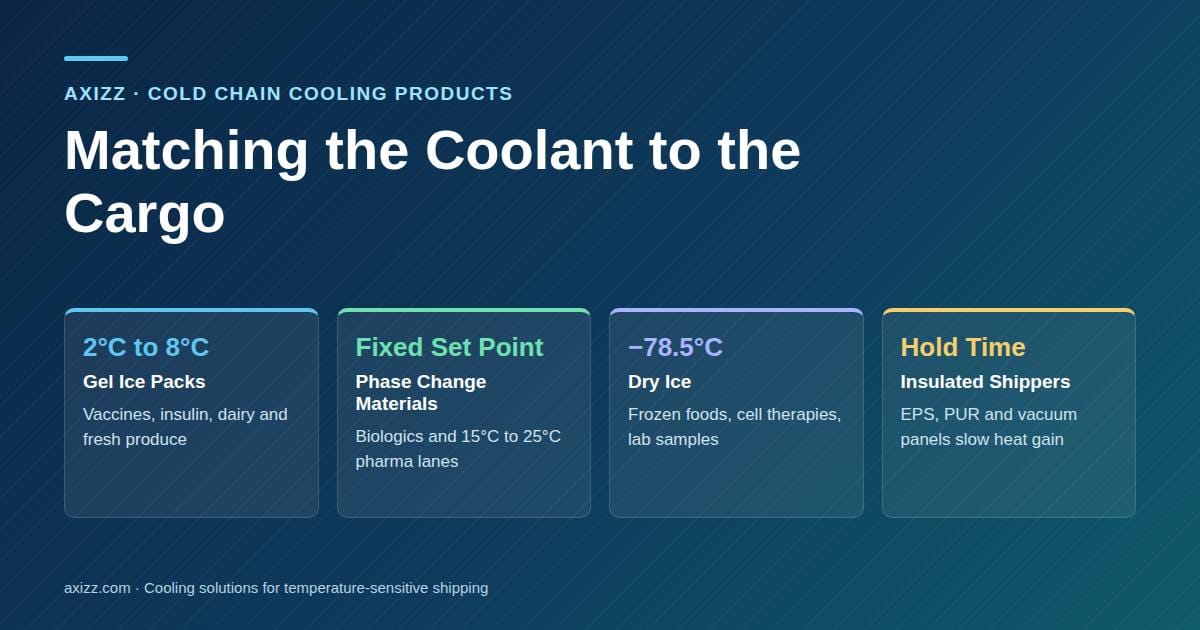
Phase change materials (PCMs) are engineered to hold a specific temperature, such as the 2 to 8 degrees Celsius range many vaccines and medicines require. Because they are reusable and highly accurate, PCMs reduce spoiled shipments, which is one of the biggest hidden sources of waste in the cold chain.
5. Reusable Cold Chain Shipping Systems
Returnable insulated shippers and pack-out kits can be used for dozens of trips before retirement. Paired with reusable ice packs, they turn cold chain packaging from a disposable cost into a long-term asset. See how cold chain solutions protect temperature-sensitive products and the role of cooling products in sustainable logistics.
6. Passive Personal Cooling Wear
Cooling vests, neck wraps and headbands use gel or PCM inserts to keep workers and athletes comfortable without fans or air conditioning. They are especially useful for outdoor crews and warehouse teams. Here is how cooling vests improve workplace safety.
7. Smarter Design and Temperature Monitoring
Right-sized packs, better insulation design and low-cost temperature loggers help companies use only as much cooling as a shipment needs. Less overpacking means less material, lower shipping weight and fewer losses.
Benefits of Eco-Friendly Cooling Products
Lower Long-Term Costs
A reusable pack costs more than a disposable one on day one, but the cost per use drops with every cycle. For high-volume shippers, the savings add up quickly.
Less Waste and a Smaller Carbon Footprint
Fewer single-use packs and foam boxes mean less landfill waste and fewer resources spent on manufacturing replacements.
Stronger Brand Trust
Customers increasingly choose brands that take sustainability seriously. Visible, reusable packaging is an easy way to show that commitment.
Reliable Performance
Modern eco-friendly cooling products are built to match or beat single-use options on hold time and temperature stability, so you do not have to trade quality for a greener choice.
How to Choose Eco-Friendly Cooling Products
Use this quick checklist when comparing options:
- Temperature range and hold time: match the pack to what you are cooling and for how long.
- Durability: look for thick, puncture-resistant film and strong seams for repeat use.
- Gel safety: choose non-toxic formulas, especially for food or personal use.
- Packaging and disposal: check whether the outer materials are recyclable.
- Size and fit: right-sized packs reduce waste and shipping weight.
- Supplier support: work with a supplier that can advise on pack-outs and bulk orders.
For a deeper walkthrough, read our guide on choosing the right cooling solution for your business, or browse Axizz cooling products.
The Future of Eco-Friendly Cooling Products
The next wave of eco-friendly cooling products will focus on circular models, such as take-back and refill programs, along with more bio-based materials and data-driven cold chains. Regulation is pushing in the same direction: the Kigali Amendment to the Montreal Protocol is phasing down high-impact HFC refrigerants worldwide, which puts more attention on passive, low-energy cooling. Explore more innovations driving the future of cooling products.
Frequently Asked Questions About Eco-Friendly Cooling Products
What are eco-friendly cooling products?
Eco-friendly cooling products are cooling items designed to reduce environmental impact, usually by being reusable, made from non-toxic or recyclable materials and requiring little or no energy to use. Reusable gel ice packs, recyclable insulated shippers and cooling vests are common examples.
Are reusable gel ice packs better for the environment than regular ice?
In most cases, yes. Reusable gel ice packs can be refrozen for years, do not create meltwater that can damage products, and replace ongoing purchases of bagged ice or single-use cold packs.
How long do reusable gel ice packs last?
With proper care, a quality reusable gel ice pack can last for years of freeze and thaw cycles. Store it flat, avoid sharp objects and replace it if you see leaks or cracks.
Are gel ice packs safe and non-toxic?
Most modern gel packs use a water-based gel that is considered non-toxic, but they are not meant to be eaten. Always check the product label, and choose packs made for food contact if they will touch groceries.
How should I dispose of a gel ice pack?
Do not pour gel down the drain, since it can clog pipes. Put the gel in the trash and recycle the outer film only if your local program accepts it. Better yet, keep reusing the pack as long as it is intact.
What is the most eco-friendly way to ship cold products?
Combine reusable or recyclable insulated packaging with reusable gel ice packs or phase change materials, and right-size the pack-out to the trip length. This keeps products safe while cutting waste.
Final Thoughts
Eco-friendly cooling products give businesses and households a simple way to cut waste without giving up performance. Starting with reusable gel ice packs is an easy first step. Need help picking the right option? Contact the Axizz team and we will help you find eco-friendly cooling products that fit your needs.