
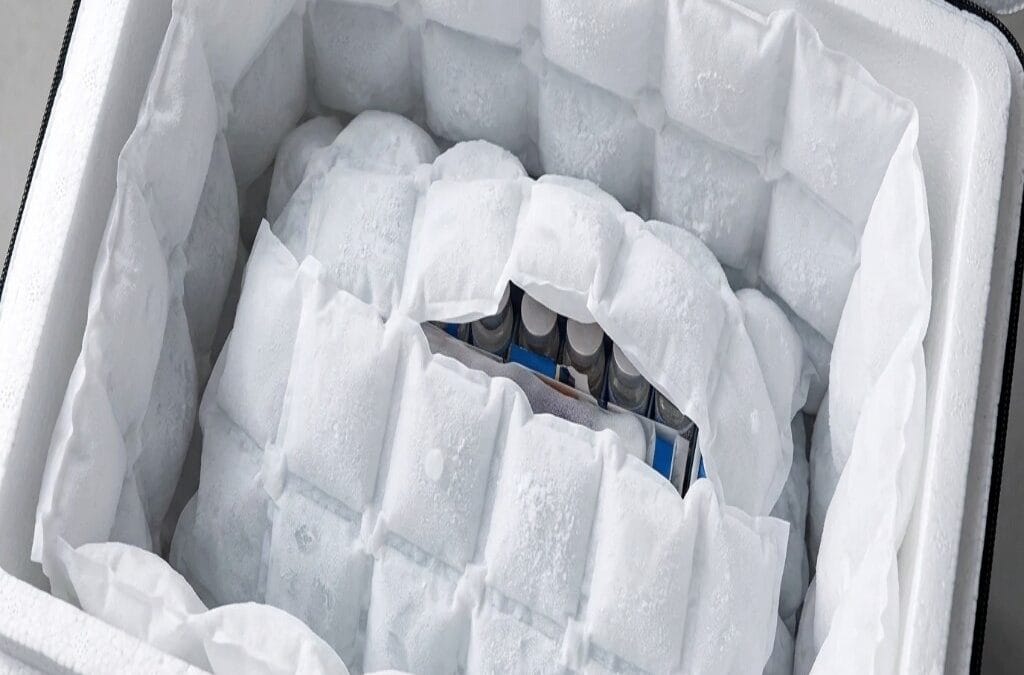
Cooling products for safe food delivery keep perishable orders at or below 40°F (4°C) from the kitchen to the customer’s door. Gel ice packs, insulated bags, thermal liners and temperature indicators slow heat transfer so food never sits long in the 40°F–140°F temperature danger zone, where bacteria multiply fastest.
For restaurants, meal-kit brands, grocery couriers and catering teams, that temperature window decides whether an order arrives fresh or gets refunded. This guide explains which cooling products work, what temperatures to hold, how many ice packs a delivery actually needs, and how to stay compliant with food safety rules.
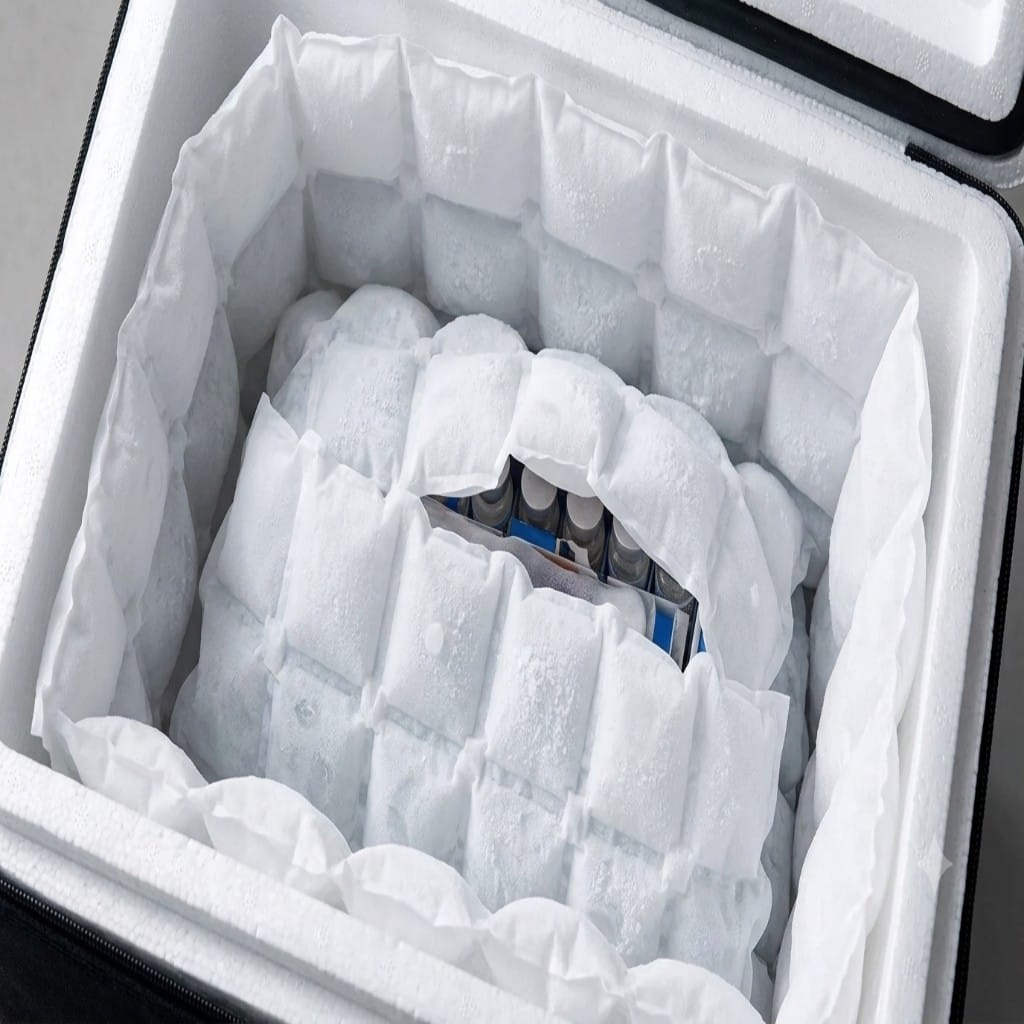
What Are Cooling Products for Safe Food Delivery?
Cooling products for safe food delivery are the passive and active tools that hold food at a safe temperature while it moves. Most delivery operations combine two or three of them:
- Gel ice packs – reusable, non-toxic packs that absorb heat for 4–12 hours depending on size and insulation. The workhorse of food delivery.
- Insulated delivery bags and totes – foil or foam-lined carriers that cut heat transfer from the vehicle and outside air.
- Thermal box liners – foil bubble or foam inserts used inside shipping cartons for next-day or courier meal boxes.
- Dry ice – holds frozen goods near -109°F, but needs ventilation and hazmat labelling for shipping.
- Phase change materials (PCM) – engineered packs tuned to a set temperature, used for chilled pharma-grade or premium food shipping.
- Temperature indicators and data loggers – proof that the cold chain held, which matters for audits and disputes.
For most last-mile food delivery, reusable gel ice packs beat loose ice: they do not melt into water, they stay put, and they can be refrozen hundreds of times.
Why Temperature Control Decides Food Safety
Bacteria such as Salmonella, Listeria and E. coli grow quickest between 40°F and 140°F. In that range a bacterial population can double roughly every 20 minutes, so a 90-minute delay in a hot car is enough to turn a safe meal into a health risk.
Two rules govern delivery timing, per the USDA danger zone guidance:
- The 2-hour rule – perishable food should not stay in the danger zone for more than two hours total.
- The 1-hour rule – when the outside temperature is above 90°F, that window drops to one hour.
Cooling products buy back that time. A well-packed insulated bag with the right number of gel packs can hold safe temperatures for several hours instead of minutes, which is what makes multi-stop routes and same-day shipping possible.
Safe Temperatures for Common Delivery Foods
| Food category | Target temperature | Cooling setup that works |
|---|---|---|
| Dairy, deli, prepared cold meals | 40°F (4°C) or below | Insulated bag + 2 gel ice packs |
| Raw meat, poultry, seafood | 32–40°F (0–4°C) | Leak-proof bag + 3–4 gel packs, packed separately |
| Cakes, desserts, chocolate | 35–45°F (2–7°C) | Rigid box + thermal liner + 2 gel packs |
| Ice cream and frozen items | 0°F (-18°C) or below | Dry ice or frozen PCM packs |
| Hot meals | 140°F (60°C) or above | Insulated hot bag, never mixed with cold items |
Hot and cold items should never share a compartment. Mixing them pulls both toward the danger zone, which is the most common packing mistake teams make when they set up cooling products for safe food delivery in food delivery operations.
How Gel Ice Packs Keep Delivery Orders Cold
How many gel ice packs do you need?
Gel packs are the most used of all cooling products for safe food delivery, and sizing them is simple. A practical rule: use one pound of gel ice pack for every two pounds of chilled food, then add one extra pack for every additional hour of transit beyond the first. In day-to-day terms:
- Trips under 1 hour, single insulated bag: 1–2 standard packs
- 2–4 hour routes or multi-stop deliveries: 3–4 packs
- Overnight or next-day shipping: 4–6 packs plus a full thermal liner
- Frozen shipments: dry ice or frozen PCM, not standard gel
Where to place the packs
Cold air sinks, so the strongest placement is on top of the food and along the sides, with one pack underneath for long routes. Fill empty space with paper or air pillows: a tightly packed container holds temperature far longer than a half-empty one.
Freeze and rotate properly
Gel packs need 12–24 hours in a freezer at 0°F to fully charge. Keeping two sets in rotation means a fully frozen batch is always ready for the next shift, which is why reusable packs work so well for commercial operations.
Best Practices for Food Delivery Operations
- Pre-chill food to 40°F before it is packed. Cooling products maintain temperature, they do not rapidly cool warm food.
- Pre-chill the insulated bag or box as well when possible.
- Pack cold and hot orders in separate carriers, always.
- Use leak-proof secondary bags for raw proteins to prevent cross-contamination.
- Fill void space so warm air cannot circulate inside the container.
- Keep bags closed and out of direct sunlight while driving.
- Plan routes so the most temperature-sensitive drop-off comes first.
- Log departure and arrival temperatures on high-value or high-risk orders.
Good cooling products for safe food delivery only work with good habits. These steps cost almost nothing but cut spoilage claims sharply, and they map directly onto the controls that cold chain solutions use at larger scale.
Cooling Products and Food Safety Compliance
Cooling products for safe food delivery are also a compliance tool. Delivery businesses are responsible for food safety until the order reaches the customer. The FDA Food Code and most state health regulations expect time and temperature control for safety (TCS) foods to stay out of the danger zone during transport, and HACCP plans treat delivery as a monitored critical control point.
In practice, compliance means three things: documented packing procedures, cooling products rated for the route length, and records that show temperatures were held. Temperature indicator strips or reusable loggers give inspectors and customers verifiable proof rather than an assurance.
How to Choose the Right Cooling Products
When comparing cooling products for safe food delivery, judge them on:
- Hold time – how many hours the pack keeps food under 40°F in your actual container, not in a lab.
- Food-grade safety – non-toxic gel and puncture-resistant film that sits safely against food packaging.
- Reusability – reusable packs typically pay for themselves within weeks compared with single-use ice.
- Size and fit – flat sheet packs suit bags and boxes; bricks suit coolers and bulk totes.
- Freeze-cycle durability – commercial use means hundreds of cycles, so seal quality matters.
- Cost per delivery – the real metric, not the unit price.
Axizz supplies food-grade gel ice packs and cooling solutions built for commercial delivery volumes. You can browse the full range of cooling products or contact our team for help sizing a setup around your routes.
Frequently Asked Questions
What temperature should food be kept at during delivery?
Cold perishable food must stay at or below 40°F (4°C) and hot food at or above 140°F (60°C). Anything between those two points is the temperature danger zone, where bacteria grow fastest, and food should not remain there for more than two hours (one hour if it is above 90°F outside).
How long do gel ice packs keep food cold during delivery?
A standard gel ice pack keeps food below 40°F for roughly 4 to 12 hours, depending on pack size, how many packs are used, the quality of the insulated bag, and the outside temperature. Two packs in a good insulated bag typically cover a 3 to 4 hour delivery route.
How many ice packs do I need for a food delivery order?
Use about one pound of gel ice pack for every two pounds of chilled food, then add one more pack per extra hour of transit. Short local trips need 1 to 2 packs, multi-stop routes need 3 to 4, and overnight shipping needs 4 to 6 packs with a thermal liner.
Are gel ice packs safe to use with food?
Yes, when they are food-grade. Food-grade gel packs use non-toxic gel in puncture-resistant film and are safe to place beside sealed food packaging. Keep them outside direct contact with unwrapped food and discard any pack that is split or leaking.
Can gel ice packs be reused for commercial food delivery?
Yes. Commercial gel ice packs can be washed, refrozen and reused hundreds of times. Freeze them for 12 to 24 hours at 0°F before use and keep two rotating sets so a fully frozen batch is always available for the next shift.
Do food delivery services need dry ice?
Only for frozen products such as ice cream or frozen meat, where temperatures must stay at or below 0°F. For chilled food, gel ice packs are safer and cheaper, since dry ice requires ventilation, careful handling and hazmat labelling when shipped.
Keeping Every Delivery Safe
Safe food delivery comes down to one measurement: the temperature of the food when the customer opens the bag. The right cooling products for safe food delivery – food-grade gel ice packs, properly insulated carriers and a consistent packing routine – keep that number where it belongs, protect your brand from spoilage complaints, and keep you on the right side of food safety regulations.
If you are scaling deliveries or shipping perishables further than before, start by matching pack size and quantity to your longest route, then verify with a temperature check on a real delivery. Explore Axizz cooling products to find a setup that fits your operation.