
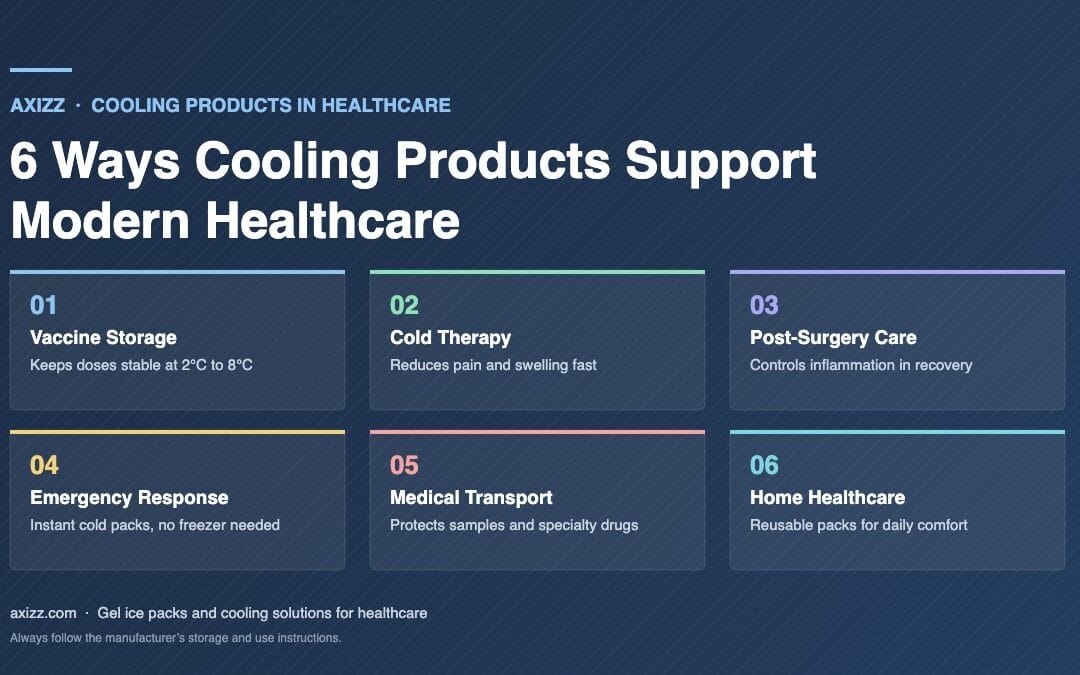
Gel packs for patient care are simple tools that help clinics and hospitals manage pain, swelling and comfort. Reusable, flexible and easy to store, they support everyday care without complicated equipment. Axizz makes reusable gel packs for these needs.
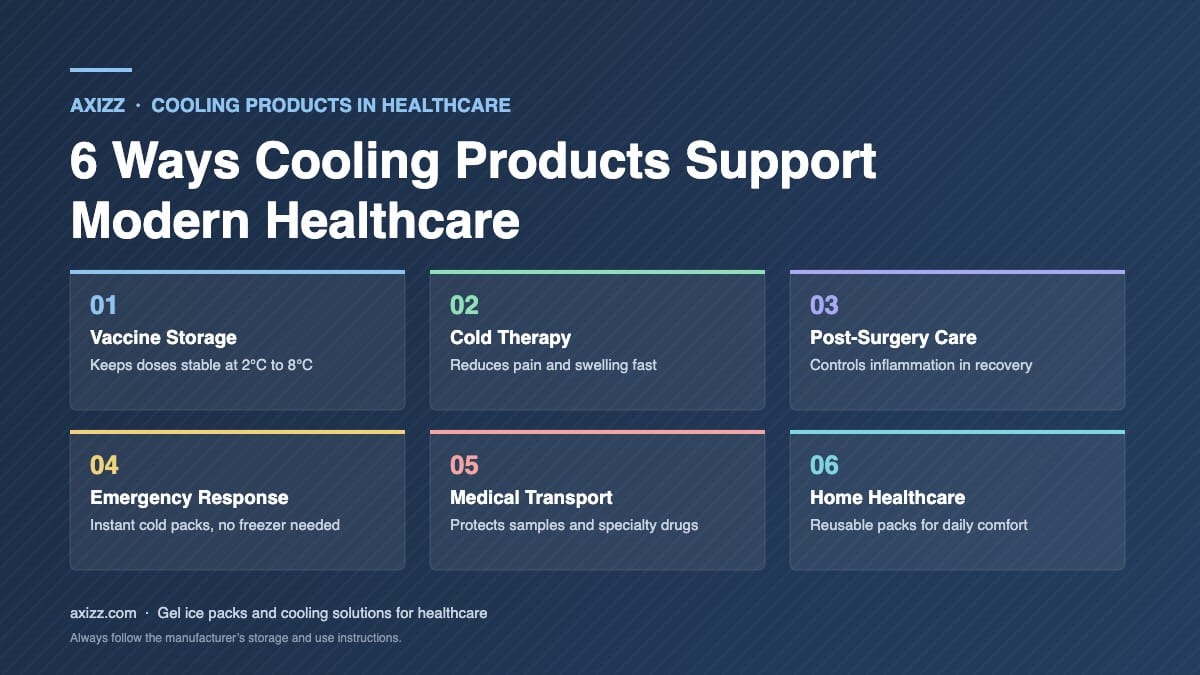
Key Takeaways
- Gel packs offer drug-free comfort for many patients.
- Hot and cold options suit different needs.
- Hygiene and skin checks are essential.
- Always follow clinical orders and local policy.
Why Gel Packs for Patient Care Are Valuable
Clinics and hospitals handle injuries, procedures and long recoveries daily. Gel packs for patient care give nurses and therapists a quick way to add comfort, reduce swelling and support rehabilitation. They are inexpensive, reusable and easy to apply.
5 Proven Benefits of Gel Packs in Clinical Settings
1. Quick, drug-free comfort
Cold or warmth can ease discomfort while other treatments take effect.
2. Flexible for many body areas
Soft gel conforms to knees, shoulders, backs and wrists for even contact.
3. Supports rehabilitation
Therapists use packs before or after exercises to manage soreness and stiffness.
4. Cost-effective and reusable
One pack serves many patients when cleaned according to policy, cutting supply costs.
5. Easy to store and deliver
Packs are stored in clinic freezers or warmers and ready within minutes.
Practical Tips
- Check the patient’s skin before and after use.
- Use a protective layer and time limits.
- Avoid use on areas with poor sensation or circulation without orders.
- Clean and inspect packs between patients.
- Document application when required.
Best Practice for Gel Packs for Patient Care
Create a short protocol that lists indications, time limits, cleaning steps and who is responsible. Train new staff and review the protocol regularly. Clear rules make gel packs for patient care safer and more consistent, and they protect patients from avoidable skin injuries.
Choosing Packs for Clinical Use
Look for durable, wipeable, leak-resistant packs in sizes that suit your common treatments. Colored or labeled packs help staff separate cold-only and warm-use stock. Ask suppliers about temperature ranges, expected life and cleaning guidance before ordering in bulk.
Patient Communication
Explain what the pack is for, how long it will stay on and what to report, such as burning, numbness or increased pain. Patients who understand the process are more comfortable and are more likely to speak up if something feels wrong.
Storage and Stock Control
Keep clean packs in a dedicated freezer or warmer, away from food and specimens. Track stock levels and rotate packs so the oldest are used first. Remove any that show wear.
Training Your Team
Hold a short session for new nurses, therapists and assistants. Show how to prepare packs, apply them with a barrier, check skin and clean between patients. Provide a one-page guide near the freezer so staff can refresh their memory quickly. Consistent technique across shifts reduces mistakes, improves patient experience and supports safer care.
Reviewing Outcomes
Ask patients how comfortable they felt and note any skin reactions. Share feedback in team meetings and update your protocol when needed. Small improvements, such as better pack sizes or clearer instructions, make a real difference over time.
Related Reading
reusable gel packs in healthcare, why healthcare facilities depend on reliable cooling products, cooling products in healthcare logistics. For trusted background, see NHS health information.
FAQ
Are gel packs safe for hospital patients?
Yes when used with barriers, time limits and clinical guidance, and with checks for skin condition.
How often should packs be replaced?
Replace when damaged, leaking or no longer performing, following supplier and facility guidance.
Conclusion
Gel packs for patient care are practical, economical and comfortable when used with good protocols. Build clear procedures and train your team. This article is general information, not medical advice.