
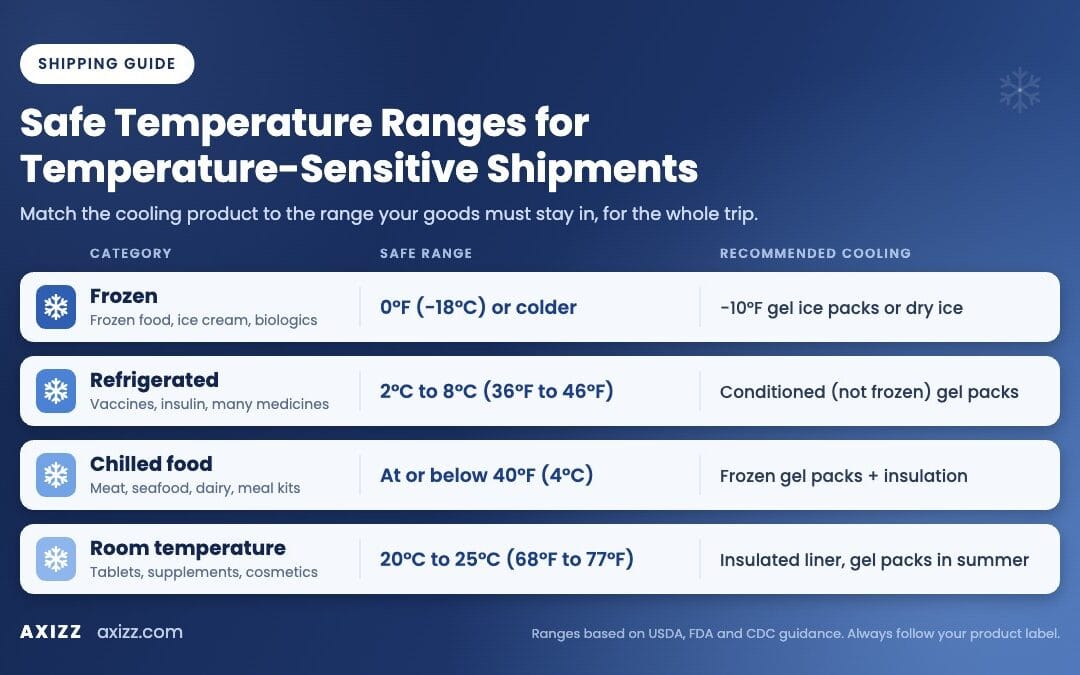
Gel-based temperature control technology uses specially formulated gels to absorb, hold and release heat in a controlled way. That makes gel packs a reliable tool for shipping, healthcare, food and personal comfort. Axizz makes reusable gel packs for these needs.
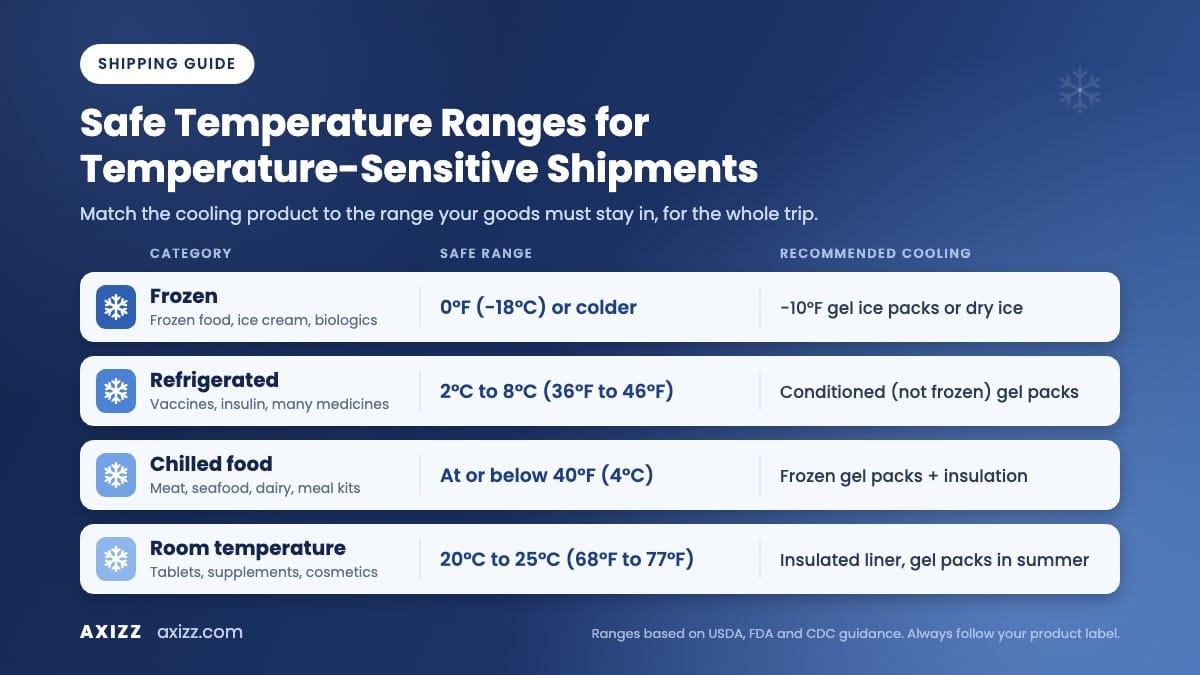
Key Takeaways
- Gels hold a lot of thermal energy and release it slowly.
- Formulations are tuned for different temperature ranges.
- Insulation and packing method matter as much as the gel.
- Testing on real routes confirms performance.
How Gel-Based Temperature Control Technology Works
A gel pack contains a water-rich gel that is frozen or warmed. As it returns to room temperature it absorbs heat from the product or releases heat to it, keeping the surroundings near the target temperature for a period of time. The gel’s thickness prevents leaks and spreads the effect evenly.
5 Key Facts About Gel Temperature Control
1. Gels store thermal energy well
Water-based gels hold a lot of heat per unit, so they stay cold or warm for a long time compared with many dry materials.
2. Formulas target different ranges
Some gels are designed for chilled goods, others for frozen or controlled room temperature, so choose the right type.
3. Insulation extends performance
A quality insulated box slows heat transfer, making the same pack last much longer.
4. Placement matters
Packs placed around the product cool more evenly than a single pack on one side.
5. Pre-conditioning is essential
Packs must be fully frozen or chilled to their stated temperature before packing for expected results.
Practical Tips
- Choose a gel formulated for your temperature range.
- Pre-condition packs for the full recommended time.
- Use insulated packaging suited to the route.
- Place packs evenly around the product.
- Validate with data loggers before routine use.
Applying Gel-Based Temperature Control Technology
Start with a clear target temperature and expected transit time. Gel-based temperature control technology can then be matched to the product, container and season. Test the setup, record results and adjust gel quantity. Teams that treat gel-based temperature control technology as a system, not a single pack, see the most reliable results.
Common Uses
Gel packs protect food deliveries, medicines, lab samples and cosmetics, and they provide comfort in hot and cold therapy. Each use has different needs for temperature range, contact and safety, so always follow guidance for the specific application.
Limits of Gel Technology
Gels do not last forever. In extreme heat or very long routes, you may need more packs, better insulation or active refrigeration. Damaged packs should be replaced, and some products must never touch cold surfaces directly because they can freeze and spoil.
Testing Your Setup
Run a trial with data loggers on your longest route in the hottest likely weather. Compare the recorded temperatures with your limits, then adjust the number of packs, the insulation or the packing pattern. Repeat the test when products, routes or seasons change.
Choosing Between Hot and Cold Applications
The same technology works in both directions. Cold gel packs absorb heat from products or the body, while warmed gel packs release heat for comfort. Always follow the maker’s instructions on safe temperatures and never microwave or freeze a pack in ways it was not designed for.
Related Reading
why temperature-controlled shipping is essential, how temperature-controlled packaging protects sensitive products, innovations shaping the future of cooling technology. For trusted background, see the World Health Organization.
FAQ
What are gel packs made of?
Typically water, a thickening polymer and additives in a sealed plastic film. Check product details for specifics.
How long do gel packs stay cold?
It depends on size, insulation, ambient temperature and starting temperature. Test your own setup.
Conclusion
Gel-based temperature control technology is a proven, flexible way to manage temperature. Combine the right gel, good insulation and testing for dependable results.