
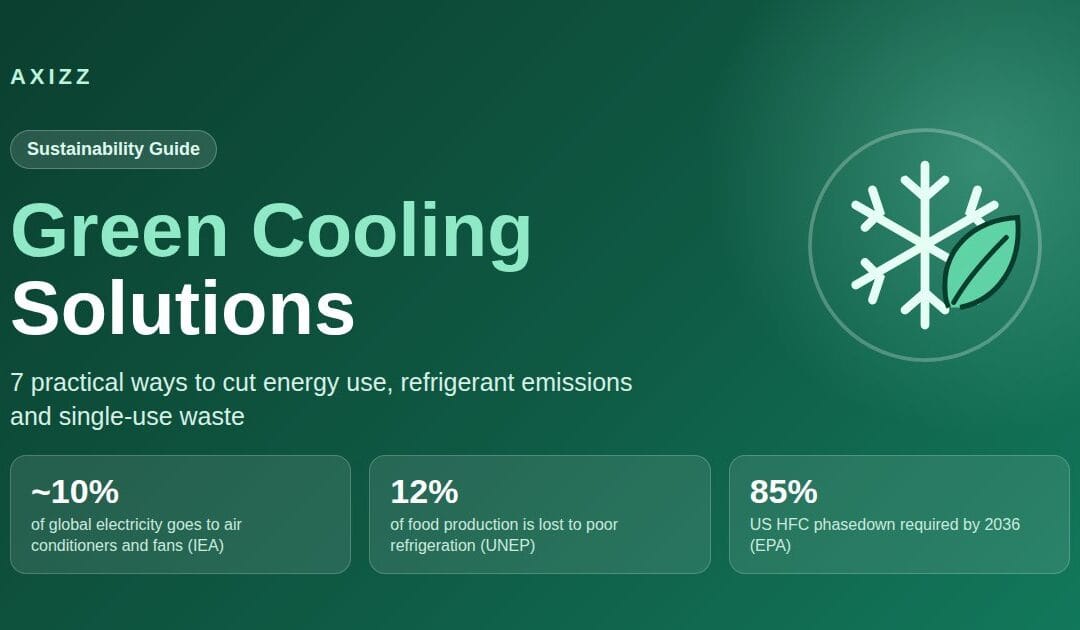
Eco-friendly cooling solutions are in growing demand as customers, regulators and businesses look for ways to cut waste without losing performance. Reusable gel packs and durable insulation are leading examples. Axizz makes reusable gel packs for these needs.
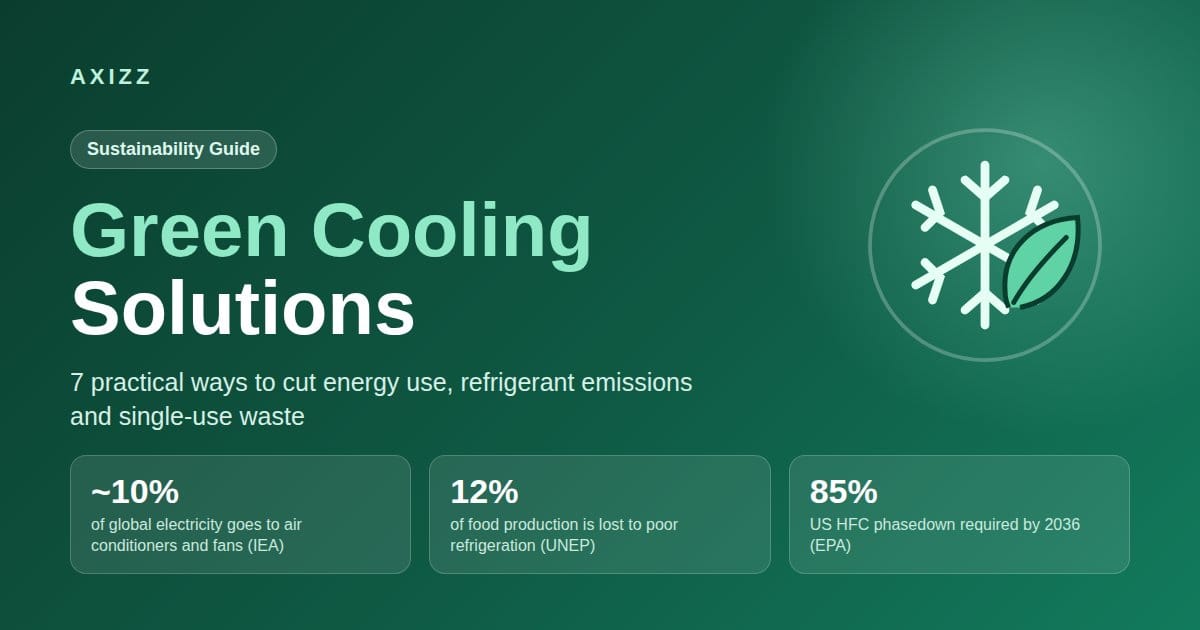
Key Takeaways
- Reuse is the simplest route to less cooling waste.
- Customers increasingly prefer greener suppliers.
- Savings often come with sustainability.
- Look for durable, recyclable and reusable designs.
Why Demand for Eco-Friendly Cooling Solutions Is Growing
Single-use coolers, cold packs and bagged ice create plenty of waste. As environmental awareness grows, both consumers and companies are asking for eco-friendly cooling solutions that perform well and last longer.
5 Reasons Eco-Friendly Cooling Is Rising
1. Waste reduction goals
Companies set targets to reduce single-use plastic, and cooling is an obvious place to start.
2. Customer expectations
Shoppers notice packaging and reward brands that show care for the environment.
3. Cost savings
Reusable products lower long-term spending compared with repeated disposable purchases.
4. Regulation and reporting
Sustainability reporting and local rules push businesses to track and reduce packaging waste.
5. Better technology
Improved gels, insulation and materials make reusable cooling reliable across many uses.
Practical Tips
- Audit how much single-use cooling you use today.
- Switch the highest-volume uses first.
- Choose durable products with long cycle life.
- Set up reuse or return systems where possible.
- Track savings and waste reduction over time.
How to Choose Eco-Friendly Cooling Solutions
Look beyond marketing claims. Real eco-friendly cooling solutions are reusable many times, safe to handle and easy to clean. Ask about expected life, materials and end-of-life options. The best eco-friendly cooling solutions also perform consistently, because a pack that fails and causes spoilage creates its own waste.
Avoiding Greenwashing
Be cautious of vague words such as “green” or “natural” without evidence. Ask for details: how many uses, what the pack is made from and whether it can be recycled in your area. Compare total impact, including product life and transport, rather than a single feature.
Small Steps With Big Impact
Start with lunch bags, shipments and events, where disposable cooling is common. Switching even a few high-volume uses removes a large amount of waste over a year.
Practical Steps for Businesses
Begin with a quick audit: how many disposable cold packs, ice bags and coolers do you use each month? Estimate their cost and waste. Choose one process, such as shipping or catering, and pilot reusable packs. Track the number of reuses, spoilage, costs and customer feedback. Use the results to build a business case and then expand to other areas.
Practical Steps for Households
At home, keep a few reusable packs in the freezer for lunches, picnics and first aid. Replace disposable ice bags and single-use cold packs, and teach family members to refreeze and reuse. These small changes add up and also save money over a year.
Measuring Your Progress
Set a simple target, such as cutting single-use cooling items by half within six months, and review it monthly. Sharing results with staff or family keeps motivation high and shows that eco-friendly cooling solutions deliver real value.
Looking Ahead
Expect more reusable formats, better materials and clearer labeling on cooling products as demand grows. Choosing suppliers who invest in durability and transparency today prepares your business for tomorrow’s expectations.
Related Reading
sustainable cooling solutions for modern businesses, the future of environmental responsibility in cooling, how reusable gel packs reduce waste. For trusted background, see the US EPA recycling guide.
FAQ
Are reusable cooling products really eco-friendly?
Yes when used many times, because the impact of making the product is spread across many uses.
Can gel packs be recycled?
It depends on local facilities and materials. Check guidance for your area.
Conclusion
Eco-friendly cooling solutions deliver performance, savings and a stronger environmental story. Start small, measure results and keep improving.