
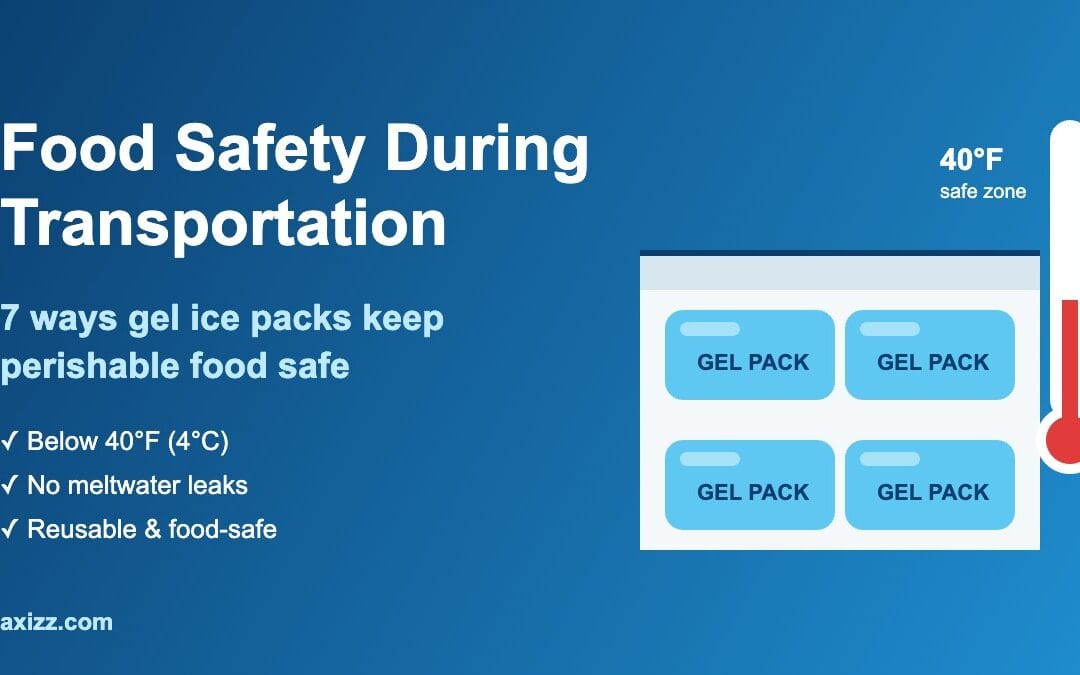
Dry gel ice packs for food safety help delivery businesses keep perishable food at safe temperatures from kitchen to doorstep. Unlike loose ice, dry gel stays contained, so food and packaging stay dry and clean. Axizz makes reusable gel packs for these needs.
Key Takeaways
- Cold food must stay cold throughout the delivery window.
- Dry gel does not melt into water or leak onto food.
- Reusable packs cut cost and waste over time.
- Pack design, timing and temperature checks all matter.
Why Dry Gel Ice Packs for Food Safety Matter
Bacteria grow quickly when chilled food warms up. Delivery drivers face traffic, heat and long routes, so reliable cooling is essential. Dry gel ice packs for food safety hold a steady cold temperature and avoid the soggy mess that ice creates, protecting both quality and customer trust.
5 Proven Benefits of Dry Gel Ice Packs
1. Steady cooling in transit
Dry gel releases cold evenly, helping keep food within safe ranges for the whole trip when packed correctly with insulation.
2. No meltwater
Packaging stays intact, labels stay readable and food is not soaked, which reduces complaints and waste.
3. Cleaner handling
Staff and drivers work with dry, tidy packs, which supports hygiene routines in busy kitchens and depots.
4. Reusable and economical
A pack can be frozen and used again many times, lowering cost per delivery compared with disposable coolants.
5. Flexible formats
Flat sheets, bricks and wraps fit boxes, bags and totes of different sizes, so teams can standardize packing.
Practical Tips
- Pre-chill food and pre-freeze packs before packing.
- Place packs on top and around food, not only underneath.
- Use insulated bags or boxes to slow warming.
- Keep raw and ready-to-eat food separate.
- Check temperatures regularly and record results where required.
Making Dry Gel Ice Packs for Food Safety Part of Your Process
Write a simple packing guide with photos so every shipment is prepared the same way. Train staff on why dry gel ice packs for food safety matter and how many packs each order size needs. Test your setup with a thermometer on the longest route, and adjust the number of dry gel ice packs for food safety if the food warms too soon.
Common Food Delivery Cooling Mistakes
- Using partly frozen packs that warm too soon.
- Overfilling boxes so cold air cannot circulate.
- Leaving orders on doorsteps for long periods.
- Skipping temperature checks on hot days.
Fixing these basics often improves results more than buying extra packs. Review complaint data and spoilage records monthly to find patterns by route, driver or season.
Packing a Cold Delivery Step by Step
Start by chilling the food and the container. Place a frozen dry gel pack at the bottom, add the food in sealed containers, then add another pack on top and close the insulated liner. Seal the box and label it clearly with the packing time. For longer routes, add more packs rather than relying on one large pack. Finally, train drivers to keep orders out of direct sun and to deliver cold items first.
Related Reading
how ice packs help maintain product integrity, why food delivery companies depend on cooling products, why gel ice packs are better than traditional ice. For trusted background, see FDA safe food handling guidance.
FAQ
What temperature should cold food stay below?
Many food safety authorities advise keeping cold food at or below about 4 degrees Celsius (40 degrees Fahrenheit). Check your local rules.
Are dry gel ice packs safe near food?
Use packs designed for the purpose, keep them sealed and avoid direct contact with unwrapped food.
Conclusion
Dry gel ice packs for food safety are a practical upgrade for any delivery operation. Combine them with insulation, training and regular checks to protect customers and your brand.