
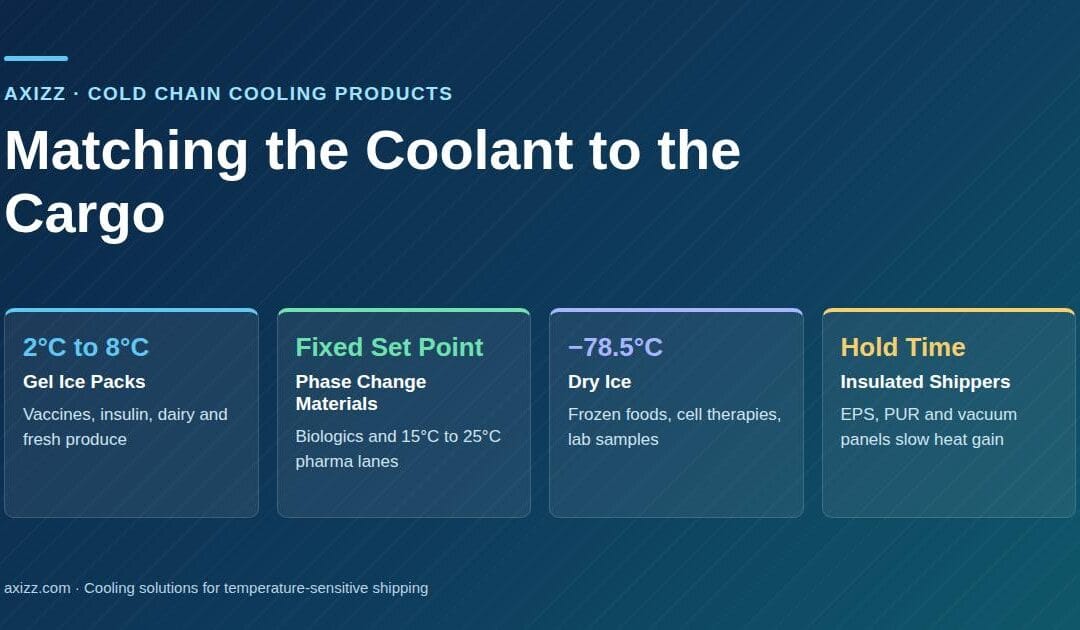
Cooling solutions for frozen food transportation keep ice cream, seafood, meat and ready meals safely frozen from warehouse to customer. The right insulation, coolant and process prevent thawing, waste and costly complaints. Axizz makes reusable gel packs for these needs.
Key Takeaways
- Frozen goods need very low, steady temperatures.
- Insulation and coolant must match transit time.
- Monitoring proves the cold chain stayed intact.
- Training and clear packing rules reduce errors.
Why Cooling Solutions for Frozen Food Transportation Matter
Frozen food quality drops quickly once it thaws and refreezes, and safety risks can rise. Cooling solutions for frozen food transportation protect texture, taste and compliance, especially on long routes or in hot weather.
5 Proven Tips for Frozen Food Shipping
1. Start fully frozen
Only pack food that is already at the target temperature. Packs cannot rescue goods that start warm.
2. Choose the right coolant
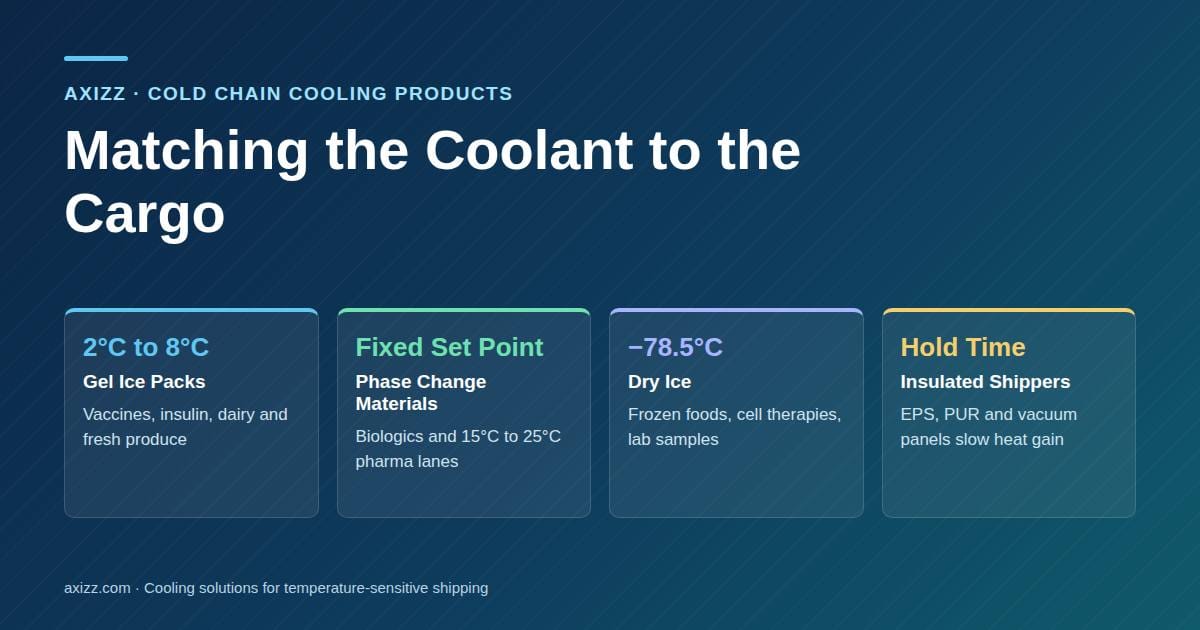
Use coolants rated for very low temperatures and pre-condition them according to instructions.
3. Insulate properly
Quality insulated boxes or liners slow heat gain, which extends cold time for long deliveries.
4. Fill empty space
Reduce air gaps with product or packing material so cold stays concentrated around the food.
5. Monitor and record
Data loggers or indicators show if temperatures rose, so you can act and improve routes.
Practical Tips
- Test packaging on your longest route and hottest season.
- Use more coolant for longer transit times.
- Load frozen items last and unload first.
- Keep boxes closed and out of direct sun.
- Train staff and review failed shipments for lessons.
Improving Cooling Solutions for Frozen Food Transportation
Review your results regularly. If goods arrive softened, adjust insulation or coolant quantity. Record each change so your team can see which cooling solutions for frozen food transportation work best, and standardize the winning setup across routes.
Cost and Sustainability Considerations
Reusable coolant packs and insulated shippers can reduce long-term cost and waste, especially where routes repeat. Compare the full cost per delivery, including spoilage, refunds and disposal. Return programs and durable packaging often pay off quickly for subscription and repeat-order businesses.
Regulations and Standards
Food transport is regulated in many countries. Check local requirements for temperature limits, labeling and records, and make sure your carriers meet them.
Packing Checklist for Frozen Shipments
- Confirm product temperature before packing.
- Condition coolant as instructed, for the full time required.
- Use a qualified insulated shipper for the route length.
- Include a logger or indicator where required.
- Seal, label and record packing time.
Following the same checklist every time helps staff pack quickly and consistently, which is especially valuable during peak seasons when volumes and pressure rise.
Handling Problems in Transit
Plan for delays. Include extra coolant for long routes, use carriers that offer tracking and ask customers to move frozen goods to a freezer immediately on arrival. If goods arrive partly thawed, have a clear policy for refunds or replacements and record the details to improve future packaging.
Choosing Suppliers and Carriers
Work with carriers experienced in frozen goods and suppliers who can provide test data for their coolants and boxes. Ask about transit time guarantees, tracking and claims handling before signing any agreement.
Related Reading
why temperature-controlled shipping is essential, cold chain packaging, how ice packs help maintain product integrity. For trusted background, see FDA safe food handling guidance.
FAQ
What temperature must frozen food stay at?
Frozen food is commonly kept at or below minus 18 degrees Celsius (0 degrees Fahrenheit). Check your local rules.
Can gel packs keep food frozen?
Standard gel packs are not always cold enough. Use coolants rated for frozen shipping.
Conclusion
Cooling solutions for frozen food transportation depend on good packaging, correct coolant and careful monitoring. Test, record and refine your process to protect every shipment.