
Gel ice packs have become one of the most dependable tools in modern cold chain logistics. Pharmaceuticals, vaccines, fresh food, and laboratory samples all move through supply chains where a few degrees of drift can ruin an entire shipment. This guide breaks down how gel ice packs work, where they outperform traditional ice, and how to use them to build a cold chain your customers can count on.
What Are Gel Ice Packs?
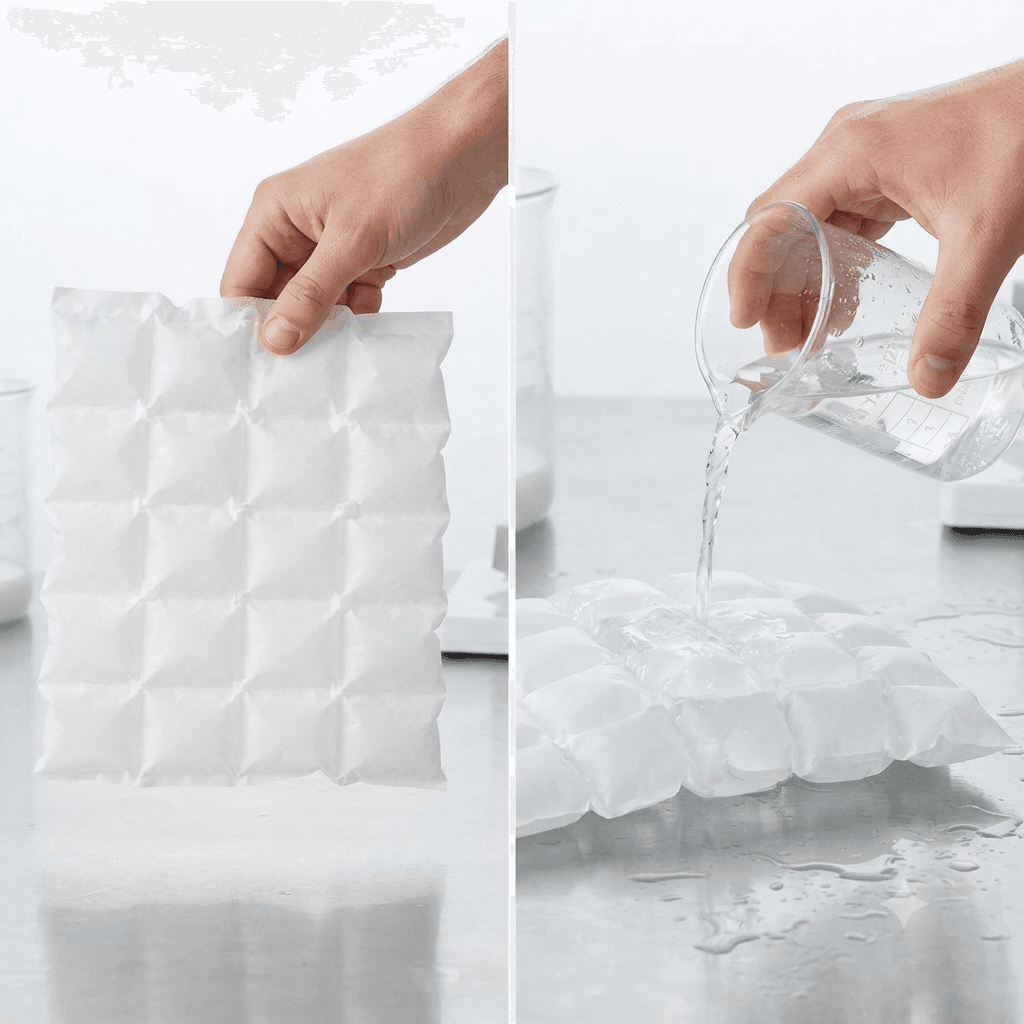
Gel ice packs are sealed pouches filled with a water-based refrigerant gel, usually thickened with a polymer such as sodium polyacrylate or cellulose. When frozen, the gel absorbs heat slowly and releases cold at a steady rate instead of dumping it all at once. That slow release is what matters in transit: the payload sits inside a stable temperature band rather than riding a spike-and-crash curve.
Because the refrigerant stays sealed inside the pouch, there is no meltwater. Cartons stay dry, labels stay readable, and corrugated packaging keeps its structural strength through a multi-day trip.
Why Cold Chain Reliability Depends on Temperature Stability
A cold chain is only as strong as its weakest handoff. Loading docks, airport tarmacs, delivery vans, and doorstep waits are all points where a shipment can drift out of range. Health agencies are explicit about the stakes: the CDC’s Vaccine Storage and Handling Toolkit treats a temperature excursion as a reportable event, not a minor inconvenience.
The commercial cost is just as real. A single rejected pallet can wipe out the margin on a dozen successful ones, and repeated failures put contracts and audit standing at risk. Reliable cooling is almost always cheaper than replacement. The same logic drives temperature-controlled shipping across every regulated industry.
Seven Ways Gel Ice Packs Improve Cold Chain Reliability
1. Longer, more predictable cooling
Water ice melts fast and then stops working. Gel refrigerants hold their phase change longer, which extends usable transit time and gives dispatchers a wider safety margin when a flight is delayed or a route is changed mid-run.
2. No meltwater, no soggy packaging
Loose ice leaves water in the box. Gel ice packs keep the refrigerant contained, protecting paper documentation, secondary packaging, and any product that reacts badly to moisture.
3. Temperature ranges matched to the payload
Formulations exist for frozen, refrigerated, and controlled room temperature ranges. Matching the pack’s phase change temperature to the product’s required band prevents both spoilage and accidental freezing, which is the failure mode most teams underestimate.
4. Reusable, so cost per shipment drops
Most commercial packs survive hundreds of freeze-thaw cycles. On closed-loop routes and returnable shippers, the cost per shipment falls sharply after the first few uses. Our guide to reusable gel ice packs for commercial applications covers the economics in more detail.
5. Flexible shapes that fill dead air
Empty space inside a shipper is where warm air collects. Flexible gel ice packs conform to the contours of the load, removing void space and improving thermal efficiency without adding dimensional weight.
6. Durability through rough handling
Puncture-resistant film and heat-sealed seams hold up to conveyor drops, stacking pressure, and the pressure changes of air freight. Fewer leaks means fewer contaminated loads and fewer claims.
7. Cleaner compliance documentation
Predictable thermal performance makes validation straightforward. When a packout is tested and repeatable, qualification reports hold up under audit and customers get proof rather than promises.
How to Choose the Right Gel Ice Packs
Selection comes down to matching the pack to the route, not to the product alone. Work through these variables before you standardize on a configuration:
- Transit time: total door-to-door hours, including the worst realistic delay on that lane.
- Required temperature band: the range the product must stay inside, and the limits it must never cross.
- Ambient conditions: summer and winter profiles for the lanes you actually ship, not an average.
- Shipper insulation: EPS, polyurethane, or vacuum panels change how much refrigerant you need.
- Pack format: flexible sheets, rigid bricks, or bottles, depending on how the load is stacked.
- Pack weight and count: enough thermal mass to cover the route without wasting freight cost.
If you are still comparing options, our guide to choosing the right cooling solution for your business walks through the same decision with worked examples.
Packing Best Practices That Protect the Cold Chain
- Precondition the packs completely. A partially frozen pack starts the trip already behind.
- Precondition the product too, so the refrigerant is not spending its capacity pulling the payload down to temperature.
- Surround the load. Place packs on top, on the sides, and underneath, not only on top.
- Use a barrier layer between the packs and any product that must not freeze.
- Fill void space with insulating dunnage so warm air has nowhere to pool.
- Include a temperature logger on high-value lanes and review the full curve, not just the pass or fail light.
- Validate the packout with a summer test and a winter test before rolling it out across a lane.
Mistakes That Quietly Break the Cold Chain
- Reusing a validated packout on a longer lane without retesting it.
- Freezing packs in a crowded freezer where airflow is blocked, so they never fully solidify.
- Mixing pack formulations in one shipper without checking the combined profile.
- Treating a delivery delay as a shipping problem instead of a temperature problem.
- Skipping the barrier layer and freezing product that was only supposed to be chilled.
Frequently Asked Questions
How long do gel ice packs stay cold?
It depends on pack size, insulation, and ambient temperature. A well-designed packout commonly holds range for 24 to 72 hours, and longer durations are achievable with vacuum-insulated shippers and a higher refrigerant-to-payload ratio.
Are gel ice packs reusable?
Yes. Commercial-grade packs are built for repeated freeze-thaw cycles. Inspect the seams before each use and retire any pack that shows swelling, weeping, or damage to the film.
Are they safe for food and pharmaceutical shipping?
Packs made with non-toxic refrigerant gel and food-grade film are widely used for both. Confirm the material specification and supporting documentation with your supplier before you standardize on a product.
Gel ice packs or dry ice: which should you use?
Dry ice suits deep-frozen payloads near -78 degrees Celsius and brings hazardous material handling rules with it. Gel ice packs cover frozen, chilled, and controlled room temperature ranges with no special shipping classification, which makes them the practical choice for most lanes.
Build a Cold Chain You Can Rely On
Cold chain reliability is never one decision. It is refrigerant choice, packout design, validation, and handling discipline working together. Gel ice packs are the piece that makes the rest predictable, and getting them right removes most of the variance from the system.
Axizz supplies flexible gel ice packs and gel ice pack refrigerants for commercial cold chain operations. Contact our team to match a configuration to your lanes.