
Ice packs for transportation are what stand between a temperature-sensitive shipment and a total write-off. Vaccines, seafood, meal kits, blood samples, cosmetics and specialty chemicals all have a temperature window they need to stay inside from the moment they leave the warehouse until the customer opens the box. Drift outside that window for a few hours and the product can still look perfect while being unusable.
This guide covers how ice packs for transportation work in transit, which types suit which shipments, how many you actually need, and the packing mistakes that quietly break a cold chain.
Why Temperature Control Decides Whether a Shipment Arrives Intact
Product integrity is not only about avoiding visible damage. A carton can arrive crush-free and still fail, because heat quietly changes what is inside it. Proteins denature. Emulsions separate. Bacteria multiply. Active pharmaceutical ingredients lose potency. None of that shows up on a delivery scan.
Regulators treat this seriously. In the United States, the FDA’s Sanitary Transportation of Human and Animal Food rule requires shippers and carriers to keep food at safe temperatures during transit and to keep records proving it. Pharmaceutical distributors work under similar good distribution practice expectations. In both cases, “we packed it cold” is not a defence. You need a method that repeats.
That is the real job of a cooling system: not to make the box cold, but to hold a known temperature range for a known number of hours, no matter what the truck, the tarmac or the porch does. For a wider view of how this fits into logistics planning, see our breakdown of why temperature-controlled shipping is essential for modern supply chains.
How Ice Packs for Transportation Actually Work
Ice packs for transportation do not add cold. They absorb heat. As the frozen gel inside changes phase from solid to liquid, it soaks up a large amount of energy while its own temperature barely moves. That plateau is what keeps the shipment stable, and it is why a half-thawed pack is still working hard even though it feels soft.
Plain water ice holds slightly more cooling energy per gram than most gels. The trade-off is that it melts into free water, which soaks labels, weakens corrugated board and can contaminate food or medical packaging. Gel packs stay contained, hold their shape, conform around irregular products and can be refrozen hundreds of times. We compare the two in detail in why gel ice packs are better than traditional ice.
Chilled, frozen or ultra-cold
Different payloads need different plateaus, and the ice packs for transportation you choose have to match:
- Chilled (2–8°C / 36–46°F): most vaccines, insulin, dairy, fresh produce and diagnostic samples. Standard gel packs, conditioned rather than rock-hard, are the usual answer. The WHO immunization supply chain guidance is built around this range.
- Frozen (−18°C / 0°F and below): seafood, ice cream, frozen meals, some biologics. Needs deep-frozen gel packs, more of them, and better insulation.
- Ultra-cold (below −60°C): dry ice territory, with the hazardous material paperwork and ventilation rules that come with it.
Most commercial shipping sits in the first two bands, which is exactly where ice packs for transportation are strongest.
Types of Ice Packs for Transportation
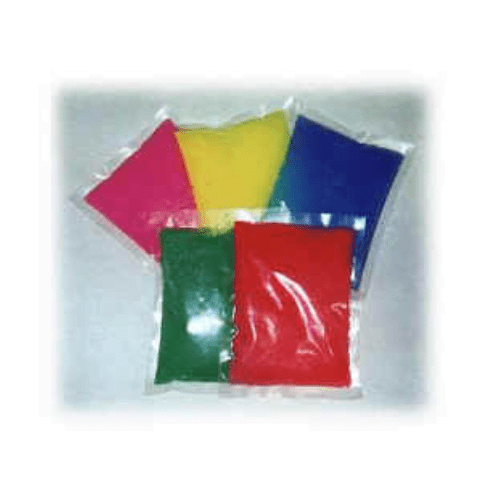
Soft gel packs
Flexible pouches that flatten against the product and fill dead space. They are the workhorse of parcel shipping: cheap, light, easy to freeze in bulk, and forgiving when box dimensions vary. Best for chilled food, cosmetics and small pharmaceutical parcels.
Rigid hard-shell packs
Moulded containers that hold their shape under load. They stack cleanly in pallet shippers and survive rough handling, which makes them a good fit for repeat-use closed loops such as lab courier routes and clinic deliveries.
Gel blankets and sheets
Large flat panels that drape over a full pallet or line a shipper on all sides. Because they spread coolant across the whole surface instead of concentrating it in a few spots, they reduce hot corners and cold spots in bigger loads.
Dry gel made on site
High-volume shippers often stop buying pre-filled packs and start making their own. Dry gel powder plus water plus a filling and sealing line means you ship coolant only when you need it, in the exact size you need, without paying freight on water. Our TEMTRO™ gel pack production system is built for that setup.
Industries That Rely on Ice Packs for Transportation
Pharmaceuticals and biologics
Vaccines, insulin, biologic injectables and clinical trial kits move under documented temperature control from manufacturer to clinic. A single excursion can force a batch to be quarantined and destroyed, so most distributors pair validated ice packs for transportation with data loggers on every shipment. See how this plays out day to day in the importance of cooling products in pharmaceutical distribution.
Food, seafood and meal delivery
Meal kit companies, butchers, seafood suppliers and specialty grocers ship perishable goods to home addresses where nobody may be waiting at the door. The pack has to survive the transit time plus several hours of doorstep exposure. More on that margin in why food delivery companies depend on cooling products.
Laboratory and diagnostic samples
Blood, tissue, swabs and reagents degrade fast at room temperature and often cannot be recollected. Courier routes with tight windows use rigid packs in reusable shippers, sized so the sample never freezes solid either, since freezing can be as damaging as heat.
Cosmetics, chocolate and specialty chemicals
These do not usually have a legal temperature range, but they have a customer-facing one. Melted chocolate, separated serum or bloomed lipstick all read as a defective product, and the refund costs more than the coolant would have.
How Many Ice Packs Does a Shipment Need?
Sizing ice packs for transportation is where most shippers guess, and guessing is expensive in both directions. There is no universal number, because the answer depends on five things: transit time, outside temperature, insulation quality, how much empty space is in the box, and the product’s own starting temperature.
As a rough starting point for a small parcel in a decent insulated shipper, plan on roughly 0.5–1 kg (1–2 lb) of gel coolant for every 12 hours of protection in mild weather, then increase it for summer routes, longer transit, thin insulation or a large air gap. Treat that as a first guess, not a spec.
The number you actually use should come from testing. Pack a real shipment, put a data logger next to the product, run it over the worst route you serve in the worst month, and read the curve. Repeat until you have margin at both ends. That single exercise usually pays for itself the first summer.
Packing Best Practices That Protect Product Integrity
Buying good ice packs for transportation is only half the job. How they go into the box decides how much of that cooling capacity actually reaches the product.
- Pre-cool the product. Coolant is there to hold a temperature, not to pull one down. Loading warm product burns through your entire budget in the first few hours.
- Condition the packs. For 2–8°C shipments, let deep-frozen packs sit out until the surface softens. A rock-hard pack pressed against a vaccine vial can freeze it.
- Surround, do not stack. Cold air falls. Packs placed only on top cool the top; packs on the sides and bottom too give an even envelope.
- Use a barrier layer. A sheet of foam or bubble between pack and product prevents direct-contact freezing and condensation marks.
- Fill the void. Empty space is air that has to be cooled and that circulates heat. Fill it with dunnage or a smaller box.
- Match the insulation to the route. EPS, polyurethane and vacuum insulated panels all buy different amounts of time. Better insulation often costs less than the extra coolant it replaces.
- Log and label. A logger inside and clear handling marks outside turn an argument with a carrier into a documented fact.
These steps are the practical layer on top of a wider strategy, which we cover in how cold chain solutions ensure safe transportation of temperature-sensitive products.
Common Mistakes That Break the Cold Chain
Most cold chain failures are not equipment failures. They are packing habits that worked once and were never re-checked. These are the ones we see most often when shippers review how they use ice packs for transportation:
- Sizing for the average day. Your packaging has to survive August in a delivery van, not a mild Tuesday.
- Ignoring the last mile. Transit time ends at the door, but temperature exposure does not. Build in the hours a box may sit on a porch.
- Reusing tired packs. Gel packs are reusable, but a seam-split or leaking pack belongs in the bin, not back in a shipper.
- Freezing what should stay chilled. Many biologics and fresh foods are ruined by freezing. Cold is not automatically safe.
- Changing one variable quietly. A new box supplier, a thinner wall or a different carrier route resets your validation. Re-test.
- No records. Without logger data you cannot prove compliance, and you cannot improve what you never measured.
Frequently Asked Questions
How long do ice packs stay cold during shipping?
In a properly packed insulated shipper, standard ice packs for transportation typically hold a chilled range for 24 to 48 hours, and well-insulated systems with generous coolant can reach 72 hours or more. Ambient temperature, insulation and void space change that figure more than the brand of pack does.
Are gel ice packs better than dry ice for transportation?
For chilled and standard frozen shipping, yes: as ice packs for transportation, gel packs are cheaper, reusable, non-hazardous and easier to ship by air. Dry ice is the right choice only when you need temperatures below about −60°C, and it brings sublimation, ventilation and dangerous goods requirements with it.
Can ice packs be reused after shipping?
Yes. Quality ice packs for transportation can be refrozen and reused for hundreds of cycles, which is why closed-loop courier and clinic routes favour them. Inspect each pack for seam damage, punctures or leakage before it goes back into rotation.
Do ice packs need to be frozen solid before shipping?
For frozen shipments, yes. For 2–8°C shipments, no. Fully frozen ice packs for transportation are conditioned first so their surface temperature rises above freezing, protecting the product from cold damage while still delivering most of the cooling capacity.
Are gel ice packs safe to ship alongside food?
Yes. Standard gel packs used as ice packs for transportation contain a non-toxic water-based gel in a sealed food-grade film, so incidental contact with sealed food packaging is not a concern. They should still never be opened, eaten or used as a food ingredient, and any leaking pack should be removed from service.
What temperature range do most shipments need?
Chilled products generally need 2–8°C (36–46°F) and frozen products −18°C (0°F) or below. Match your ice packs for transportation to that window, and check the manufacturer’s stability data for your specific product, since some items have tighter windows and some are damaged by freezing.
Building a Cooling System You Can Trust
Ice packs for transportation are a small line item that protects a large one. Get the coolant type, quantity and packing method right and temperature-related losses stop being a recurring cost. Get them wrong and you pay in spoiled stock, replacement shipments, refunds and lost trust.
Axizz supplies ice packs for transportation, gel coolants and cold chain packaging solutions for shippers of every size, from single-parcel operations to pallet-scale distribution. Explore our FREEZEZE™ gel ice pack refrigerants, or contact our team to size a system around your routes, your season and your product.