
Cold chain solutions are the packaging, cooling, and monitoring systems that keep temperature-sensitive pharmaceuticals safe from the factory to the patient. Vaccines, biologics, insulin, and laboratory samples lose potency when exposed to heat, freezing, or humidity — so the pharmaceutical industry depends on reliable cold chain management at every step of distribution.
What Are Cold Chain Solutions in the Pharmaceutical Industry?
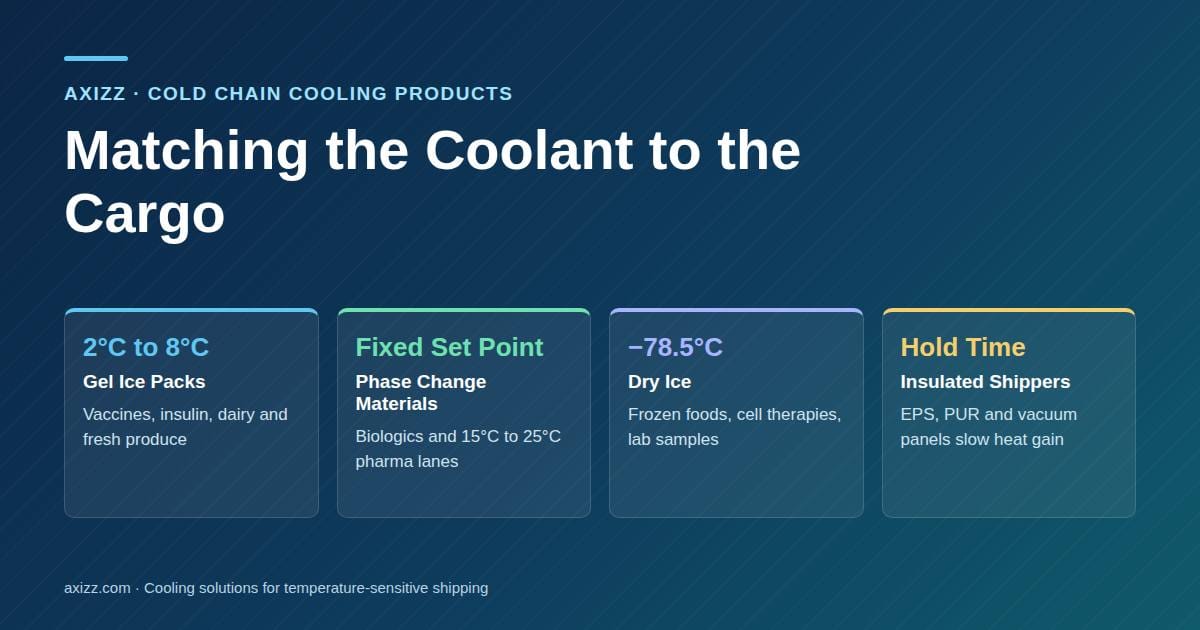
A cold chain is an unbroken series of refrigerated production, storage, and distribution steps. Cold chain solutions are the tools that make this possible: insulated shipping containers, reusable gel ice packs, phase-change materials (PCM), temperature data loggers, and validated shipping lanes. Together, they hold products within a required temperature range — most commonly 2°C to 8°C for refrigerated medicines, with some therapies requiring ultra-cold conditions as low as −80°C.
Why Reliable Cold Chain Solutions Matter: 7 Key Benefits
Temperature excursions are one of the costliest problems in pharmaceutical logistics. The IQVIA Institute for Human Data Science estimates that temperature-related failures cost the pharmaceutical industry $35 billion every year, while the World Health Organization estimates that up to 50% of vaccines are wasted globally — many due to cold chain breaks. Here are seven reasons reliable cold chain solutions are essential:
- Patient safety. Medicines that have been exposed to incorrect temperatures can lose potency without any visible sign, putting patients at risk.
- Product efficacy. Vaccines, biologics, and insulin are only effective when kept within their labeled temperature range.
- Regulatory compliance. Health authorities require documented temperature control, and failures can trigger recalls and penalties.
- Lower financial losses. A single spoiled shipment can be worth millions; dependable cold chain solutions protect that investment.
- Reduced waste. Consistent cooling cuts product discard rates and supports sustainability goals.
- Global vaccine reach. Reliable cold chains make it possible to deliver life-saving vaccines to remote and developing regions.
- Brand trust. Manufacturers and distributors known for reliable cold chain handling win more contracts and partnerships.
The 5 Key Components of Reliable Cold Chain Solutions
- Insulated packaging and thermal shippers that shield products from external heat and cold.
- Reusable gel ice packs that provide stable cooling for 24–72 hours or more — learn how gel ice packs enhance cold chain reliability.
- Phase-change materials (PCM) that hold a precise temperature set-point during long transits.
- Temperature data loggers and indicators that record conditions and prove compliance on arrival.
- Validated lanes and standard operating procedures that keep every hand-off consistent.
Cold Chain Regulations and Compliance Requirements
Pharmaceutical companies must document temperature control at every stage of distribution. In the United States, the FDA’s drug supply chain guidelines require products to be stored and transported according to their labeled conditions, while the WHO’s cold chain guidance sets the global standard for vaccine distribution. EU Good Distribution Practice (GDP) and USP <1079> add further requirements for monitoring, qualification, and temperature mapping of cold chain solutions.
Innovations Improving Cold Chain Performance
Modern cold chain technology has advanced far beyond wet ice and Styrofoam. High-performance gel ice packs for transportation, vacuum-insulated panels, and phase-change materials that hold a precise set-point for days are making long-haul pharmaceutical shipping safer and more predictable. Reusable systems also cut single-use plastic waste and lower the total cost per shipment.
How Axizz Supports Pharmaceutical Cold Chains
Axizz designs and manufactures reusable temperature-control products trusted across medical and pharmaceutical applications. From leak-proof gel ice packs to customizable cooling pads and blankets, our products help distributors and healthcare providers maintain strict temperature ranges with confidence. See why high-quality gel ice packs matter for medical applications and how the right cooling partner protects your supply chain.
Frequently Asked Questions About Cold Chain Solutions
What are cold chain solutions in the pharmaceutical industry?
Cold chain solutions are the insulated packaging, cooling products, and temperature-monitoring systems that keep medicines and vaccines within their required temperature range — usually 2°C to 8°C — during storage and transport.
What temperature range do pharmaceutical cold chain solutions maintain?
Most refrigerated pharmaceuticals must stay between 2°C and 8°C (36°F to 46°F). Some products, such as certain mRNA vaccines and biologics, require ultra-cold conditions down to −60°C or −80°C.
Why do vaccines need a reliable cold chain?
Vaccines are highly sensitive to heat and freezing. A single temperature excursion can permanently reduce their potency, making doses ineffective and contributing to the up to 50% of vaccines the WHO estimates are wasted globally each year.
What happens if the cold chain breaks?
A cold chain break can make medicines and vaccines unsafe or ineffective. Consequences include product recalls, regulatory penalties, major financial loss, and — most importantly — risk to patients.
How do gel ice packs improve cold chain reliability?
Reusable gel ice packs provide consistent, long-lasting cooling inside insulated shippers, prevent freezing damage, and are more cost-effective and sustainable than dry ice or single-use ice.
As healthcare systems expand globally, dependable cold chain solutions remain the foundation of safe medicine. Investing in proven cooling technology protects patients, satisfies regulators, and safeguards every shipment from the first mile to the last.