
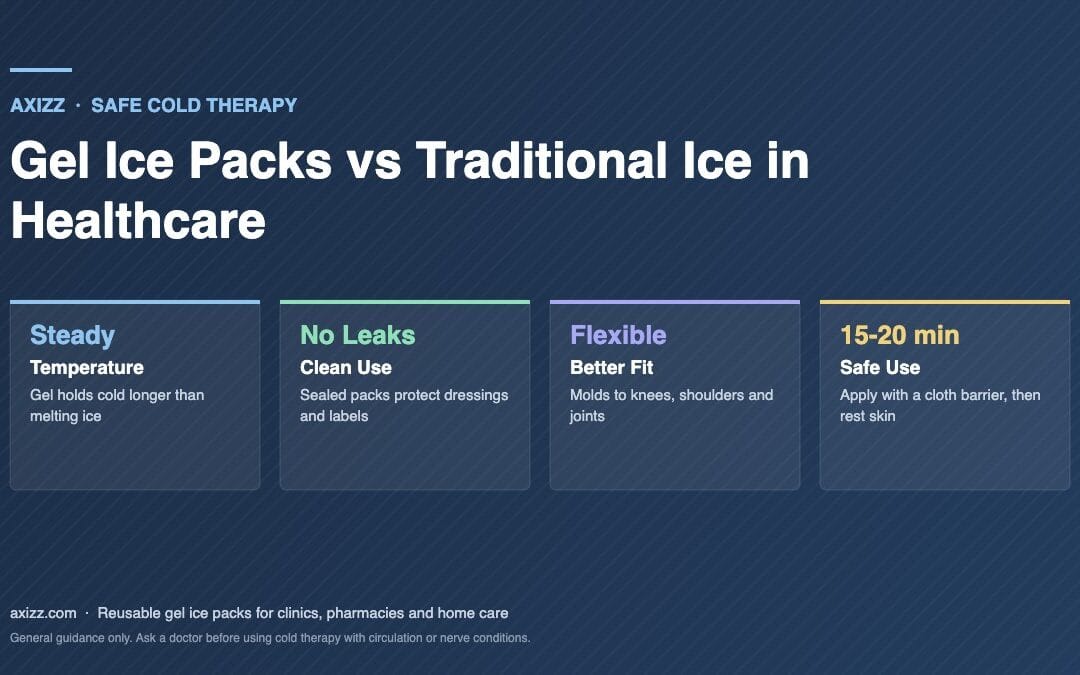
Reusable gel packs vs traditional ice is a comparison more people are making as they look for cleaner, steadier and cheaper cooling. Ice is familiar, but gel packs solve many of its biggest problems. Axizz makes reusable gel packs for these needs.
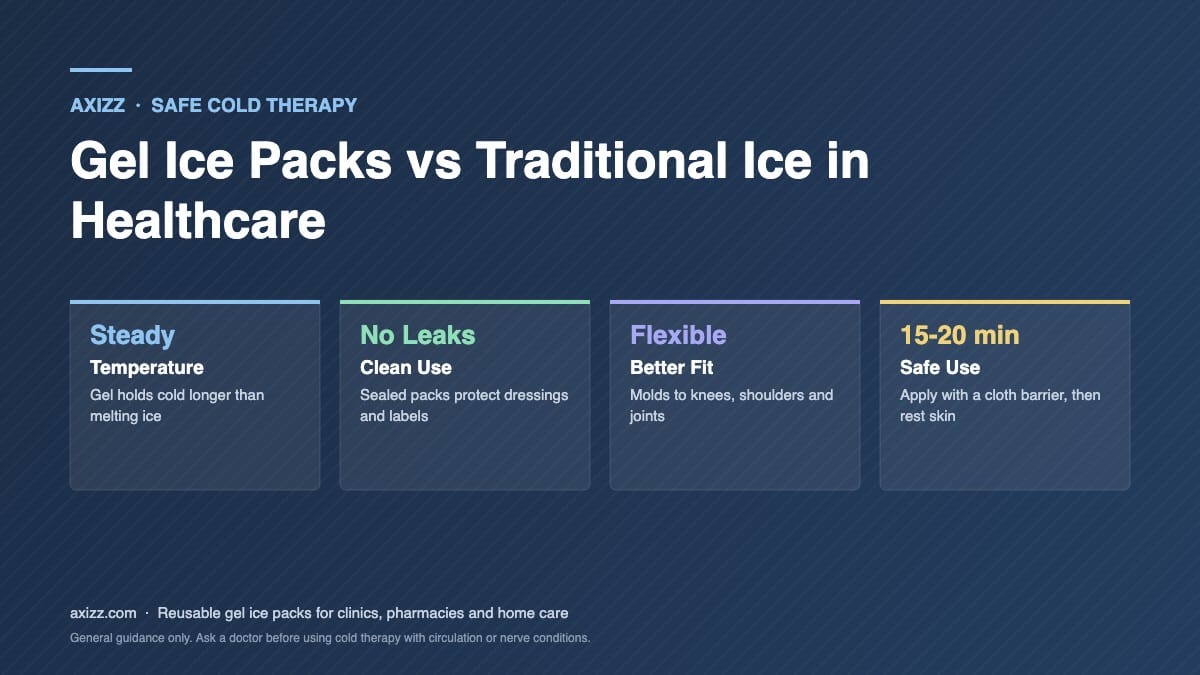
Key Takeaways
- Gel packs do not melt into water.
- They can be reused many times.
- Cooling is steadier and more controllable.
- Cost per use is usually lower over time.
Reusable Gel Packs vs Traditional Ice: The Main Differences
Traditional ice cools quickly, but it melts, leaks and must be replaced. Reusable gel packs release cold more slowly and can be refrozen. For shipping, food, healthcare and travel, those differences affect cost, quality and convenience.
5 Proven Reasons to Replace Ice
1. No meltwater mess
Gel stays contained, so boxes, food and floors stay dry.
2. Reusable many times
Refreezing is easy, so one pack replaces bags of ice again and again.
3. More consistent cooling
Gel releases cold gradually, which helps products stay at a steady temperature longer.
4. Less packaging damage
Dry packs protect cardboard, labels and electronics from moisture.
5. Lower waste
Reuse reduces single-use plastic bags and discarded coolants.
Practical Tips
- Freeze packs fully and flat before use.
- Match pack size to your container.
- Use insulation to extend cooling time.
- Wipe and store packs after each use.
- Keep a rotation so packs are always ready.
When Traditional Ice Still Makes Sense
Ice can still be useful for quick, cheap cooling of drinks or a one-off event. But for repeated use, reusable gel packs vs traditional ice is usually an easy win for gel on cost and cleanliness. If you handle many shipments or need dependable temperatures, reusable gel packs vs traditional ice should favor gel almost every time.
Cost Comparison in Practice
Ice looks cheap per bag, but costs add up: buying, storing, packing, cleaning and replacing damaged goods. A reusable pack costs more at the start, but its price is spread across many uses. Compare your monthly spend on ice, losses from melted or soaked products and labor, then estimate the same figures with gel packs. Most regular users find the switch pays for itself quickly.
Environmental Impact
Reusing a pack avoids hundreds of single-use bags and reduces waste. Combined with good insulation, gel packs can lower overall resource use for cooling.
How to Switch From Ice to Gel Packs
Begin by listing every place you use ice today: shipping, catering, first aid, events or travel. Choose gel pack sizes that fit those containers, freeze a few sets and run a trial. Compare temperatures, product condition and handling time against your ice method. Share the results with your team, update packing instructions and set up a simple routine for cleaning and refreezing packs. Most teams adapt within a week or two.
Real-World Example
A small bakery used bagged ice for deliveries and found boxes soggy and labels smudged. After switching to dry gel packs, deliveries arrived dry and cold, complaints dropped and monthly coolant spending fell because packs were reused. The same logic applies to caterers, pharmacies and online sellers.
Related Reading
why gel ice packs are better than traditional ice, how reusable ice packs are changing the cooling industry, reusable gel ice packs for commercial applications. For trusted background, see the US EPA recycling guide.
FAQ
Are gel packs colder than ice?
Not necessarily, but they hold temperature more steadily and do not melt into water.
Can I use gel packs for food?
Yes, with proper packaging and temperature control for the type of food.
Conclusion
In the reusable gel packs vs traditional ice debate, gel wins on cleanliness, consistency and long-term value. Try a few packs in place of ice and compare the results.